Choose a privately owned e-scooter only if every intended ride is on private land where you have the landowner’s permission. GOV.UK says it cannot lawfully be ridden on public roads, pavements or in parks, so a journey that enters public space calls for a different option: check whether a compliant electrically assisted pedal cycle (EAPC) fits your travel needs, or whether an official rental e-scooter scheme operates on your route. For a private-site purchase, assess the ground, storage and charging arrangements rather than relying on a headline range.
Who this is for
Private-site recreation buyers
You have access to a genuinely private riding area, such as a garden, estate or closed venue, and can obtain the landowner’s permission. Your choice depends on the site, storage and charging arrangements—not on whether the scooter looks suitable for commuting. GOV.UK sets out the private-land permission rule.
Travellers reconsidering a private e-scooter
If your intended journey includes roads or cycle paths, a privately owned e-scooter does not meet that need. GOV.UK distinguishes private e-scooters from official rental schemes and EAPC e-bikes; check which, if either, fits your actual route.
Buyers focused on charging and support
Even with a permitted private site, you need a way to identify the manufacturer, obtain appropriate charging equipment and receive product-safety information. Department for Transport battery guidance advises using the supplied charger or a manufacturer-authorised replacement.
What matters when buying
Establish where the whole journey takes place before comparing a private e-scooter’s site fit, storage needs and charging arrangements.
Private-land e-scooter
Choose when: Every ride stays on private land and you have the landowner’s permission.
Trade-off: GOV.UK’s location rule still applies regardless of the scooter’s range or road-oriented equipment.
EAPC e-bike
Choose when: You need road or cycle-path travel and the exact pedal-assisted bike meets EAPC requirements.
Trade-off: It requires pedalling and has a different riding and storage format from a stand-on scooter.
Official rental e-scooter
Choose when: An official trial serves your intended journey and you meet its driving-licence requirements.
Trade-off: Department for Transport trial rules and local availability govern the rental journey; the scheme does not permit public use of your own e-scooter.
| Concern |
What to check |
Who this matters to |
| Where the journey goes |
Map the entire route. If it enters public space, check the exact e-bike against EAPC rules or your eligibility for a local rental trial. |
I need to reach work by road or cycle path, so a private e-scooter would not cover my journey lawfully; around 40% of consumers put lawful public travel first. |
| Private-site fit |
With landowner permission established, compare the exact scooter’s tyres, brakes, rider-load limit and storage dimensions with the site and rider. |
On land where I have permission, I want a scooter that suits the ground and is practical to put away; roughly 30% of consumers put private-site fit first. |
| Charging and support |
Identify the manufacturer and supplied charger, check how to obtain authorised replacements, and plan a charging place clear of escape routes. |
I need to know which charging equipment to use and whom to contact about the product; around 30% of consumers put safe ownership and support first. |
Buying mistakes to avoid
-
Buying a private e-scooter for a commute
GOV.UK says privately owned e-scooters may be ridden only on private land with the landowner’s permission. Lights, speed settings and a long advertised range do not change where you may ride one.
Trace your full journey before buying. If it uses roads, pavements, parks or cycle paths, investigate an EAPC e-bike or an eligible official rental scheme instead.
-
Treating advertised range as your site range
Segway specifies a rider weight of 75 kg, a temperature of 25°C and a speed of 15 km/h on pavement for its E2 Plus B II range test. Your site and riding conditions may differ from those test conditions.
Read the exact model’s range-test conditions and decide whether its stated range leaves enough room for your intended private-site ride without treating the maximum as a promise.
-
Using an unknown charger or modified battery
Department for Transport battery guidance advises using the charger supplied with the e-scooter or a manufacturer-authorised replacement. London Fire Brigade warns that incompatible chargers can deliver the wrong amount of power to a battery.
Check the manufacturer and charging instructions before purchase. Use supplied or authorised equipment, and follow Fire Kills guidance not to charge in a bedroom or where an escape route could be blocked.
Brands for reference
Pure Electric
Its Air, Flex and Escape e-scooter lines are relevant to buyers comparing private-site models and UK-facing support arrangements.
- Pure Electric states that its e-scooter warranty lasts 12 months from purchase, subject to its terms.
- Check the exact model’s site suitability and warranty conditions; neither the brand nor its warranty changes the rule against public use of a private e-scooter.
Segway-Ninebot
Its eKickScooter range offers model-specific configurations worth comparing against the surface and distance of an authorised private site.
- Segway lists suspension, tyres, brakes and lighting for the E2 Plus B II, allowing checks against that particular model.
- Segway’s stated E2 Plus B II range uses specified test conditions; do not apply its equipment or range to every model or assume the same distance on your site.
Raleigh
An e-bike brand to consider when the real requirement is road or cycle-path travel, rather than stand-on recreation on private land.
- Raleigh states that its e-bikes meet EAPC requirements; an EAPC offers a pedal-assisted format for a different travel need.
- Check the exact bike and any modifications against the Driver and Vehicle Standards Agency and Department for Transport EAPC requirements before relying on that classification.
Joybuy e-scooters for private-land use
These e-scooters are choices to assess for recreation on private land with the landowner’s permission. They are not options for completing a journey on public roads, pavements or cycle paths.
 No image available
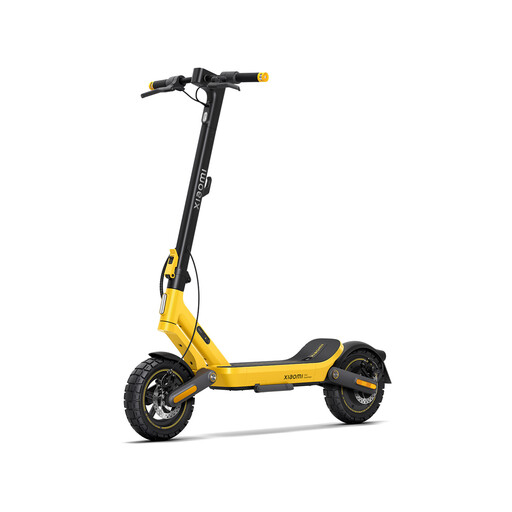
Xiaomi Electric Scooter 6 Ultra
For an authorised private site with varied ground, assess this model’s tyres and suspension against the actual riding area.
Check whether moving and storing the scooter is practical for you, and confirm what charging equipment is supplied. Use only the supplied charger or a manufacturer-authorised replacement.
View on Joybuy
 No image available
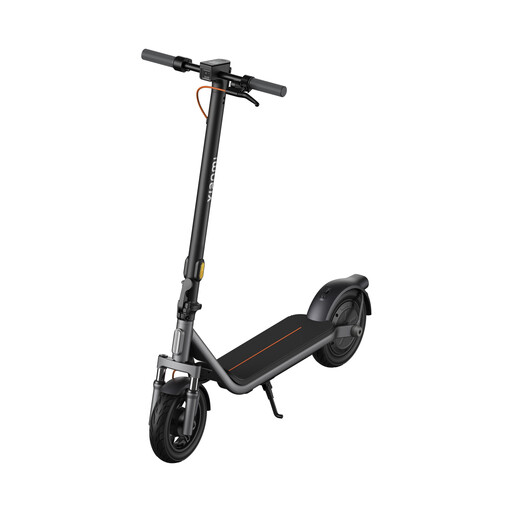
Xiaomi Electric Scooter 6 Lite
For an authorised private site with bumps, compare this model’s tyres and suspension with the ground you will ride on.
Check the rider-load limit for the intended user and arrange a charging place that will not block an escape route. Confirm the supplied charger before use.
View on Joybuy
Common questions
Can I ride my own e-scooter to work or on a cycle path?
No: GOV.UK says a privately owned e-scooter may only be ridden on private land with the landowner’s permission. A commute involving public roads, pavements, parks or cycle paths needs a different lawful travel option.
What should I ask the landowner before buying an e-scooter?
Confirm permission and the precise boundaries of the riding area before buying. Ask the landowner or venue about its permitted surfaces, rider age or supervision rules, protective equipment, storage and any insurer conditions that apply there.
When does an e-bike meet the EAPC rules for public travel?
For the EAPC classification described by the Driver and Vehicle Standards Agency and Department for Transport, the exact bike must have pedals capable of propelling it, a maximum continuous rated motor output of no more than 250 W and assistance that cuts off at 15.5 mph. GOV.UK says riders must be at least 14; check the bike and any modifications rather than relying on its e-bike label alone.
How should I charge a private-land e-scooter?
Use the charger supplied with the scooter or a manufacturer-authorised replacement, as Department for Transport guidance advises. Fire Kills advises against charging in bedrooms or where an escape route could be blocked; do not leave it charging while you are asleep or away.


