What should you compare?
Start with whether the snack is appropriate for the child, then compare nutrition for the portion they would actually eat. A higher protein figure does not settle the whole choice.
| Priority | What to check | Your needs |
|---|
| Protein |
Compare grams per pack or serving, not figures for different pack sizes. Check the exact flavour’s energy declaration alongside any high-protein claim. |
I’m looking for a crisp-style snack specifically for its protein, rather than assuming any lentil or potato crisp meets that aim. |
| Age and allergens |
Read the current age statement, ingredients and allergen information for the exact product. Joybuy’s Applied Nutrition Paprika listing says it is not suitable for children. |
Before giving a snack to a child, I need to know whether that particular product is appropriate for their age and dietary requirements. |
| Portion and nutrition |
Compare pack size, energy, salt and saturated fat per serving. Use front-of-pack traffic-light labels where provided, rather than judging a snack by protein alone. |
For routine holiday snacks, I want to see what one pack contributes. NHS guidance favours fruit and vegetables for children’s snacks and suggests no more than two packaged snacks a day. |
| Where it is served |
Distinguish food provided by a state-funded school in England from a snack eaten at home. England’s school-food guidance and its HFSS retail-promotion guidance address different activities. |
If I’m buying for school provision in England, I need to check the applicable school-food requirements; a holiday snack at home is a different setting. |
Brand and product-line references
These figures describe the named products or lines, not every flavour a brand sells. Check the exact pack when protein, ingredients or allergens affect the choice.
Applied Nutrition
Protein Chips are a pea-protein, crisp-style snack rather than a conventional potato crisp.
- Applied Nutrition states 15g protein per 50g bag.
- Joybuy’s Paprika listing says that product is not suitable for children.
Myprotein
Protein Crisps are part of Myprotein’s sports-nutrition range.
- Myprotein states 11g protein and 100 calories per bag.
- The brand says nutrition may vary by flavour; check the exact pack and its age guidance before considering it for a child.
Tyrrells
The lentil-crisp line offers a different base from Tyrrells’ potato crisps, but the ingredient alone does not establish a high-protein claim.
- Tyrrells lists 3.9g protein and 0.60g salt per 30g serving of Sour Cream & Onion Lentil Crisps.
- That flavour contains milk; check its pack for other allergen information.
KETTLE Chips
Lightly Salted is a potato crisp to compare by its stated nutrition and dietary labels, rather than assume it serves a high-protein aim.
- KETTLE Chips lists 6.5g protein per 100g and labels this product vegan, vegetarian and gluten-free.
- The protein figure is per 100g, not per individual serving.
McCoy’s
Salted is a conventional ridged potato crisp, not a specialist protein snack.
- McCoy’s lists 6.6g protein and 1.3g salt per 100g for Salted.
- The product information says it may contain milk, soya, gluten and mustard.
Seabrook
Salt & Vinegar Crunchies are a portioned potato snack, with nutrition stated per bag.
- Seabrook lists 0.7g protein and 0.39g salt per 18g bag.
- The product information lists possible milk, soya, sulphites and gluten-containing cereal cross-contact.
REAL Hand Cooked Crisps
REAL describes its range as vegetarian and gluten-free.
- The brand also states that the range has no added MSG.
- For a protein-led choice, compare the nutrition declaration on a named product and pack.
Crisp-style options on Joybuy
These lentil cakes and portioned seaweed snacks offer two crisp-style formats for holiday snacking. Neither product name alone establishes suitability for a child; check the exact pack before serving.
 No image available
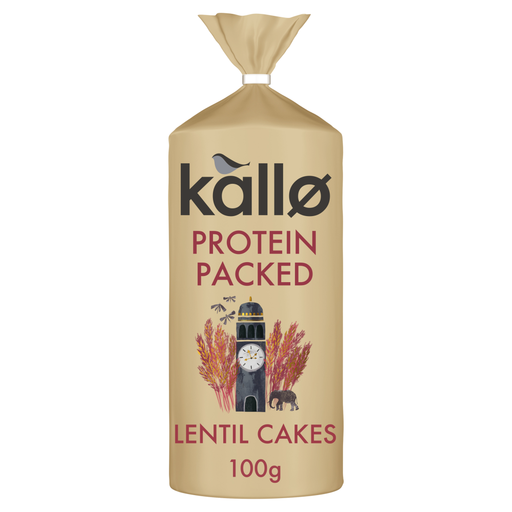
Kallo Protein Packed Lentil Cakes 100g
Lentil cakes offer a crisp-style format rather than a potato crisp. For a child’s snack, compare the protein and nutrition declarations for the intended portion, then check the current age guidance and allergens.
View on Joybuy
 No image available
CJ Bibigo Crispy Seaweed Snack Bulgogi Flavour 5g x 3 Packs
Three individual 5g packs provide a portioned seaweed snack rather than a potato crisp. Compare protein and salt for one pack, and check ingredients, allergens and age guidance before choosing it for a child.
View on Joybuy
Frequently asked questions
How should I compare protein in crisp-style snacks?
Compare the declared protein for the portion you would serve, alongside its energy and the exact product’s label claims. A per-100g figure and a per-bag figure describe different quantities of food, so do not compare them as though they were equivalent.
Do England’s school-food rules apply to a holiday snack eaten at home?
The Department for Education’s school-food guidance addresses food and drink provided in state-funded schools in England, not an ordinary snack eaten at home. If food is being supplied by a school or holiday provider, check the requirements that apply to that setting.
Are HFSS retail rules the same as school-food standards?
No. England’s government guidance describes restrictions on certain HFSS promotions and placement by medium and large food retailers; the Department for Education’s school-food guidance addresses provision in state-funded schools. They concern different activities and should not be treated as one rule for home snacks.
Should protein crisps be an everyday snack for children?
Protein content alone is not a reason to make them the routine choice. NHS guidance favours fruit and vegetables for children’s snacks and suggests no more than two packaged snacks a day; for any packaged option, check age guidance, allergens, portion size and the nutrition label.
Is Applied Nutrition Paprika Protein Chips suitable for a child?
Joybuy’s listing for Applied Nutrition Paprika Protein Chips says it is not suitable for children, so do not select that listed product as a child’s snack. Check the current label and manufacturer information separately for any different product or flavour rather than extending one listing’s wording to a whole range.


