If protein from the snack is your main priority, a formulated protein crisp is a more relevant choice than an ordinary potato crisp: Applied Nutrition and Myprotein declare 15 g and 11 g protein per bag respectively, compared with 1.6 g for a Walkers Ready Salted pack and 1.9 g for a Seabrook Sea Salted bag. Check the portion, salt and ingredients for the exact flavour before choosing; a protein crisp may not have the ingredients or format you expect from a sliced-potato crisp.
Who is this choice for?
Students seeking protein in one snack portion
If you want a savoury snack between lectures that contributes around 10 g protein in one bag, compare the declared portion rather than relying on the word “crisp”. Myprotein declares 11 g per 25 g bag and Applied Nutrition declares 15 g per 50 g bag.
Students who want a familiar crisp
If the sliced-potato format matters more than protein, an ordinary crisp may suit your lunch. Walkers Ready Salted, for example, declares 1.6 g protein per 25 g pack; a formulated protein snack can use different ingredients and have a different format.
Students checking salt or allergens
Compare the exact flavour and pack you intend to eat. Myprotein declares 1.4 g salt per 25 g bag for its Popped Protein Crisps and lists soya alongside precautionary allergen statements; milk is an ingredient in Pipers Lye Cross Cheddar & Onion crisps.
What should you check?
Formulated protein crisps
Choose when: You want the snack itself to contribute protein during a lecture day; Applied Nutrition declares 15 g per 50 g bag and Myprotein declares 11 g per 25 g bag.
Trade-off: These are not necessarily conventional sliced-potato crisps, and their ingredients, salt and allergens differ by product.
Traditional potato crisps
Choose when: You want the familiar potato-crisp format and protein from the crisps is not the deciding factor.
Trade-off: Walkers Ready Salted declares 1.6 g protein per 25 g pack, while Seabrook Sea Salted declares 1.9 g per 31.8 g bag.
| Priority | What to check | Your needs |
|---|
| Protein per portion |
Read protein per bag as well as per 100 g. Compare the amount in the portion you expect to eat, not just the front-of-pack description. |
I want the snack itself to contribute protein between lectures, so the per-bag figure matters more to me than a per-100-g figure. |
| Pack format |
Check the pack size, whether it contains one or several portions, and any storage directions on the current pack. |
A ready-to-eat portion that fits in my bag is easier to use during a short lecture break. |
| Salt |
Compare salt for the amount you will eat. Myprotein declares 1.4 g per 25 g bag of Popped Protein Crisps; a higher protein figure does not answer the salt question. |
If I am comparing flavours or pack sizes, I want to know the salt in my actual portion. |
| Ingredients and allergens |
Read the current ingredient list and allergen statements for the exact flavour. Myprotein lists soya and says its product may contain celery, egg, milk and mustard. |
I need to check whether this particular pack fits my ingredient or allergen requirements, regardless of its protein figure. |
Common buying mistakes
-
Assuming all crisps provide similar protein
Walkers Ready Salted declares 1.6 g protein per 25 g pack and Seabrook Sea Salted 1.9 g per 31.8 g bag; the formulated examples from Myprotein and Applied Nutrition declare 11 g and 15 g per bag.
If protein from the snack is the deciding factor, compare per-bag nutrition and ingredients before choosing between a potato crisp and a formulated alternative.
-
Reading a per-100-g figure as a per-bag figure
KETTLE Chips gives 6.5 g protein per 100 g for Lightly Salted crisps. That figure does not describe the protein in a smaller portion.
Use the declared bag or serving values to compare what you plan to eat during one break.
-
Assuming more protein means less salt or fewer allergens
Myprotein declares 11 g protein and 1.4 g salt per 25 g bag and lists soya and precautionary allergen statements. Pipers’ Lye Cross Cheddar & Onion crisps contain milk ingredients.
Check salt, ingredients and allergen information for the precise product and flavour, not just its protein claim.
Relevant brand examples
These product examples show how portions and ingredients differ; a brand name alone does not establish the nutrition of every flavour.
Applied Nutrition
Its Protein Chips are a formulated crisp-style option for comparing protein by individual bag.
- Applied Nutrition declares 15 g pea protein and 210 kcal per 50 g bag.
- The listed ingredients include dehydrated potato and other plant ingredients; this is not a conventional sliced-potato crisp.
Myprotein
Popped Protein Crisps offer a stated 25 g portion for a lecture-break snack.
- Myprotein declares 11 g protein per 25 g bag.
- The same portion lists 1.4 g salt; the ingredients include soya, with precautionary allergen statements.
Walkers
Ready Salted is a conventional potato-crisp example in a 25 g pack.
- Walkers lists potatoes, vegetable oils and salt, with 0.34 g salt per pack.
- The pack declares 1.6 g protein, so it serves a different priority from the formulated protein examples.
KETTLE Chips
Lightly Salted is a traditional potato crisp for shoppers choosing that format rather than protein per bag.
- KETTLE Chips describes this product as gluten-free and suitable for vegans and vegetarians.
- Its stated 6.5 g protein is per 100 g, not per small snack portion.
Seabrook
Sea Salted provides a conventional crisp example with figures for a 31.8 g bag.
- Seabrook lists potatoes, vegetable oils and sea salt, and declares 0.4 g salt per bag.
- It declares 1.9 g protein per bag; check another option if protein from the snack is your priority.
Pipers
Lye Cross Cheddar & Onion is a flavoured conventional crisp example.
- Pipers supplies per-100-g nutrition figures for comparing like amounts of this flavour.
- Its 6.2 g protein and 1.6 g salt figures are per 100 g, and its ingredients include milk.
Tyrrells
Lightly Sea Salted is a traditional potato-crisp option offered in different pack sizes.
- Tyrrells lists potatoes, sunflower oil and sea salt and identifies 40 g, 150 g and 600 g packs.
- Check the nutrition panel for the pack you intend to eat before judging its protein contribution.
Joybuy product options
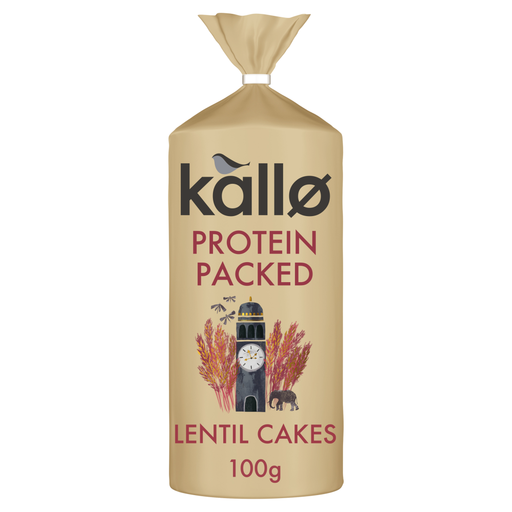
This lentil-cake option is for a portable, crisp-style lecture-lunch snack, rather than a conventional potato crisp. Check its current pack label to compare the protein in the portion you would eat.
 No image available
Kallo Protein Packed Lentil Cakes 100g
For a lecture lunch, these lentil cakes offer a portable savoury snack rather than a sliced-potato crisp. The pack is 100 g; compare the current label’s protein and salt figures for the portion you intend to eat.
View on Joybuy
Questions about protein crisps
Will an ordinary potato crisp give me as much protein as a formulated protein crisp?
Not in these pack examples: Walkers Ready Salted declares 1.6 g protein per 25 g pack and Seabrook Sea Salted 1.9 g per 31.8 g bag, while Myprotein and Applied Nutrition declare 11 g and 15 g per bag for their formulated products. Compare the particular packs you are considering.
Is a protein crisp just a potato crisp with extra protein?
Not necessarily. Applied Nutrition lists dehydrated potato and pea protein among the ingredients in its Protein Chips, while Myprotein lists soya in its Popped Protein Crisps. Read the ingredients if the conventional sliced-potato format matters to you.
How do I compare salt in different-sized bags?
Compare the salt in the portion you would actually eat. Myprotein declares 1.4 g per 25 g bag of Popped Protein Crisps; a per-100-g figure or protein claim alone does not tell you the salt in your snack portion.
What should I check if I need to avoid an allergen?
Read the ingredient list and precautionary allergen statements on the current pack of the exact flavour. Myprotein lists soya and says its Popped Protein Crisps may contain celery, egg, milk and mustard; Pipers lists milk ingredients in its Lye Cross Cheddar & Onion crisps.


