What matters when choosing?
For a hallway power cut, decide where the light will stand, how long it must remain useful and whether its battery also needs to serve another device.
| Concern | What to check | Who this matters to |
|---|
| Usable hallway light |
Look for broad area lighting, an adjustable low setting and a placement option that will stand securely where you need it. |
I need both hands free while finding my way along a dark hallway; around 45% of consumers put controllable route lighting first. |
| Runtime and readiness |
Compare stated runtime at each relevant brightness setting, and choose a storage spot you can reach in the dark. |
If the interruption lasts, I want the route lit without using up the charge early; for around 36% of consumers, sustained light and readiness come first. |
| Backup charging |
If you need it, check for USB output or a manual charging option and how the exact model is charged. |
When I also need a phone, I would accept less battery power for lighting in exchange for device backup; around 19% of consumers prioritise that or an alternative way to charge the lantern. |
Joybuy product choices
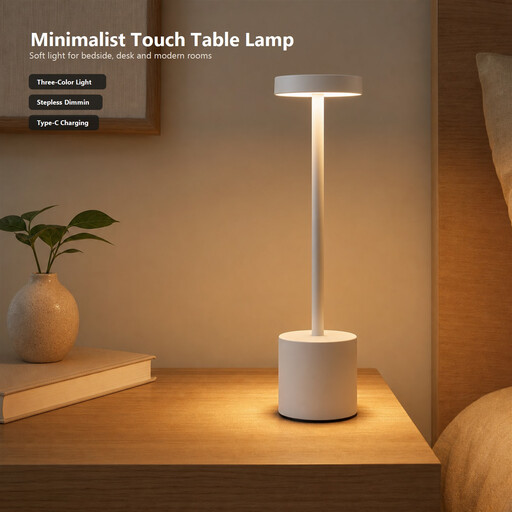
This rechargeable table lamp is a tabletop-light option for a hallway power cut, rather than a dedicated lantern. Check that you have a suitable, stable surface and that its light reaches the route you need to see.
 No image available
Rechargeable touch LED table lamp, 1,800 mAh, white
Consider this tabletop light if you have a suitable surface near the hallway; check its stability and whether its light covers the route before relying on it during a cut.
The product name specifies a 1,800 mAh rechargeable battery, touch control, dimming and three colour-temperature settings. It lists iron and acrylic materials.
View on Joybuy
Common questions
Should I use a rechargeable lantern instead of candles?
Use battery-powered light rather than relying on candles for a power cut: the UK Government Prepare campaign says torches are safer than candles. A rechargeable lantern can provide hands-free area light, but keep a separate battery or wind-up torch in case the lantern has not been charged.
How bright should a hallway lantern be?
Choose light distribution and a setting you can use for the required time, rather than buying on the maximum lumen figure alone. Check where the lantern will stand, whether it illuminates the route and its stated runtime at a lower setting.
How should I charge and store a rechargeable lantern?
Follow the manufacturer’s charging instructions and keep the lantern somewhere you can reach in the dark. London Fire Brigade advises using genuine charging products from a trusted supplier and taking care with damaged or swelling batteries; check that the lantern still operates when you put it back in storage.
Can a lantern with USB output replace a power bank?
Treat USB output as limited backup unless the exact lantern’s device-charging capability meets your needs. Charging a phone uses energy that would otherwise be available for lighting; Goal Zero’s Lighthouse 600, for instance, uses its internal battery for both functions.


