Choose a reduced-fat crisp if you want a portioned savoury snack and its fat, carbohydrate, salt and allergen information fits your plans; the reduced-fat claim does not establish its value as ride fuel. A Walkers Oven Baked Sea Salt 22 g pack contains 16 g carbohydrate, while a 2015 sports-nutrition review published in Nederlands Tijdschrift voor Geneeskunde cites 30–60 g carbohydrate per hour for exercise lasting 1–2.5 hours. For a ride where you are planning carbohydrate intake, calculate what the pack contributes and consider another measurable food or drink if that contribution is too small.
Who is this choice for?
Cyclists seeking a lower-fat savoury snack
If reducing fat matters to your snack choice, compare both fat per 100 g and fat in the pack you will eat. Treat carbohydrate as a separate figure rather than assuming a reduced-fat claim says anything about fuelling.
Riders planning food for a longer ride
If you plan carbohydrate intake during a ride, work from the amount in an individual pack. A small crisp pack may contribute to that plan without supplying the whole amount you intended for an hour.
Shoppers checking salt or allergens
Check the exact flavour and pack when salt, ingredients or precautionary allergen statements matter to you. A baked or reduced-fat label does not answer those separate questions.
What should you check before choosing?
Decide whether the crisps are a snack or part of a planned ride intake, then compare like-for-like nutrition figures before calculating what you would eat.
| Priority |
What to check |
Your needs |
| Carbohydrate for the ride |
Read carbohydrate per pack or serving, not just per 100 g. Compare the amount you would eat with your planned intake for the ride. |
For a longer ride, I need to know whether a crisp pack makes a small contribution or covers the amount I planned. Walkers states that its Oven Baked Sea Salt 22 g pack contains 16 g carbohydrate; a 2015 Nederlands Tijdschrift voor Geneeskunde review cites 30–60 g per hour for exercise lasting 1–2.5 hours. |
| Fat and portion size |
Compare fat per 100 g across recipes, then check fat in the pack or serving. Read the stated comparison behind any reduced-fat claim. |
I may prefer a lower-fat savoury snack, but I still want to know what my portion contains. Walkers labels Oven Baked Sea Salt as 50% less fat than regular potato crisps and lists 2.8 g fat per 22 g pack; Tyrrells labels its Sour Cream & Onion Lentil Crisps as 30% less fat than standard potato crisps on average and lists 5.7 g per 30 g serving. |
| Reading food labels |
Use the nutrition table for the figures you need; check traffic-light labelling where it appears rather than relying on a product name. |
I want to check the figures behind a front-of-pack description. In the Food Standards Agency and Ipsos Northern Ireland’s 2024 survey of 611 adults interviewed between September and November, approximately 49% said they actively use traffic-light labelling when shopping for food; that figure is not specific to cyclists or crisp buyers. |
| Salt and allergens |
Check salt for the amount you will eat, then read the ingredients and allergen statements on the exact flavour and pack. |
Salt or an allergen may matter more to my choice than fat. A no-salt description is not a reduced-fat claim: Tyrrells lists 0.02 g salt and 8.9 g fat per 30 g serving for Naked (no salt). |
| Format and portability |
Check whether the pack size and food format work for when you intend to eat it. Calculate nutrition from the portion you would actually carry and consume. |
A small pack suits my snack plans only if its labelled portion is useful to me; a lentil cake, vegetable crisp and potato crisp need not be interchangeable in format or serving size. |
What is easy to overlook?
-
Treating reduced fat as a complete fuelling plan
Reduced fat describes a comparison in fat content, not how much carbohydrate one pack supplies. Walkers lists 16 g carbohydrate in a 22 g Oven Baked Sea Salt pack; the 2015 Nederlands Tijdschrift voor Geneeskunde review cites 30–60 g carbohydrate per hour for exercise lasting 1–2.5 hours.
Calculate carbohydrate from the whole pack against your ride plan, and choose another measurable food or drink if the pack does not provide the amount you intended.
-
Reading lightly salted or dietary-suitability wording as a fat claim
Salt, fat and dietary suitability describe different properties. KETTLE Chips lists 29.5 g fat per 100 g for Lightly Salted; Seabrook lists 30.4 g per 100 g for Sea Salted.
Check fat, carbohydrate and salt separately, then assess any dietary claim against the specific requirement it addresses.
-
Comparing different portions as though they were equal
A 22 g pack and a 30 g serving do not provide a like-for-like measure of recipe differences. Walkers and Tyrrells state nutrition for different serving sizes on their named reduced-fat products.
Compare per 100 g first, then use the pack or serving figure to calculate what you expect to consume.
-
Overlooking flavour-specific allergen statements
A reduced-fat claim does not settle allergen suitability. Walkers Oven Baked Sea Salt carries precautionary allergen information, while Tyrrells Sour Cream & Onion Lentil Crisps contain milk ingredients.
Read the ingredients and allergen panel on the exact flavour and pack, including individual packs in a variety multipack.
Which brands offer useful comparisons?
Walkers
Oven Baked Sea Salt is a baked potato-crisp example with a manufacturer-stated reduction in fat.
- Walkers labels it 50% less fat than regular potato crisps and lists 2.8 g fat and 16 g carbohydrate per 22 g pack.
- Those figures describe Sea Salt, not every Oven Baked flavour or variety-pack inner bag. Check the exact pack’s nutrition and allergen information.
Tyrrells
Its lentil crisps and no-salt potato crisps answer different shopping needs.
- Tyrrells describes Sour Cream & Onion Lentil Crisps as 30% less fat than standard potato crisps on average; a 30 g serving lists 5.7 g fat and 17 g carbohydrate.
- Naked (no salt) is a separate salt-focused option: Tyrrells lists 0.02 g salt and 8.9 g fat per 30 g serving. The Sour Cream & Onion lentil flavour contains milk ingredients.
KETTLE Chips
Lightly Salted provides a standard-crisp comparison when a name might be mistaken for a reduced-fat claim.
- Kettle Foods Ltd lists 29.5 g fat, 53.7 g carbohydrate and 0.7 g salt per 100 g for Lightly Salted.
- “Lightly Salted” describes salt positioning, not a reduction in fat.
Seabrook
Sea Salted is another standard-crisp nutrition comparison, separate from Seabrook’s range-level gluten-free information.
- Seabrook lists 30.4 g fat, 52.6 g carbohydrate and 1.3 g salt per 100 g for Sea Salted.
- Seabrook states that its gluten-free crisp and snack range is Coeliac UK accredited; check the exact product and flavour rather than treating that statement as a fat claim.
McCoy's
Salted Flavour supplies a standard ridged-crisp comparison for shoppers checking fat and carbohydrate.
- McCoy's lists 32 g fat, 53 g carbohydrate and 1.3 g salt per 100 g for Salted Flavour.
- Those figures describe this flavour; read its own allergen statement before choosing it.
Joybuy options to compare
These options include a baked-crisp variety pack, vegetable and lentil snacks, and other crisp formats. Compare each product’s own pack label for fat, carbohydrate, salt and allergens before deciding whether it suits a snack or your ride plan.
 No image available
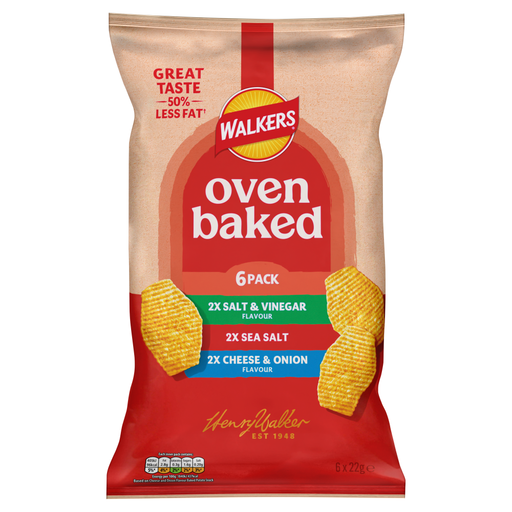
Walkers Oven Baked Variety Pack Crisps 6 x 22g
Individual packs may be convenient for a portioned savoury snack. Check nutrition, ingredients and allergens for the particular flavour you would eat; do not apply the separate Sea Salt product’s figures to every pack in this variety pack.
View on Joybuy
 No image available
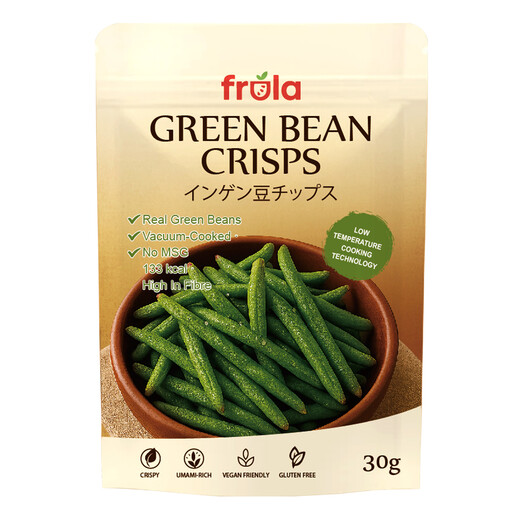
Frula GreenBean Vegetable Crisps 30g
For this vegetable-crisp option, use the 30 g pack’s nutrition panel to calculate carbohydrate for a ride or fat for a snack. Check its ingredients and allergen statement separately.
View on Joybuy
 No image available
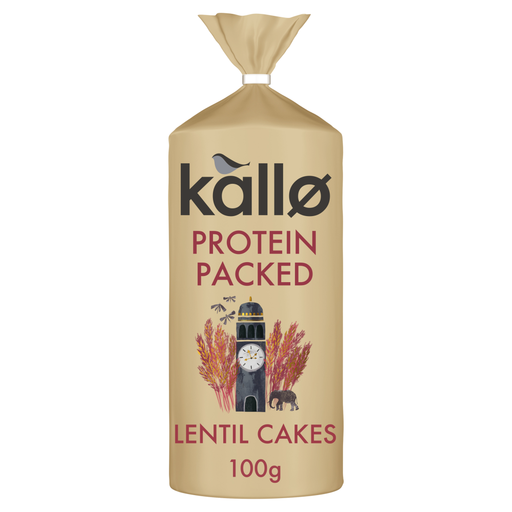
Kallo Protein Packed Lentil Cakes 100g
These are lentil cakes rather than conventional crisps. If you would take individual cakes on a ride, check carbohydrate per cake and calculate the amount for the number you intend to eat.
View on Joybuy
 No image available
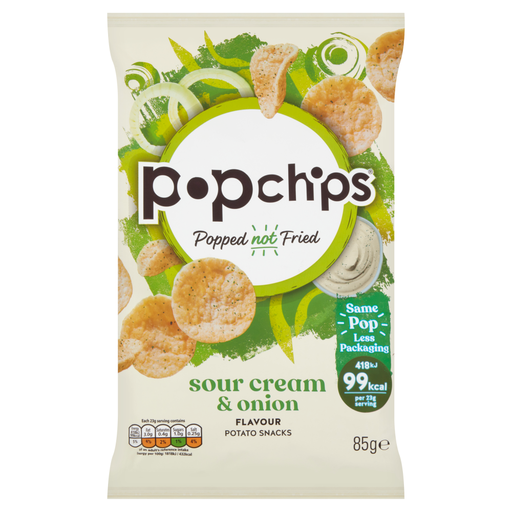
PopChips Sour Cream & Onion 85g
For this 85 g bag, calculate nutrition from the portion you expect to eat rather than assuming you will consume the whole bag. Check fat, carbohydrate, salt and the allergen panel for this flavour.
View on Joybuy
 No image available
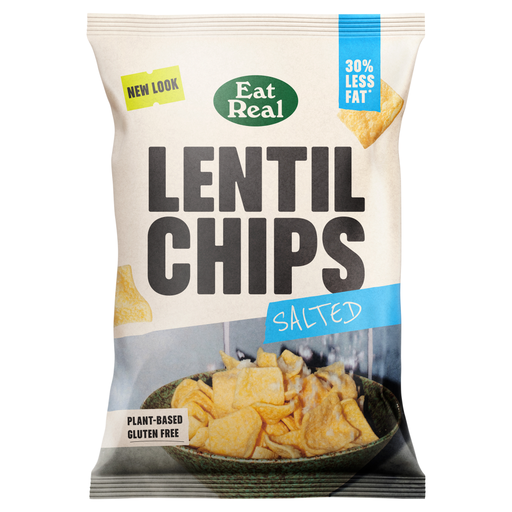
Eat Real Sea Salt Lentil Chips 95g
If lentil chips appeal as a savoury snack, compare their fat and salt per 100 g with other options, then calculate carbohydrate for your intended portion. Read the allergen statement for this flavour.
View on Joybuy
Questions about crisps and cycling
Does reduced fat mean a crisp will cover my ride-fuelling plan?
No. A reduced-fat claim concerns fat, not the carbohydrate in the pack. Walkers lists 16 g carbohydrate in a 22 g Oven Baked Sea Salt pack; a 2015 Nederlands Tijdschrift voor Geneeskunde review cites 30–60 g carbohydrate per hour for exercise lasting 1–2.5 hours. Calculate the pack’s contribution separately from its fat claim.
Should I compare crisps per 100 g or per pack?
Use per 100 g to compare different recipes on the same basis, then use per-pack or per-serving figures to work out what you would eat. Walkers lists 2.8 g fat per 22 g Oven Baked Sea Salt pack, whereas Kettle Foods Ltd lists 29.5 g fat per 100 g for KETTLE Lightly Salted; those portions are not directly comparable.
Does lightly salted mean lower fat?
No. Salt and fat are separate nutrition figures. Kettle Foods Ltd lists 29.5 g fat per 100 g for KETTLE Lightly Salted, so check the fat figure rather than interpreting “lightly salted” as a reduced-fat claim.
Do allergens still matter with reduced-fat crisps?
Yes. A fat comparison does not establish allergen suitability: Walkers Oven Baked Sea Salt carries precautionary allergen information, and Tyrrells Sour Cream & Onion Lentil Crisps contain milk ingredients. Check the ingredients and allergen statements on the exact flavour and pack you intend to buy.


