Hosts looking to reduce fat
If reduced fat is the reason for changing the crisp selection, look for a declared comparison and read the nutrition panel. A baked or lentil ingredient alone does not establish how its fat content compares.


For a garden party where reducing fat is the main aim, choose a crisp with a stated comparison and check its fat per 100g: Walkers says Oven Baked Sea Salt has 50% less fat than regular potato crisps, while Tyrrells compares its lentil crisps with an average of standard potato crisps. Neither claim settles the salt, allergen or serving-format decision, so check those separately on the exact packs you plan to serve.
If reduced fat is the reason for changing the crisp selection, look for a declared comparison and read the nutrition panel. A baked or lentil ingredient alone does not establish how its fat content compares.
Check vegetarian, vegan, gluten-free and allergen information for each flavour before serving crisps in communal bowls. Keep the packs available so guests can read the declarations.
Individual packs make it straightforward to offer labelled portions; sharing bags suit an open bowl. Choose the format that works for serving your guests, then assess its nutrition separately.
Start with the reason for choosing a different crisp, then compare nutrition on the same per-100g basis before deciding how to serve it.
| Priority | What to check | Your needs |
|---|---|---|
| Fat reduction | Read fat per 100g and the basis of any reduced-fat claim. Walkers UK lists 13g fat per 100g for Oven Baked Sea Salt and compares it with regular potato crisps; Tyrrells compares its lentil crisps with an average of standard potato crisps reviewed in March 2021. | I want a stated fat reduction, not a choice based on whether a crisp looks or sounds lighter. |
| Salt | Compare salt per 100g separately from fat. Walkers UK lists 0.85g salt per 100g for Oven Baked Sea Salt; a lower-salt claim on another range does not make it reduced fat. | If salt matters for the food I am serving, I need to check its figure on the chosen flavour too. |
| Ingredients and allergens | Read the exact flavour’s ingredients, dietary declarations and may-contain warnings. Seabrook labels its Sea Salted crisps gluten-free and suitable for vegetarians and vegans; that declaration belongs to that product. | Guests need to be able to identify what is in each bowl, especially when several flavours are on the table. |
| Serving format | Check the pack size and whether it contains individual bags or a sharing portion. Keep the relevant packaging beside an open bowl. | I may prefer labelled individual bags, or a shared bowl that can be topped up during the party. |
Tyrrells’ reviewed lentil flavours list 2.0g or 2.1g salt per 100g despite the range’s reduced-fat comparison.
Put fat and salt figures side by side on a per-100g basis, then check the portion in the pack you intend to serve.
Walkers UK says Lightly Salted has 45% less salt than the average salt value of regular potato crisps, but lists 31g fat per 100g. Its Oven Baked Sea Salt is a different product, listed at 13g fat per 100g.
Choose by the claim and nutrition panel of the exact range, rather than transferring a claim from one Walkers product to another.
Flavours can have different ingredients and may-contain warnings. A declaration for one crisp does not establish the status of another flavour.
Check every chosen pack and retain its label when transferring crisps into a bowl.
The reviewed KETTLE Lightly Salted, Seabrook Sea Salted and McCoy’s Salted products list 29.5g, 30.4g and 32g fat per 100g respectively. Their flavour names or cooking styles are not reduced-fat claims.
If reducing fat is the aim, use a stated comparison and the nutrition table rather than an impression of the product.
These brand examples illustrate different label checks; a claim or declaration for one range should not be carried across to every flavour.
Its Oven Baked Sea Salt and Lightly Salted ranges address different buying priorities.
Its lentil crisps offer a non-potato option alongside the brand’s potato crisps.
A hand-cooked potato-crisp range with sharing formats and some products labelled for particular dietary needs.
Its Sea Salted product provides an example of clearly labelled dietary suitability.
A ridged potato-crisp option for guests who prefer that format.
A conventional crisp range with brand-wide vegetarian and gluten-free statements.
These options include Walkers Oven Baked multipacks for serving individual bags, plus other crisp-style snacks and lentil cakes. Check each product’s own label before treating it as reduced fat or suitable for a guest’s dietary needs.
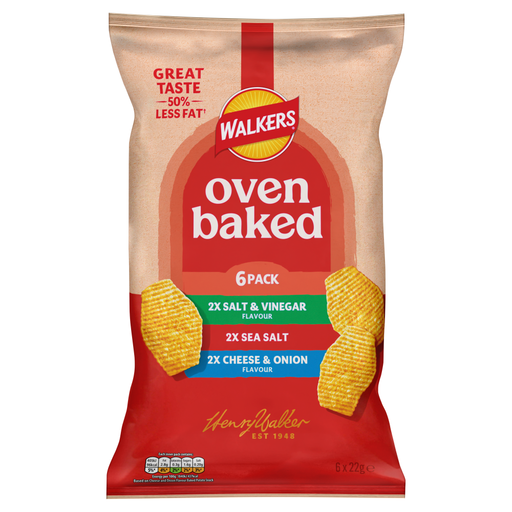 No image available
Six 22g bags offer individual portions for a garden party. Check the fat, salt, ingredients and allergen declaration for each flavour in the variety pack.
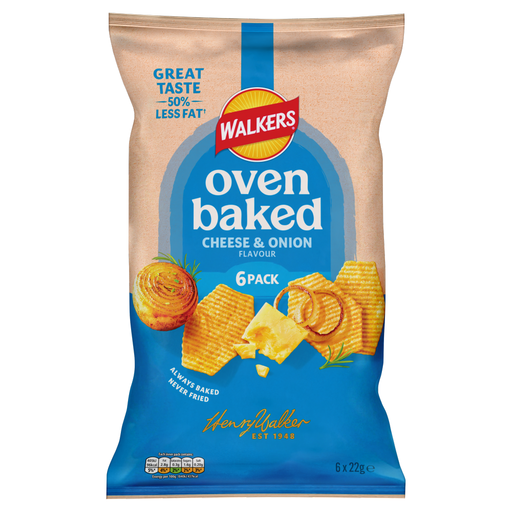 No image available
This single-flavour multipack contains six 22g bags. Check its own nutrition panel and milk and other allergen declarations before serving it to guests.
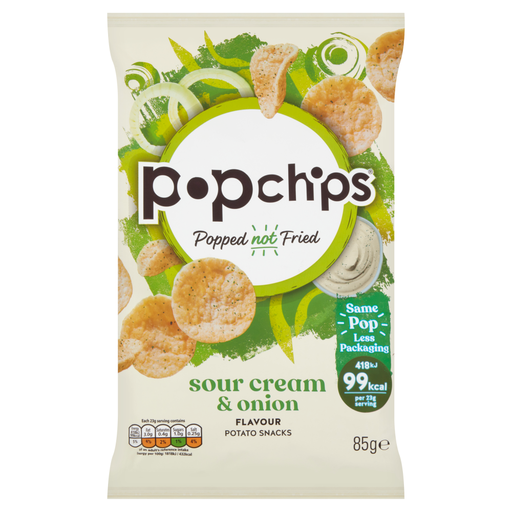 No image available
The 85g pack is a different serving format from the individual Walkers bags. Compare its fat and salt per 100g on the pack, and check the allergen declaration before putting it into a shared bowl.
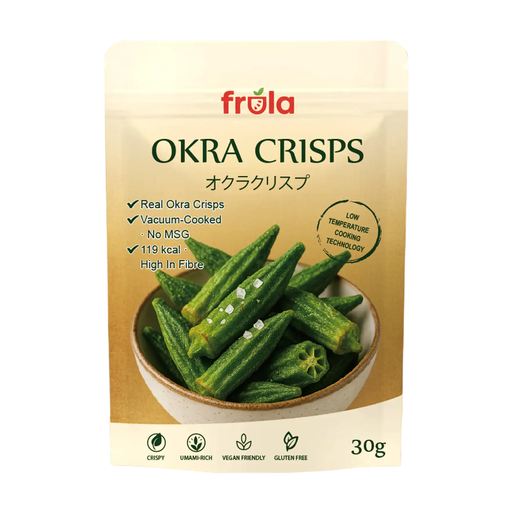 No image available
Okra crisps provide a vegetable-based alternative to the potato-crisp packs. Check the pack’s weight, fat and salt per 100g, and ingredient information when planning portions for guests.
 No image available
These are lentil cakes rather than lentil crisps, so consider them a different snack format. The pack is 100g; check its nutrition and allergen declarations rather than applying Tyrrells’ lentil-crisp comparison to it.
Not necessarily. Walkers UK lists 0.85g salt per 100g for Oven Baked Sea Salt, while the reviewed Tyrrells lentil flavours list 2.0g or 2.1g per 100g. Compare salt on the exact pack independently of its fat claim.
Choose according to the format guests want and the label figures that matter to you. Walkers UK lists 13g fat per 100g for Oven Baked Sea Salt; Tyrrells lists 19–20g per 100g for the reviewed lentil flavours and bases its 30% less-fat claim on an average of standard potato crisps reviewed in March 2021. Check salt and allergens whichever you choose.
The Department for Education’s school-food guidance concerns food and drink provided in state-funded schools in England, not an ordinary private garden party. It does not establish an HFSS classification for an individual crisp product; use the chosen pack’s information for the buying decision.
Keep each flavour’s packaging available and identify which bowl it belongs to. Check both ingredients and may-contain statements on the exact pack: a dietary declaration for one flavour does not cover every crisp in a brand’s range.