Crisp snackers looking to reduce fat
If you want a familiar crisp for a late snack, compare fat per 100g for different products, then check the amount in the pack you expect to eat. A word such as “baked” is not a substitute for the nutrition panel.


If reducing fat is your main reason for choosing a midnight snack, compare crisps per 100g before checking how much is in the pack you intend to eat. Walkers lists 13g fat per 100g for Oven Baked Sea Salt, against Tyrrells’ 20g per 100g for Lentil Crisps Sour Cream & Onion; neither figure makes the product low fat under the NHS guide of 3g or less per 100g. Check salt and allergens separately, because a reduced-fat claim does not answer either question.
If you want a familiar crisp for a late snack, compare fat per 100g for different products, then check the amount in the pack you expect to eat. A word such as “baked” is not a substitute for the nutrition panel.
A reduced-fat claim says nothing by itself about salt. Check the salt figure for your intended portion alongside the fat figure, particularly when comparing different pack sizes.
Choose by the exact flavour and pack, not the brand name alone. Read its ingredients, allergen warnings and dietary statements before deciding whether it suits your requirements.
Start with fat per 100g to compare products, then use the pack or serving figures to judge the portion you would actually eat.
| Priority | What to check | Your needs |
|---|---|---|
| Fat | Compare fat per 100g, then fat in the intended portion. Walkers lists 13g per 100g for Oven Baked Sea Salt; Tyrrells lists 20g for Lentil Crisps Sour Cream & Onion. The NHS low-fat guide for solid foods is 3g or less per 100g. | I want to reduce fat without mistaking “reduced fat” for “low fat”. |
| Salt | Compare salt per 100g and per portion. Tyrrells lists 2.0g per 100g for Lentil Crisps Sour Cream & Onion; Walkers lists 0.19g in a 22g Oven Baked Sea Salt pack. | Salt matters to me as well as fat, so I need to check both figures for the snack I would eat. |
| Portion | Check the net pack weight and calories per pack or stated serving. Walkers lists 96 kcal for its 22g Oven Baked Sea Salt pack. The NHS notes that a manufacturer’s serving may differ from the amount someone eats. | A single pack helps me see the quantity at a glance; with a larger bag, I would decide on a portion before eating. |
| Suitability | Read the exact flavour’s ingredients, allergen declaration and dietary statements. KETTLE Chips describes Lightly Salted as gluten-free and suitable for vegans and vegetarians; that does not establish suitability for other flavours. | I need the particular pack to meet my dietary requirements, regardless of its fat content. |
A reduced-fat claim compares a product with another product or reference. Walkers Oven Baked Sea Salt lists 13g fat per 100g, above the NHS low-fat guide of 3g or less per 100g for solid foods.
Compare the per-100g fat figures rather than treating the front-of-pack wording as the whole answer.
Tyrrells Lentil Crisps Sour Cream & Onion list 2.0g salt per 100g despite the brand’s reduced-fat comparison. Fat and salt are separate label checks.
Look at both figures for the portion you plan to eat, especially if salt is part of your buying decision.
The amount eaten from a sharing bag may differ from its stated serving. NHS food-label guidance notes that a manufacturer’s idea of a portion may not match yours.
Use the pack weight to work out whether the stated serving reflects your snack, or portion the bag before eating.
These examples refer to particular products or stated ranges, not every flavour a brand makes.
Oven Baked Sea Salt provides a 22g pack for comparing a baked potato crisp with other pack formats.
Lentil Crisps offer a different base ingredient from potato crisps.
Lightly Salted is a hand-cooked potato crisp to compare with reduced-fat products.
Sea Salted is another potato-crisp reference for comparing nutrition panels.
Original Salted is a traditional ridged potato crisp rather than a reduced-fat example.
REAL Hand Cooked Crisps describes its range as vegetarian and gluten-free.
These options include baked potato crisps, other crisp formats and lentil cakes. They differ in pack size and format, so check the nutrition and allergen information for the exact product you choose.
 No image available
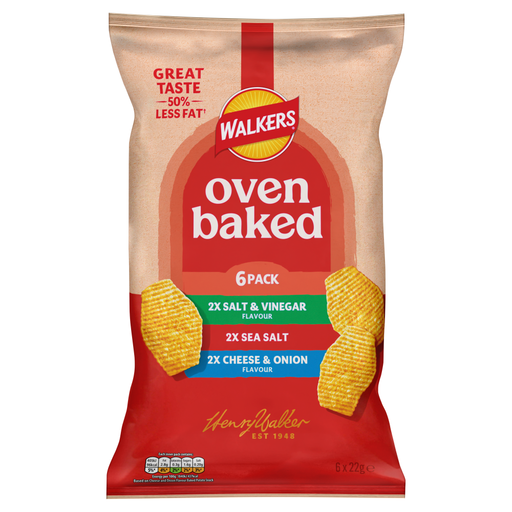
The six individual 22g packs provide a defined pack size for a late snack. As a variety pack, check each flavour’s nutrition panel and allergen declaration separately.
 No image available
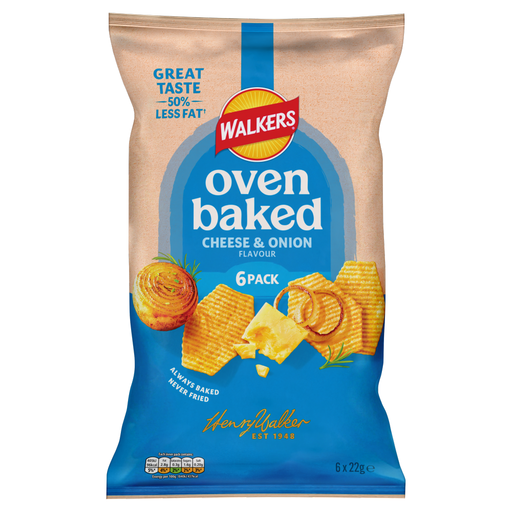
The 6 x 22g format lets you compare the nutrition for an individual pack with the amount you intend to eat. Check this flavour’s own fat, salt and allergen information rather than applying figures from Oven Baked Sea Salt.
 No image available
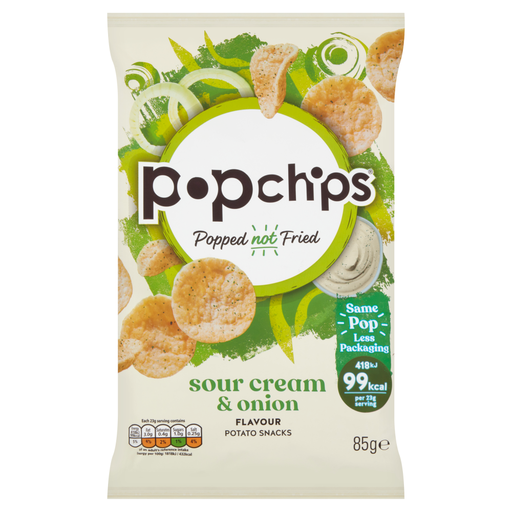
This 85g pack is an option if you prefer to portion a larger bag for a late snack. Use its own per-100g and serving figures to compare fat and salt with smaller packs.
 No image available
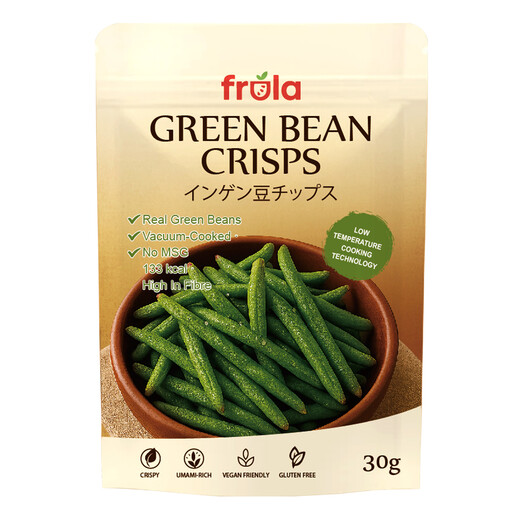
The 30g green bean crisp pack offers a different ingredient base from potato crisps. Check its own fat, salt, sugar and allergen label before comparing it with a reduced-fat potato crisp.
 No image available
These are lentil cakes rather than potato crisps, so choose them if that different format appeals. Compare the label per 100g and the quantity you would eat; check the pack for allergen information.
No. A reduced-fat claim is a comparison, while the NHS guide describes solid foods with 3g fat or less per 100g as low fat. Walkers Oven Baked Sea Salt lists 13g per 100g, and Tyrrells Lentil Crisps Sour Cream & Onion list 20g per 100g; compare the figure for the exact product you are considering.
Use both: per 100g helps compare products of different sizes, while the pack or serving figure shows the amount in the portion you plan to eat. The NHS cautions that a manufacturer’s stated portion may differ from yours, which matters particularly with a larger bag.
Not necessarily; check salt separately for each product and portion. Tyrrells lists 2.0g salt per 100g for Lentil Crisps Sour Cream & Onion, while Walkers lists 0.19g in a 22g Oven Baked Sea Salt pack. Those are different portion measures, so use the per-100g figures for a like-for-like product comparison.