Snackers balancing fat and protein
If you want crisps occasionally while paying attention to protein, decide whether your priority is a lower-fat crisp or more protein in the crisp serving. Neither choice needs to be your main protein food.


Choose Walkers Oven Baked Cheese & Onion if reducing fat in a potato crisp matters more to you than the protein it provides: Walkers states it has 50% less fat than regular potato crisps, but each 22g pack contains 1.3g protein. Tyrrells Lentil Crisps Sour Cream & Onion provides 4.2g protein per 30g serving, alongside 5.7g fat; Tyrrells states its lentil crisps have 30% less fat than standard potato crisps on average. If the snack needs to make a substantial contribution to your protein intake, choose a protein-rich food alongside or instead of the crisps, in line with Cambridge University Hospitals NHS Foundation Trust’s high-protein diet guidance.
If you want crisps occasionally while paying attention to protein, decide whether your priority is a lower-fat crisp or more protein in the crisp serving. Neither choice needs to be your main protein food.
Individual bags make the labelled portion straightforward to identify. Walkers lists 96kcal, 2.8g fat and 1.3g protein for each 22g Oven Baked Cheese & Onion pack.
Check the exact flavour as well as its nutrition panel. The researched Walkers Cheese & Onion and Tyrrells Sour Cream & Onion products contain milk and carry additional may-contain statements.
Start with the fat and protein figures for the amount you expect to eat, then check the rest of the label for that exact flavour.
| Priority | What to check | Your needs |
|---|---|---|
| Fat comparison | Read what the reduced-fat claim compares with. Compare fat per 100g as well as per pack: Walkers lists 13g per 100g for Oven Baked Cheese & Onion, while Tyrrells lists 19g per 100g for Lentil Sour Cream & Onion. | I want a crisp with a stated fat reduction, rather than assuming that baked, lentil or hand-cooked means lower fat. |
| Protein per portion | Check protein in the labelled serving and how much you expect to eat. Walkers lists 1.3g per 22g pack; Tyrrells lists 4.2g per 30g serving. The portions are different sizes. | If the snack needs to contribute meaningfully to my protein intake, I’ll consider a protein-rich food alongside or instead of crisps. |
| Portion and full label | Check pack size, calories and salt per serving, then use per-100g values for a like-for-like comparison. Walkers lists 96kcal and 0.20g salt per 22g pack; Tyrrells lists 139kcal and 0.23g salt per 30g serving. | A smaller bag helps me see how much I’m eating; a sharing bag calls for a closer look at the portion I’ll serve. |
| Ingredients and allergens | Read the ingredient list and allergen declaration on the exact flavour and pack. The researched Walkers and Tyrrells flavours both contain milk and have may-contain statements. | I need to check suitability for my dietary requirements rather than relying on words such as “lentil” or “baked”. |
A fat-reduction claim compares a product with another type of crisp; it does not describe how much protein a serving contributes. Walkers Oven Baked Cheese & Onion contains 1.3g protein per 22g pack, and Tyrrells Lentil Sour Cream & Onion contains 4.2g per 30g serving.
Read the protein figure for the portion you plan to eat. If protein is the point of the snack, consider a protein-rich food alongside or instead of the crisps.
Walkers’ 50% less-fat statement and Tyrrells’ 30% less-fat statement refer to their respective comparisons with regular or standard potato crisps. Those percentages do not tell you the amount of fat or protein in differently sized servings.
Compare the declared fat and protein per 100g, then check the figures for the portion you will actually eat.
The researched Tyrrells lentil flavour contains milk and may contain soya and gluten. The researched Walkers baked flavour also contains milk and carries several may-contain statements.
Read the current ingredient and allergen declaration for the exact flavour before buying or eating it.
The manufacturer declarations for the researched KETTLE Chips, Seabrook, McCoy’s and REAL products list 5.6g–6.6g protein per 100g, alongside 29.5g–32g fat per 100g. A protein figure alone therefore does not establish that one of these products fits a reduced-fat purchase.
When both considerations matter, compare fat and protein on the same per-100g basis, then decide whether a separate protein food would better serve the snack’s purpose.
These figures describe the named products and flavours, not every crisp made by each brand.
Oven Baked Cheese & Onion is a potato-crisp option sold in 22g packs.
Lentil Crisps Sour Cream & Onion offers a different crisp format with a stated fat comparison.
Lightly Salted provides a standard potato-crisp comparison when reading per-100g nutrition.
Sea Salted is a crinkle-cut potato crisp to compare with reduced-fat products, rather than an interchangeable alternative.
Original Salted is a ridge-cut standard crisp for checking the fat–protein trade-off.
Sea Salt is another standard crisp to assess using its declared nutrition, not its cooking description alone.
These options include a reduced-fat potato crisp and other lentil-cake, lentil-chip and cracker-style snacks to consider when weighing crisp format against your protein and fat priorities. Check each exact pack’s nutrition and ingredients before deciding.
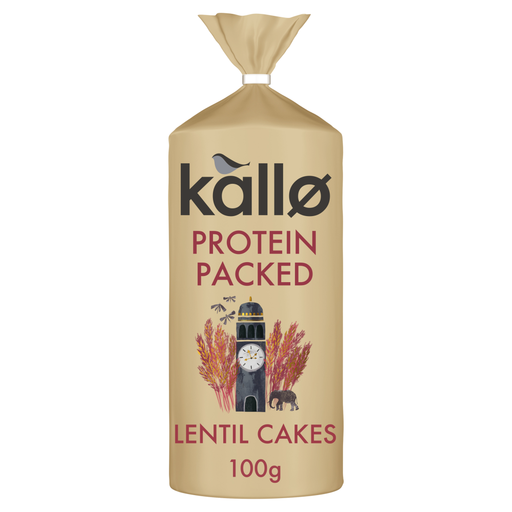 No image available
Consider this lentil-cake format if you are open to a snack other than potato crisps. The pack is 100g; check its nutrition panel for the protein and fat in the portion you intend to eat.
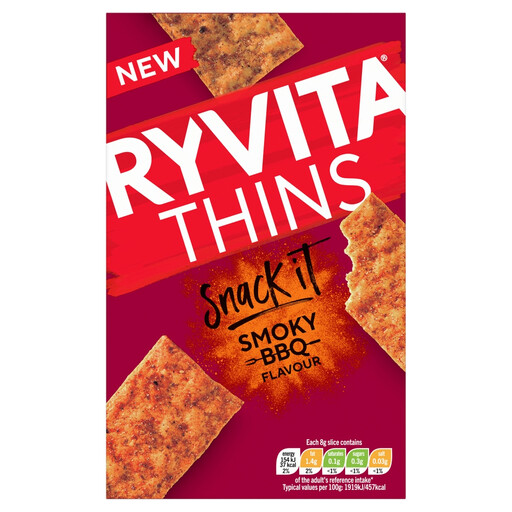 No image available
This is a cracker-style option rather than a potato crisp. With a 125g pack, compare nutrition for the amount you plan to serve and check the ingredients if you avoid particular cereals.
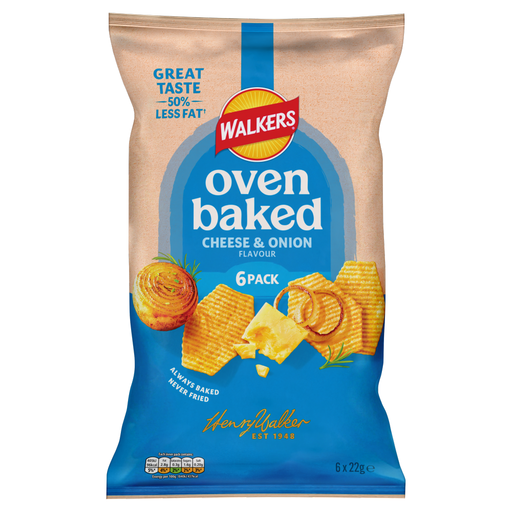 No image available
For a pre-portioned potato crisp when reducing fat is the priority: Walkers states 50% less fat than regular potato crisps. Its declaration lists 2.8g fat and 1.3g protein per 22g pack. This flavour contains milk; check the pack’s may-contain statement.
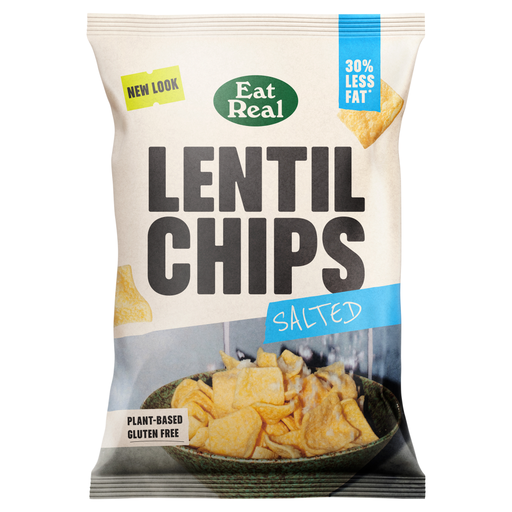 No image available
If you want a lentil-chip format, compare its declared fat and protein per 100g with other crisps rather than assuming the ingredient determines either figure. The 95g pack also warrants a check of your intended serving size.
 No image available
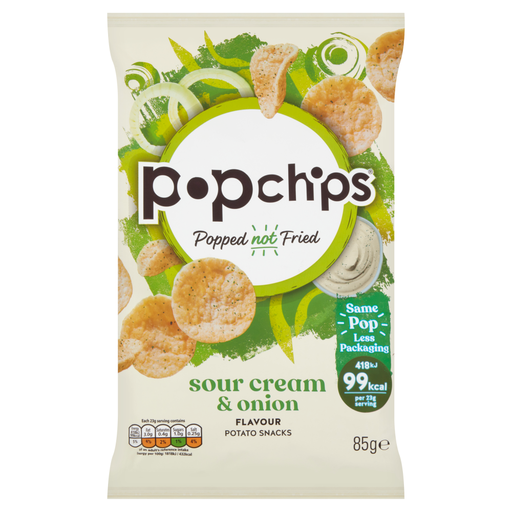
For another crisp-style option, read the 85g pack’s fat and protein declarations before comparing it with a product carrying a stated reduced-fat claim. Check the exact flavour’s ingredients and the portion you intend to serve.
No. A reduced-fat comparison says nothing by itself about protein in a serving. Walkers declares 1.3g protein per 22g Oven Baked Cheese & Onion pack, while Tyrrells declares 4.2g per 30g Lentil Sour Cream & Onion serving. Check those figures against what you want the snack to contribute.
Walkers Oven Baked Cheese & Onion lists 2.8g fat per 22g pack and 13g per 100g; Tyrrells Lentil Sour Cream & Onion lists 5.7g per 30g serving and 19g per 100g. The serving sizes differ, so use the per-100g figures for a like-for-like comparison and the serving figures for the amount you expect to eat.
Consider a protein-rich food alongside the crisps, or choose that food instead if protein is the snack’s main purpose. Cambridge University Hospitals NHS Foundation Trust identifies foods including fish, eggs, dairy, pulses, tofu and Quorn as protein-rich options in its high-protein diet guidance.
Yes. A fat-reduction statement does not specify either figure. Walkers lists 96kcal and 0.20g salt per 22g Oven Baked Cheese & Onion pack; Tyrrells lists 139kcal and 0.23g salt per 30g Lentil Sour Cream & Onion serving.
No. The researched Walkers Oven Baked Cheese & Onion and Tyrrells Lentil Sour Cream & Onion flavours both contain milk and have additional may-contain statements. Read the ingredient and allergen declaration on the exact pack, particularly if you need to avoid gluten or soya.