Revision snackers comparing fat
If you want a ready-to-eat savoury snack, compare fat per 100g before looking at the amount in the pack you expect to eat. A reduced-fat claim is not a description of the whole nutrition panel.


Reduced-fat crisps can be a portioned savoury snack for a revision break, but the claim alone does not tell you how much fat, salt or energy is in the pack you will eat. Compare the exact flavour per 100g and per pack, and check its ingredients and allergen information. If the food is being supplied by a school, check the rules that apply in its UK nation and on the relevant date rather than assuming a reduced-fat claim makes crisps permissible.
The useful label checks depend on whether you are choosing a personal revision snack or food for a school-controlled setting.
If you want a ready-to-eat savoury snack, compare fat per 100g before looking at the amount in the pack you expect to eat. A reduced-fat claim is not a description of the whole nutrition panel.
Read the salt value for the exact flavour alongside its fat value. NHS guidance advises adults to have no more than 6g of salt a day; a reduced-fat claim does not tell you how much salt a crisp contains.
Food supplied by a school needs a different check from a privately bought revision snack. The Department for Education’s school-food guidance applies to England; rules and implementation dates must not be assumed to be identical across the UK.
Start with the exact flavour’s per-100g values, then read the pack information and ingredient label for the snack you plan to buy.
| Priority | What to check | Your needs |
|---|---|---|
| Fat | Compare fat per 100g on the same basis. Check what the reduced-fat claim compares with and whether it applies to this flavour. | I want to know what the claim means for the crisps I am buying, rather than assuming every reduced-fat variety has the same fat content. |
| Salt | Read salt per 100g and per serving. Walkers UK lists 0.85g per 100g for Oven Baked Sea Salt; Tyrrells lists 2.0g per 100g for its Sour Cream & Onion Lentil Crisps. | Salt matters to my choice too, even when a pack says it has less fat. |
| Pack size | Check the labelled serving against the amount you expect to eat. A per-pack value and a per-100g value answer different questions. | For a revision break, I would rather compare the pack I plan to open than treat a serving printed on another-sized bag as equivalent. |
| Ingredients | Read the current pack’s ingredients, emphasised allergens and any may-contain statement. Do not use a reduced-fat or vegetarian claim as an allergen check. | If an ingredient or allergen affects what I can eat, I need the information for the exact product and flavour. |
| School provision | For food supplied by a school, confirm the applicable national rules, date and school policy. The Department for Education says England’s updated standards planned for September 2027 are subject to Parliamentary approval. | When buying for a school-controlled snack service, I need to check what is permitted there, not rely on the reduced-fat wording. |
Walkers UK lists 0.85g salt per 100g for Oven Baked Sea Salt, while Tyrrells lists 2.0–2.1g per 100g for the two lentil flavours described in its nutrition information. Those differences matter if you are comparing salt as well as fat.
Compare both figures per 100g, then check the salt in the pack or serving you expect to eat.
A brand’s comparison claim and an individual flavour’s nutrition panel are not interchangeable. Tyrrells describes its lentil range as having 30% less fat than standard potato crisps on average, using a stated comparison with standard potato crisps; individual flavours still have their own values.
Match the nutrition panel, flavour and pack format to the item in your basket.
A reduced-fat claim does not settle school-food requirements. The Department for Education’s published September 2027 secondary-school snack list for England does not include crisps, and the department says the updated standards are subject to Parliamentary approval.
For a school-controlled service, check the rule in force in the relevant UK nation and the school’s policy before ordering.
Walkers lists several may-contain allergens for Oven Baked Sea Salt. Neither “reduced fat” nor “vegetarian” replaces the product’s allergen information.
If an allergy or intolerance is relevant, read the current pack’s ingredients and may-contain statement before eating.
These references describe particular ranges and flavours, not every crisp made by either brand.
Walkers Oven Baked Sea Salt is a potato-crisp option sold in six 22g packs.
Tyrrells offers lentil crisps as an alternative to standard potato crisps.
These options include oven-baked crisps for a revision break and other savoury snacks with different formats. Compare each item’s current pack label if fat, salt or allergens are deciding factors; lentil cakes and snack thins are not crisps.
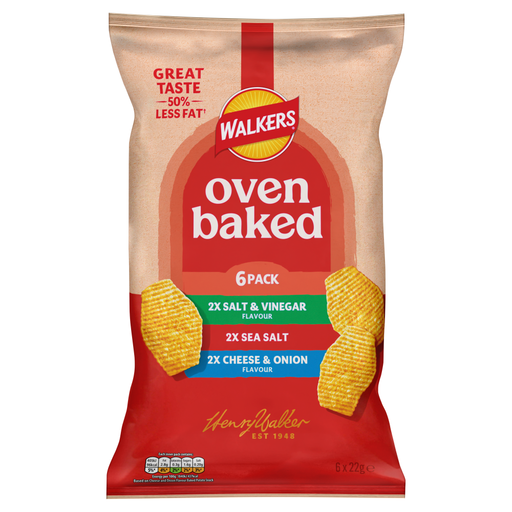 No image available
Six 22g bags offer separately packed crisps for revision breaks. As this is a variety pack, check the nutrition and allergen information for each flavour you choose.
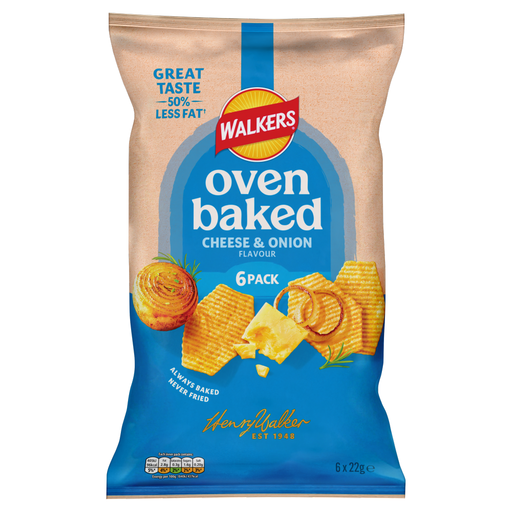 No image available
This Cheese & Onion option comes in six 22g bags. Check its own nutrition and allergen label rather than applying the Sea Salt flavour’s values to it.
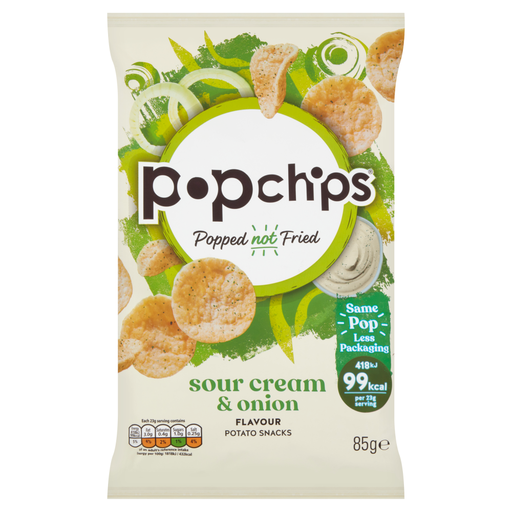 No image available
This is a single 85g bag rather than a set of smaller packs. Check the labelled serving if you plan to eat only part of the bag during a revision break.
 No image available
These are lentil cakes, not crisps, so choose them only if that snack format appeals. Check the current pack for serving, nutrition and allergen details.
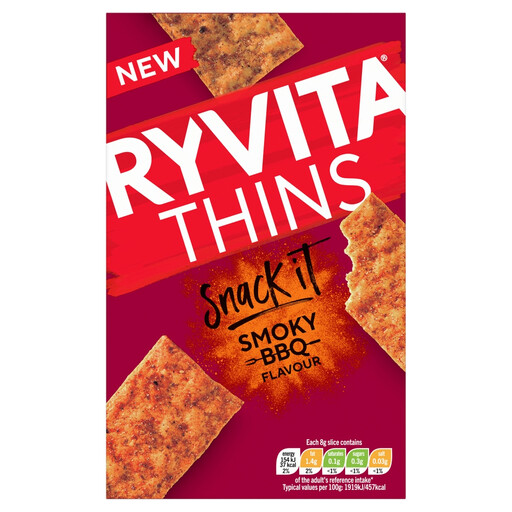 No image available
These savoury thins provide a different format from crisps in a 125g pack. Read the serving and ingredient information for this flavour before comparing it with a bag of crisps.
No single front-of-pack claim settles the choice. Compare the exact crisp’s fat and salt per 100g, the amount in the pack you intend to eat, and its ingredients and allergens. Walkers UK lists 13g fat and 0.85g salt per 100g for Oven Baked Sea Salt; Tyrrells lists 20g fat and 2.0g salt per 100g for Sour Cream & Onion Lentil Crisps. Those figures describe these flavours, not their whole ranges.
Use per 100g to compare products on the same basis, then use per-pack or per-serving figures to understand the amount you plan to eat. A 22g pack and a larger labelled serving should not be compared as though they contain the same quantity.
A reduced-fat claim does not establish whether a crisp may be supplied by a school. The Department for Education’s published September 2027 secondary-school snack list for England does not include crisps, but the department says those updated standards are subject to Parliamentary approval. Check the rule in force for the relevant UK nation, date and school-controlled setting, as well as the school’s policy.
Read the current physical pack’s ingredients, emphasised allergens and may-contain statement before eating. GOV.UK guidance says pre-packed food labels must include an ingredients list that emphasises the allergens required to be declared; a reduced-fat claim does not replace that information.