For protein from the cakes themselves, compare a protein-focused lentil or rice cake with a plain rice cake on both a per-100g and a per-cake basis. Kallo lists 26g protein per 100g for its Protein Packed Lentil Cakes, but 1.8g per cake; M&S lists 24.8g per 100g for its Barbecue High Protein Rice Cakes, while Tesco lists 0.7g per cake for its lightly salted rice cakes. A plain cake can still work as a base for a topping, but check the current pack before relying on any nutrition or allergen details.
Who is each option for?
People packing a protein-focused snack
If you want the cakes themselves to contribute protein during a mid-morning break, check how much the number of cakes you plan to eat provides. A per-100g figure helps compare products, but an individual cake is a much smaller portion.
Vegan or gluten-free shoppers
Kallo lists its Protein Packed Lentil Cakes as vegan and gluten-free, and M&S gives those descriptions for its Barbecue High Protein Rice Cakes. Kallo’s product information also says the lentil cakes may contain sesame and soya. Check the current pack if dietary or allergen suitability determines your choice.
People who want a plain base
Tesco Lightly Salted Rice Cakes contain brown rice and sea salt and provide 0.7g protein per cake, according to Tesco. They are an option when you want a simple cake to eat with a topping rather than relying on the cake for most of the snack’s protein.
What should you compare?
Start with the portion you would actually eat, then compare products per 100g. Ingredients and the current allergen statement can change which cake is suitable for you.
| Priority | What to check | Your needs |
|---|
| Protein per portion |
Read protein per cake or declared serving, then consider how many cakes you plan to eat. Kallo lists 1.8g per lentil cake; Tesco lists 0.7g per lightly salted rice cake. |
I want to know what my mid-morning portion provides, not just whether the pack describes the cakes as protein-focused. |
| Like-for-like nutrition |
Compare protein per 100g: Kallo lists 26g for its lentil cakes, M&S lists 24.8g for its Barbecue High Protein Rice Cakes, and Tesco lists 9.3g for its lightly salted rice cakes. Check energy, fat, fibre and salt on the same basis. |
If I am choosing between savoury rice cakes and lentil cakes, I want to compare the whole nutrition label rather than protein alone. |
| Ingredients and allergens |
Check whether the cake uses rice, lentil flour or added pea protein. Read the current pack’s dietary descriptions, ingredients and precautionary allergen statement. |
Vegan or gluten-free descriptions matter to me, but an allergen warning could change whether a product suits my requirements. |
| Plain cake or protein-focused cake |
Decide whether the cake itself needs to supply protein or will carry a topping. Tesco lists brown rice and sea salt for its lightly salted cakes; Kallo and M&S describe different protein-focused formulations. |
A plain crunchy base may be enough if I plan to add a protein-containing topping. Otherwise, I would compare the protein in the cakes themselves. |
Common buying mistakes
-
Judging the snack by its per-100g protein figure alone
Kallo lists 26g protein per 100g for its Protein Packed Lentil Cakes, but 1.8g in one cake. The portion you eat determines the amount you get from the snack.
Compare the per-cake figure and the number of cakes you expect to eat, as well as the per-100g figure used to compare packs.
-
Assuming plain rice cakes provide similar protein
Tesco lists 0.7g protein per lightly salted rice cake. That makes a plain cake a different choice from a protein-focused cake when the cake itself is meant to contribute protein.
Choose based on the whole snack: compare protein-focused cakes, or consider what you will put on a plain cake.
-
Comparing protein while overlooking the rest of the label
M&S lists 24.8g protein, 451 kcal and 16.2g fat per 100g for its Barbecue High Protein Rice Cakes. Protein alone does not describe their full nutrition profile.
Use the same per-100g basis for energy, fat, fibre and salt, then check the figures for your intended portion.
-
Using an online dietary description instead of the pack
Kallo’s product information says its lentil cakes may contain sesame and soya. Ingredient and allergen details are particularly important when suitability determines whether you can eat a product.
Read the current pack before buying or eating, especially if you need to avoid an allergen.
Brand and product references
These examples show how specific rice-cake-style products differ; a brand name alone does not establish the nutrition or suitability of another product in its range.
Kallo
Protein Packed Lentil Cakes offer a lentil-based alternative to a conventional rice cake.
- Kallo lists 26g protein per 100g and 1.8g per cake; Sainsbury’s lists 6.9g fibre per 100g for the product.
- It is a lentil cake rather than a standard rice cake. The product information says it may contain sesame and soya; check the current pack for dietary and allergen details.
M&S
Barbecue High Protein Rice Cakes are a savoury, rice-based option made with wholegrain brown rice, buckwheat, pea protein and lentil flour.
- Marks & Spencer lists 24.8g protein per 100g and describes this product as vegan and gluten-free.
- Its label lists 451 kcal and 16.2g fat per 100g; check the portion you intend to eat rather than choosing on protein alone.
Tesco
Lightly Salted Rice Cakes provide a plain brown-rice-and-sea-salt reference point for a snack with or without a topping.
- Tesco lists 9.3g protein per 100g and 0.7g per 7.2g cake.
- If the cake itself needs to contribute more protein, compare those portion figures with the protein-focused products.
Snack a Jacks
Sour Cream & Chive Jumbo Rice Cakes are a flavoured rice-and-corn snack rather than an established protein-focused option in this comparison.
- Tesco describes this product as suitable for vegetarians and lists 37 kcal per snack.
- Check its protein declaration if protein is your reason for choosing a mid-morning snack.
Joybuy product options
This Joybuy option is a lentil cake for shoppers considering a protein-focused alternative to plain rice cakes. Check its current pack before making a dietary or allergen decision.
 No image available
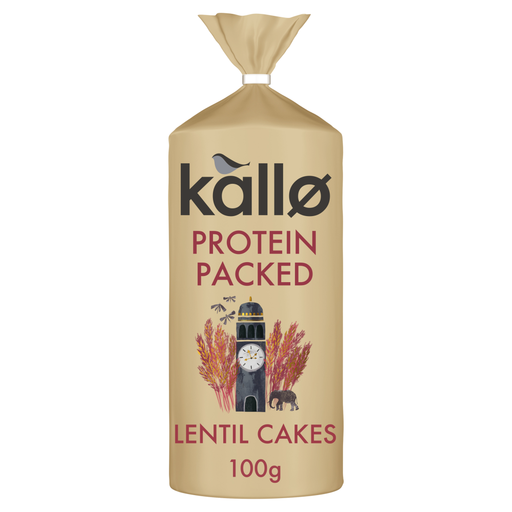
Kallo Protein Packed Lentil Cakes 100g
A lentil-cake option if you want the cakes themselves to contribute protein to a mid-morning snack. The Joybuy listing describes the product as vegan but also lists milk as an allergen; check the current pack before relying on its dietary or allergen information.
View on Joybuy
Questions about choosing a snack
Are ordinary rice cakes high in protein?
Do not assume they provide the same amount as a protein-focused cake. Tesco lists 0.7g protein in one 7.2g Lightly Salted Rice Cake, while Kallo lists 1.8g in one Protein Packed Lentil Cake. Compare both per-100g figures and the portion you will eat.
Should I choose Kallo lentil cakes or M&S high-protein rice cakes?
Kallo’s Protein Packed Lentil Cakes suit a choice based on their listed 26g protein per 100g and lentil-cake format; its stated portion provides 1.8g per cake. M&S Barbecue High Protein Rice Cakes suit someone who wants a savoury rice-based cake with pea protein and lentil flour; M&S lists 24.8g protein, 451 kcal and 16.2g fat per 100g. Check the current pack and your intended portion before deciding.
Can vegan and gluten-free shoppers choose these cakes?
Kallo’s and M&S’s product pages describe the respective protein-focused cakes as vegan and gluten-free, but suitability must be checked on the current pack. Kallo’s product information says its lentil cakes may contain sesame and soya. The Joybuy listing for the Kallo cakes also conflicts about vegan status and milk, so do not rely on that listing alone if either matters to you.
Should I check the label when buying the same cakes again?
Yes. Check the current pack for ingredients, allergens, nutrition per 100g and nutrition per cake or serving. Tesco notes that food products can be reformulated, so a previous purchase or online description should not replace the pack in hand.


