Groups protecting original poems
If contributors hand in unique, delicate, folded or irregular pages, careful placement on a flatbed matters more than feeding a stack quickly. Epson’s guidance warns that valuable originals can be damaged in an ADF.


Choose a multifunction printer with a flatbed scanner if your community group handles valuable, delicate or irregular handwritten poems: those originals belong on the scanner glass, not in an automatic document feeder (ADF). Add an ADF for recurring batches of suitable loose sheets, and consider A3 only when the size of your originals or printed materials calls for it. Check the exact scanner area as well as the printer’s stated paper size.
If contributors hand in unique, delicate, folded or irregular pages, careful placement on a flatbed matters more than feeding a stack quickly. Epson’s guidance warns that valuable originals can be damaged in an ADF.
Groups receiving repeated batches of clean, loose sheets may benefit from an ADF, provided they can put unsuitable pages on a flatbed instead. Canon and Brother list ADFs on selected multifunction models.
If the group also prepares proofs, meeting packs or larger-format materials, printing supplies and page size become part of the decision. Check whether larger originals fit the scanner itself, not just whether the printer accepts larger paper.
Start with the condition and size of the poems, then decide whether suitable sheets arrive often enough to justify an ADF. Assess printing supplies separately from scanning needs.
| Concern | What to check | Who this matters to |
|---|---|---|
| Protecting originals | Confirm there is a flatbed and that poems fit on its glass without folding. | If a poem is unique, delicate or irregular, I need to scan it without feeding it through rollers. Around 36% of consumers put protection of the original first. |
| Scanning batches | Check ADF capacity and the manual’s restrictions on sheet size and condition. | When volunteers repeatedly receive clean, loose pages, loading each one by hand takes time; roughly 29% of consumers prioritise batch handling. |
| Printing supplies | Compare the consumable system and stated yield basis against expected printing, not scan volume. | If we regularly print proofs or meeting sheets as well as scan poems, keeping that work supplied matters. Around 21% of consumers put the printing workflow first. |
| Larger pages | Measure the largest original and confirm the usable scanner area separately from maximum print paper size. | For poems on oversized sheets, I need to know whether the whole original fits in one scan; roughly 14% of consumers prioritise larger-format work. |
Feeding a valuable or unsuitable original can wrinkle or damage it, according to Epson’s ADF guidance. Folded, curled, torn or attached sheets call for particular care.
Keep a flatbed option for such poems, and reserve the feeder for sheets that meet the exact model’s instructions.
A printer’s paper-size label does not establish how much of an original its scanner glass can capture. Canon specifies a maximum document size of 216 × 297 mm for the PIXMA MG2551S flatbed.
Measure the largest poem and check whether the shortlisted model can scan it in one pass.
Pages that do not fit may require a separate oversized-scanning arrangement.
A stated page yield follows particular test conditions; the group’s printing pattern and choice of consumables also matter. Scan volume alone does not indicate ink use.
Estimate how much the group will print, then compare current consumables and the stated yield basis for the exact models under consideration.
Canon offers relevant compact flatbed models and selected multifunction models with an ADF.
Epson’s refillable EcoTank range is relevant when scanning accompanies regular printing.
Brother has relevant multifunction examples for A4 batch handling and larger-format paper workflows.
These models are relevant to the group’s batch-scanning, printing or larger-format decisions. Before choosing one for delicate poems, confirm its flatbed and usable scanning area for the exact model; check feeder suitability separately for loose sheets.
 No image available
Consider this model if the group needs a way to handle suitable loose sheets in batches alongside careful scanning of originals. Confirm the usable flatbed area before choosing it for larger poems, and place vulnerable originals on the glass rather than in a feeder.
 No image available
Consider this model when regular printing is part of the group’s work as well as scanning suitable batches. Before using it for valuable, folded or irregular poems, confirm that the exact model has a flatbed and check how much of a page fits on its glass.
 No image available
Consider this model if larger-format output and batches of suitable loose sheets are part of the group’s work. Check the exact scanner area before relying on it for oversized originals, and confirm a flatbed route before scanning delicate poems.
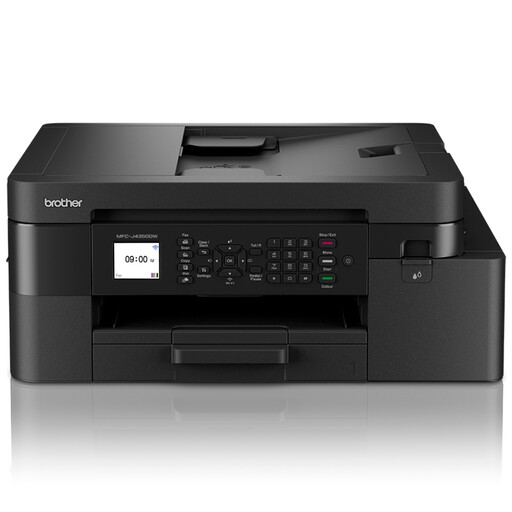 No image available
Consider this model for recurring batches of suitable loose sheets, particularly if the group also prints regularly. Confirm the presence and usable size of its flatbed before choosing it for poems that should not go through a feeder.
Use an ADF only for sheets that meet the model’s feeding instructions. Put valuable, torn, folded, curled or attached originals on the scanner glass instead; Epson warns that valuable originals can be damaged by misfeeding.
Not if poems usually need careful, one-at-a-time handling. An ADF becomes useful for recurring batches of suitable loose sheets, but the group should keep a flatbed route for exceptions.
No: maximum print paper size and usable scanner area are separate specifications. Measure the largest original and confirm the exact model’s flatbed scanning area before choosing it for oversized poems.
Separate expected print volume from scan volume, then compare current consumables and the manufacturers’ stated yield methods for the exact models. Check software compatibility, warranty and support arrangements with the seller rather than treating an advertised page yield as the group’s actual running cost.
Ask the retailer about old-printer take-back before replacing the device, including whether collection is available and whether it carries a charge. GOV.UK provides guidance on retailer take-back of electrical waste; confirm the arrangement for your purchase with the seller.