Poets preserving individual originals
If each page needs careful alignment, look for a flatbed rather than relying on a feeder alone. Canon UK specifies both a platen and an ADF for the MAXIFY GX4050, with an A4/Letter maximum on the platen.


For a shared studio digitising handwritten poems, choose a multifunction printer with a flatbed for carefully positioned originals and an automatic document feeder (ADF) for compatible batches of loose pages. If the studio also prints drafts regularly, weigh its network connections, paper capacity and consumables against expected use; neither a refillable tank nor a cartridge system settles that decision on its own.
If each page needs careful alignment, look for a flatbed rather than relying on a feeder alone. Canon UK specifies both a platen and an ADF for the MAXIFY GX4050, with an A4/Letter maximum on the platen.
For stacks of compatible loose pages after readings or editing sessions, compare feeder capacity and connection options. Canon UK lists a 35-sheet ADF for the MAXIFY GX4050; Brother UK lists a 20-sheet ADF for the MFC-J4540DW.
If proofs and handouts are printed alongside scanning, compare the consumables for the exact model. Canon UK and Epson United Kingdom describe refillable-tank options, while Brother UK lists cartridges for the MFC-J4540DW; the right approach depends on how much the studio prints.
Start with how you will handle individual poem pages, then consider batch scanning, repeat printing and access for studio members.
| Concern | What to check | Who this matters to |
|---|---|---|
| Careful placement | Confirm a flatbed, its maximum document size and the model’s optical scan resolution. | When I need to align a handwritten original precisely, I want control over its position rather than feeding it with a stack. Around 31% of consumers put careful placement first. |
| Batch scanning | Check ADF capacity and the sizes and condition of pages its manual permits. | After a workshop, I need to digitise several compatible loose sheets without placing each one on the glass. For around 25% of consumers, batch handling is the primary concern. |
| Repeat printing | Compare the exact model’s ink system, replacement supplies and paper capacity against expected printing. | If drafts and handouts are a regular part of studio work, I need to understand what replenishing supplies will involve. Ongoing printing is the leading concern for around 25% of consumers. |
| Shared access | Confirm the connections and device compatibility the studio needs, then plan who manages scan destinations. | When several members use their own devices, I need a connection and scan-storage arrangement the studio can manage. Around 19% of consumers place shared access ahead of the other concerns. |
A feeder saves individual placement for suitable loose-page batches, but it does not give the same control over an original’s position. Canon UK distinguishes platen and ADF document handling in its MAXIFY GX4050 specifications.
Make a flatbed a requirement if individual poems need careful positioning; treat the ADF as an additional route for pages that meet its feeding rules.
A refillable-tank model and a cartridge model call for different replacement supplies. Manufacturer-stated yields do not establish what printing will cost in your studio.
Estimate your monthly printing and compare compatible bottles or cartridges, included ink, stated yield conditions and any applicable maintenance parts for each exact model.
Wi-Fi, Ethernet, mobile and cloud features describe connection options; members still need an agreed way to access the printer and store scans.
Check device compatibility and network coverage, then decide who manages access, scan destinations and updates.
Setting up and supporting shared devices and scan destinations also takes studio time.
Canon UK offers different routes within its MAXIFY and PIXMA multifunction ranges, rather than one configuration for every studio.
Epson EcoTank provides a refillable-ink route for a studio that prints repeatedly as well as scanning.
Brother’s MFC inkjet range includes cartridge-based options for shared document work.
HP OfficeJet Pro is another shared-office route to examine when network access and document feeding matter.
These multifunction printers offer different starting points for individual-page scanning, shared access or repeat printing. Check each exact model’s flatbed and feeder arrangements against the poems you plan to scan.
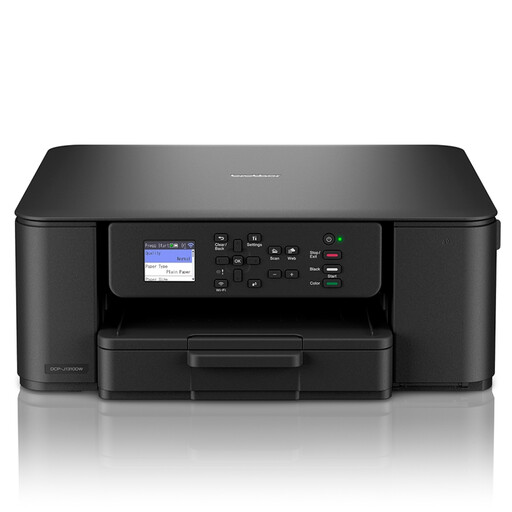 Image unavailable
Consider this model where wireless access is useful, but confirm its flatbed and ADF arrangements, including supported page sizes, before planning how to scan poem originals.
Check replacement cartridges and available connections against the studio’s printing and network needs.
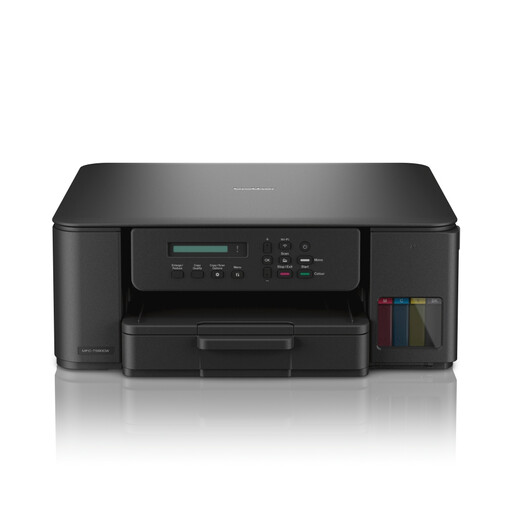 Image unavailable
The refillable ink tank makes this a model to consider if printing drafts and handouts is routine alongside scanning. Confirm whether the exact model has an ADF before relying on it for page batches.
Compare replacement ink and the studio’s wireless setup with its expected use.
 Image unavailable
This is a model to assess for shared printing and scanning where both individual placement and page batches matter. Confirm the feeder’s supported originals and the optical scan resolution for the exact model.
Allow for a stable location if the printer will not remain on a dedicated surface, and compare compatible replacement cartridges.
 Image unavailable
Consider this model if the studio also needs to print A3/A4 material, while checking how its flatbed and feeder handle the poem pages you use. Confirm ADF-supported original sizes and optical scan resolution for the exact model.
Clarify its replacement-ink arrangement before comparing ongoing printing needs, and plan a stable place for the printer.
 Image unavailable
Consider this model for a studio combining repeat printing with batch scanning, but confirm a flatbed platen before choosing it for poems that need individual positioning.
Check the ADF’s supported page sizes, optical scan resolution and replacement-ink details for this exact model.
Use the flatbed when an individual page needs careful positioning; use the ADF for loose pages that meet the feeder’s documented requirements. Canon UK lists both routes for the MAXIFY GX4050, so check the permitted sizes and handling rules on whichever model you choose.
Confirm a flatbed first, then compare its maximum document size, the model’s optical scan resolution and available file formats. Canon UK specifies an A4/Letter platen and 1,200 x 2,400 dpi optical resolution for the MAXIFY GX4050; those specifications alone do not guarantee that every handwritten page will be equally legible.
Yes, if the chosen model supports the connections their devices need and the studio can manage access. Canon UK lists Wi-Fi and Ethernet for the MAXIFY GX4050, while Brother UK lists wired, wireless, mobile and NFC options for the MFC-J4540DW; agree who will manage scan destinations and updates.
A refillable tank is not automatically the lower-cost choice for a particular studio. Compare expected printing, compatible replacement ink, included supplies and any maintenance parts for the exact models; manufacturer-stated yields are not a promise of your actual cost per page.