Who is choosing a study device?
The right starting point changes with the work the student must do, not just where they will use the device.
Students with required platforms or specialist software
If coursework calls for a named application, assessment tool, printer or other peripheral, confirm its device requirements before choosing an operating system. England's Department for Education advises schools and colleges to match devices to their educational use.
Students doing mainly browser-based work
A Chromebook is worth considering when the school confirms its web-based workflow works on ChromeOS. If internet access can be interrupted, Google advises making the necessary Drive files available offline beforehand; some apps will still need a connection.
Students who type and also use touch
A 2-in-1 can put keyboard work and tablet-style viewing in one device, provided its operating system runs the required coursework tools. For a detachable device or iPad, check the exact keyboard model and whether it is included.
What should you check first?
Start with tasks the device must complete, then compare its offline workflow, keyboard and configuration against a typical study day.
| Priority | What to check | Your needs |
|---|
| Course compatibility |
Ask the school which platform, browser, applications, file formats and assessment tools are required. Check printers and other peripherals against the exact device and operating system. |
I need to open, complete and submit coursework on the device I take between home and school. |
| Offline work |
Check the actual files and apps needed without internet. Google says selected Drive files can be made available offline on a Chromebook and synced after reconnecting, but some apps do not work offline. |
If my connection drops, I still need access to the assignments I have prepared for offline use. |
| Typing and carrying |
Check whether a physical keyboard is built in or included, and whether a detachable keyboard fits the exact tablet. Consider screen size and listed weight for a device carried regularly. |
Long written assignments call for a keyboard I can use comfortably, while the device still has to travel with me. |
| Windows configuration |
Compare the exact processor, RAM and storage with the course applications and files. Microsoft lists 4 GB RAM and 64 GB storage as Windows 11 minimum requirements; individual apps and features may need more. |
I do not want to mistake basic Windows eligibility for confirmation that my course software will run as required. |
| Files and connections |
Check how work is saved and submitted, available local storage, and the ports needed for displays, drives or other equipment. Confirm any school rules before planning to transfer files on removable storage. |
I need a workable way to move assignments between home and school without relying on a connection or accessory I cannot use. |
Which brand ranges are relevant?
These ranges illustrate different device routes; a brand name alone does not establish compatibility with a school's requirements.
Lenovo
Lenovo's UK education range includes conventional laptops for students considering a Windows-based setup.
- Lenovo describes education models with Intel or AMD processors and designs intended for learning on the move.
- Check the operating system, configuration, ports and required course applications on the specific model.
Acer
Acer's education Chromebook range includes clamshell and convertible options for schools using a compatible ChromeOS workflow.
- Acer lists a Chromebook 311 and a convertible Chromebook Spin 311 in its education range.
- Confirm the school's apps and any work required offline before choosing a Chromebook.
Microsoft Surface
Surface Pro is a Windows tablet-style route for students considering touch alongside keyboard-based work.
- Microsoft's Surface Pro 8 documentation identifies compatible keyboard, pen and dock accessories.
- Check which accessories are included with the exact device and whether its connections meet the course requirements.
Apple
MacBook laptops and iPads with keyboards are distinct routes to consider when an education setting confirms the relevant platform is supported.
- Apple lists portable MacBook Air and MacBook Pro ranges; compatible iPad keyboards provide a separate typing option.
- Apple says iPad keyboards are sold separately and must match the iPad model. Check course software and peripherals before choosing macOS or iPadOS.
Joybuy devices for schoolwork
These Joybuy options cover conventional laptops, a convertible Windows laptop and a Chromebook. Compare each with the school's requirements before treating its listed configuration as a suitable coursework setup.
 No image available
ASUS Vivobook 15 X1504VA, Core 5 120U, 24 GB, 1 TB SSD
Consider this conventional laptop for keyboard-based coursework once its compatibility with the required applications and peripherals is confirmed. Its title lists a 15.6-inch display, Intel Core 5 120U, 24 GB memory and a 1 TB SSD.
View on Joybuy
 No image available
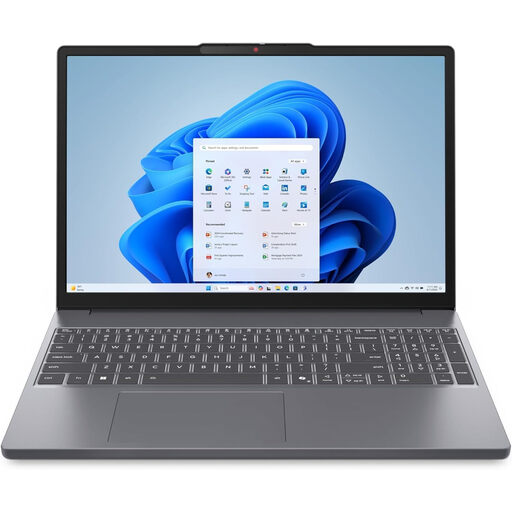
Lenovo IdeaPad Slim 3 83K7009MUK, Ryzen 5, 24 GB, 512 GB SSD
This Windows 11 Home laptop is an option for typed coursework when the course supports its software and file workflow. The title specifies a 15.3-inch WUXGA display, AMD Ryzen 5 7535HS, 24 GB DDR5 RAM and a 512 GB PCIe SSD; check the required peripherals against the exact configuration.
View on Joybuy
 No image available
ASUS Vivobook 14 X1407QA-LY003W, Snapdragon X, 16 GB, 512 GB SSD
For coursework on this Snapdragon X laptop, confirm that each required application and peripheral supports the exact configuration before choosing it. The title lists 16 GB RAM and a 512 GB SSD.
View on Joybuy
 No image available
HP OmniBook X Flip 16-as0004na, Core Ultra 5, 16 GB, 512 GB SSD
This 2-in-1 offers a touchscreen option for study that combines typing with touch, subject to course-software compatibility. Its title specifies a 16-inch touchscreen, Intel Core Ultra 5 226V, 16 GB RAM, a 512 GB SSD and Windows 11 Home; check its weight if it will travel daily.
View on Joybuy
 No image available
Acer Chromebook Plus 514 CB514-5H, Core i3, 8 GB, 256 GB SSD
Consider this Chromebook for browser-based coursework if the school confirms that its platforms and required apps work on ChromeOS. Its title lists a 14-inch WUXGA (1920 x 1200) display, Intel Core i3-1315U, 8 GB RAM and a 256 GB SSD. Check the actual apps and prepare supported files before relying on offline work.
View on Joybuy
Questions about studying at home
Should I ask the school before choosing an operating system?
Yes. Ask which learning platforms, applications, assessment tools, browsers, file formats and peripherals coursework requires. England's Department for Education advises schools and colleges to assess devices against their educational use; that does not amount to one specification for every student.
Can a Chromebook handle schoolwork without internet?
A Chromebook can handle selected offline work when the necessary Google Drive files have been made available beforehand. Google says edits sync after reconnection, but some apps do not work offline, so test the school's actual tasks before depending on them.
Can a tablet with a keyboard replace a laptop for coursework?
Only if the school's platform, course applications, files and peripherals work on that tablet. Check the physical keyboard as part of the setup: Apple says its iPad Smart Keyboards and Magic Keyboards are sold separately and must be matched to the iPad model.
Are Windows 11 minimum requirements enough for study?
Not necessarily. Microsoft lists 4 GB RAM and 64 GB storage as Windows 11 minimum requirements, while individual applications and features may require more. Compare the exact laptop configuration with the course software and files it will need to handle.


