
24/7 Customer Support

Free returns

Same-day & Next-day Delivery

Quality Guaranteed

Unlock Your Welcome Offers: FREE Delivery | Up to 80% OFF | Free 30-day JoyPlus trial
Download the APP
Dealing with sensitive skin can make everyday tasks, like laundry, a challenge. The wrong fabric conditioner can leave clothes feeling stiff or, worse, cause skin irritation, itchiness and discomfort. This is a particular concern for parents of newborns, whose skin is especially delicate and for anyone managing conditions like eczema.
Navigating the laundry aisle can be confusing, with countless products all making bold claims. This guide is designed to cut through the clutter. As the Joybuy Product Recommendation Officer, my role is to provide clear, practical advice to help you choose a gentle fabric conditioner that leaves your clothes soft and your skin comfortable. We will look at key features to consider and highlight some standout options available today.
Before looking at specific products, understanding what makes a fabric conditioner suitable for sensitive skin is helpful. Here are a few key points to consider during your search.
Labels like "hypoallergenic" and "dermatologically tested" are important indicators. A hypoallergenic fabric softener is formulated to minimise the risk of an allergic reaction. When a product is dermatologically tested, it means it has been tested on human skin under the supervision of a dermatologist. In the UK, an endorsement from an organisation like the Skin Health Alliance provides an extra layer of reassurance, as it signifies that a panel of independent dermatologists has verified the product's skin-safe claims.
Many modern conditioners are moving towards plant-based fabric softener formulas. These often use ingredients derived from sources like rapeseed instead of traditional petroleum-based chemicals. An eco-friendly fabric conditioner is not only gentler on the environment, with biodegradable ingredients, but often gentler on the skin too. Checking the ingredients list for potential irritants like harsh dyes is always a good practice.
Fragrances are a common trigger for skin sensitivity. While many enjoy a fresh scent on their laundry, those with very reactive skin may prefer a fragrance-free option. If you do prefer a scented product, look for a mild scented fabric softener that uses natural extracts or is specifically formulated to be gentle. This is particularly important when choosing a fabric conditioner for baby clothes, as strong smells can be overwhelming for infants.
Based on their formulations, features and suitability for delicate skin, here are our recommendations for a sensitive skin fabric conditioner.
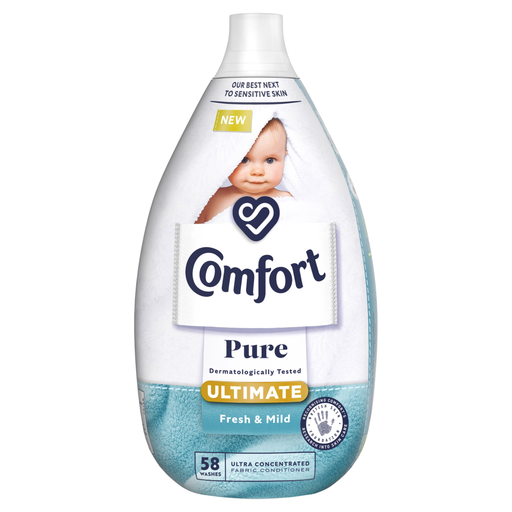
Why It Stands Out: This ultra-concentrated formula is designed to deliver softness with just a small dose. Its key feature is the recommendation from the Skin Health Alliance, confirming its suitability for sensitive skin. The gentle formulation is appropriate for the whole family, making it a convenient choice for households with babies or young children.
Pros:
Who is it for? This is an excellent all-rounder for families who need a reliable, gentle fabric conditioner that is trusted by dermatologists and safe for everyone in the home.
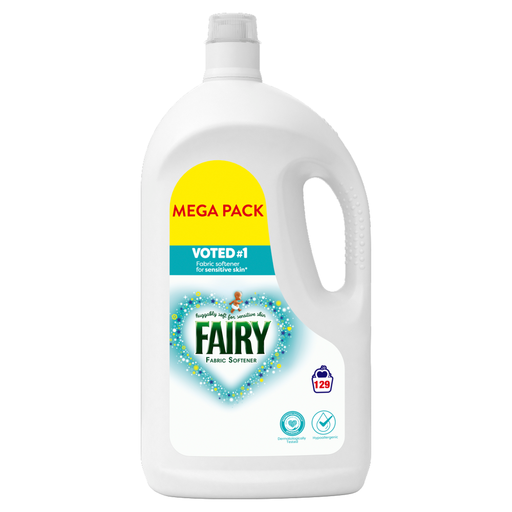
Why It Stands Out: Fairy is a widely recognised brand for gentle laundry care, and this fabric softener is specifically marketed for sensitive skin. It is also endorsed by the Skin Health Alliance. The formula uses plant-based ingredients to achieve its softness and its large 3.999-litre bottle offers up to 129 washes, making it a cost-effective choice for busy households.
Pros:
Who is it for? Ideal for large families or anyone looking for an affordable, bulk-buy option from a brand long associated with care for sensitive skin.
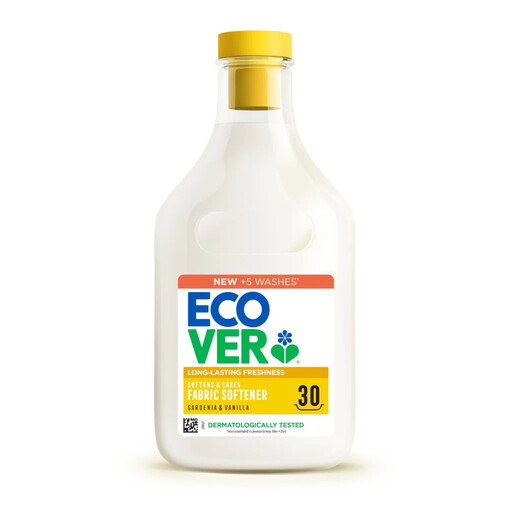
Why It Stands Out: Ecover focuses on environmental responsibility without compromising on performance. This eco-friendly fabric conditioner is made with plant-based, biodegradable ingredients and notably features a palm oil-free formula. It is dermatologically tested, making it a safe choice for sensitive skin and is scented with natural gardenia and vanilla for a gentle, fresh aroma.
Pros:
Who is it for? A perfect match for environmentally-conscious individuals and families who need a gentle, skin-friendly product that aligns with a green lifestyle.
While these three products are excellent starting points, the ideal fabric conditioner can depend on personal preference for scent, bottle size or specific ingredients. If you haven't found the perfect fit here, you can browse a wider selection.
Explore our full range of fabric conditioner to find the right match for your laundry needs.
While not essential, using a gentle fabric conditioner can make a noticeable difference. It helps to soften cotton fibres, making vests, sleepsuits and blankets less scratchy and more comfortable against a baby's delicate skin. The key is to choose a hypoallergenic fabric softener that is free from harsh chemicals and strong perfumes.
Yes, some conventional fabric conditioners can trigger eczema flare-ups due to ingredients like synthetic fragrances, dyes and certain preservatives. To avoid this, it is advisable to seek out the best fabric conditioner for eczema in the UK by looking for products that are specifically labelled as hypoallergenic, dermatologically tested and formulated for sensitive skin. Plant-based and fragrance-free options are often a safer bet.
Bio detergents contain enzymes that are very effective at breaking down protein-based stains like food and grass. Non-bio detergents do not contain these enzymes, making them a gentler choice for sensitive skin. Fabric conditioner is a separate product used during the final rinse cycle. Its job is to soften fabric fibres, reduce static and add a light scent. For a complete sensitive-skin laundry routine, many people pair a non-bio detergent with a sensitive skin fabric conditioner.