Compact cockpit builders
You need room for a keyboard and simulator controls as well as the screen. Monitor width, stand placement and an adjustable viewing position all affect whether the setup works.


A 27-inch QHD IPS monitor is a sensible starting point when a virtual cargo-ship cockpit has little room for a screen and its controls. A 34-inch ultrawide offers a wider display format, but choose it only if its width and placement work in your setup and your simulator and source device can use the intended resolution.
You need room for a keyboard and simulator controls as well as the screen. Monitor width, stand placement and an adjustable viewing position all affect whether the setup works.
You want more horizontal screen space for the simulated bridge and can accommodate a 34-inch ultrawide on a desk or suitable mount.
You want navigation displays to remain readable while the view moves. Resolution, interface scaling, refresh modes and available connections deserve attention alongside screen size.
Decide how much space the screen and its support can occupy before choosing a wider view. Then check the simulator’s display options and your device’s outputs against the monitor you have in mind.
Choose when: Keeping room for cockpit controls matters more than gaining a wider screen format.
Trade-off: A 16:9 screen has less horizontal image area than a 3440 × 1440 ultrawide, and its stand still needs measuring.
Choose when: A wider bridge-style presentation matters and the screen has a workable position in your room.
Trade-off: The wider display needs more horizontal room; satisfactory 21:9 presentation also depends on the simulator and connected device.
| Concern | What to check | Who this matters to |
|---|---|---|
| Physical fit and mounting | Measure usable desk width and depth, including the stand or arm position. If mounting, match the monitor, mount and desk requirements. | If controls already crowd the desk, I need a screen I can position without losing a usable viewing distance. For around 36% of consumers, physical fit is the primary concern. |
| Wider bridge view | Measure the space for a 34-inch display and check how the simulator presents its view and interface at 21:9. | I would make room for a wider bridge display if the simulator uses that space well. A wider view is the first priority for around 29% of consumers. |
| Readable instruments | Compare native resolution and check the simulator’s interface-scaling options before choosing a screen format. | Route charts and on-screen instruments need to stay legible from my seating position. Around 21% of consumers put readable detail first. |
| Motion and connections | Check the device’s output ports and supported display modes, then compare them with the monitor’s inputs and the simulator’s settings. | When I pan the camera or manoeuvre the ship, I want the display mode to work with my equipment. Connection-compatible motion is the leading need for around 14% of consumers. |
Samsung UK lists its Odyssey G5 LC34G55TWWPXXU as a 34-inch ultrawide, while the compact alternatives discussed here are 27-inch monitors. Diagonal size alone does not tell you where the screen and stand will fit.
Mark out the available width and the intended stand or arm position. Keep a 27-inch QHD option in consideration if the ultrawide’s placement is uncertain.
A mounting pattern does not establish that an arm can carry a particular monitor or attach to your desk. BenQ UK specifies a 100 × 100 mm VESA pattern for the EX2710Q; the other parts of a proposed setup still need checking.
Compare the monitor’s pattern and weight with the arm’s requirements, then check desk thickness, clamp clearance and cable routing.
LG UK lists 165Hz for the 27GR75Q-B and ASUS United Kingdom lists 180Hz for the VG27AQ3A. Those monitor specifications do not establish the frame rate or display mode your simulator and connected device will achieve.
Check the device’s output, the connection you plan to use and the simulator’s video settings before prioritising a monitor’s maximum refresh rate.
A monitor that leaves room for controls can still be awkward to view. As an ergonomic reference, the Health and Safety Executive’s display-screen guidance suggests placing the screen directly in front of you, about an arm’s length away, with its top around eye level.
Check whether the supplied stand or a compatible mount lets you reach a comfortable position from your simulator seat.
LG UK lists the 27GR75Q-B as a 27-inch, 2560 × 1440 IPS gaming monitor with a 165Hz refresh rate. It is an example to examine if a 27-inch QHD screen suits the cockpit layout.
BenQ UK specifies a 100 × 100 mm VESA mount, 100 mm stand height adjustment, HDMI and DisplayPort inputs, and built-in speakers for the 27-inch EX2710Q.
Samsung UK lists the Odyssey G5 LC34G55TWWPXXU as a 34-inch curved, 3440 × 1440 ultrawide monitor with a 165Hz refresh rate.
ASUS United Kingdom specifies the VG27AQ3A as a 27-inch, 2560 × 1440 Fast IPS gaming monitor with a maximum 180Hz refresh rate.
These choices include smaller-format QHD monitors for a space-conscious cockpit and 34-inch models to consider if a wider display will fit. Check each monitor’s physical placement and your simulator’s supported display modes before deciding.
 No image available
Consider this 27-inch format if you want a QHD screen without moving to a 34-inch ultrawide. The product name specifies OLED and 240Hz; check the stand dimensions, room-lighting suitability and the display modes your device can use. For a simulator with persistent on-screen instruments, review the OLED screen-care guidance too.
 No image available
This is a 27-inch QHD option to assess when the cockpit cannot readily accommodate an ultrawide. Its product name specifies 2560 × 1440 and 220Hz; check the stand footprint, adjustment and mounting requirements, as well as the modes your connected device can deliver.
 No image available
Consider this wider format only if the screen and its support have enough room alongside your controls. The product name specifies 3440 × 1440, a VA panel, 200Hz, two HDMI inputs and two DisplayPort 1.4 inputs; check which connection and display mode your device and simulator can use.
 No image available
This 34-inch monitor is a wider-format choice if its placement works in your cockpit. The product name specifies OLED, WQHD and 240Hz; confirm the exact native display mode and stand dimensions for your setup, and consider OLED screen care if simulator instruments remain on screen for long periods.
 No image available
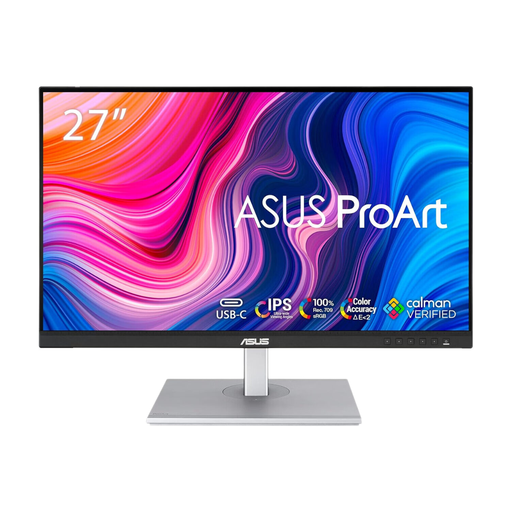
Consider this QHD IPS option if screen positioning and readable simulator controls matter more to you than choosing a higher stated refresh rate. Its product name specifies 100Hz; check its physical dimensions and the exact connections and features of the variant you plan to use.
Start with 27-inch QHD if the display’s fit is uncertain; consider a 34-inch ultrawide when you have measured its position and want the wider format. LG UK and ASUS United Kingdom list 27-inch QHD gaming models, while Samsung UK lists a 34-inch 3440 × 1440 Odyssey G5; none of those specifications establishes how your particular simulator will present its interface.
An arm can change where the monitor’s weight and support sit, but it does not automatically suit every screen or desk. Match the monitor’s mounting pattern and weight to the arm, and check clamp clearance and desk requirements; BenQ UK specifies a 100 × 100 mm VESA pattern for the EX2710Q, not compatibility with every arm.
Position it directly in front of your seat at a comfortable distance and height. As a practical reference, the Health and Safety Executive’s work-display guidance suggests roughly an arm’s length of viewing distance and the top of the screen around eye level; adjust the stand or mount to suit your actual seating position.
Check the monitor’s inputs, your device’s output modes, the connection and the simulator’s video settings. LG UK lists 165Hz and adaptive-sync compatibility for the 27GR75Q-B, but a monitor’s stated capability does not guarantee the same mode from every connected device or game.