
24/7 Customer Support

Free returns

Same-day & Next-day Delivery

Quality Guaranteed

Unlock Your Welcome Offers: FREE Delivery | Up to 80% OFF | Free 30-day JoyPlus trial
Download the APP
A pile of shoes by the front door is a familiar sight in many UK homes. It’s not just untidy; it’s a daily obstacle course that can make a small entryway feel even more cramped. Finding a practical and stylish solution is key to reclaiming your space. A well-chosen shoe storage cabinet can transform a cluttered hallway into an organised and welcoming entrance.
This guide is designed to help you navigate the options. We will explore what to look for when choosing a unit, from size and capacity to material and style and share some of our top recommendations to help you make an informed decision.
Choosing the right storage isn't just about hiding shoes; it's about finding a piece of furniture that fits your home and lifestyle. Here are a few points to consider.
The most important step is to measure the area where you plan to place the cabinet. In many UK flats and houses, hallways can be particularly tight. A narrow shoe storage unit is often essential. Pay close attention to the depth of the cabinet. A slim shoe cabinet with a depth of around 25 cm can fit neatly behind a door or in a tight corridor without obstructing the walkway, making it an excellent choice for hallway shoe storage. For a slightly wider entryway shoe cabinet, ensure there is still ample room to move around it comfortably.
Consider how many pairs of shoes your household owns. Do you need to store bulky walking boots and wellies, or mostly trainers and flats? This will determine the type of storage you need.
The material of your shoe cabinet affects its durability, appearance and ease of maintenance. Engineered wood (MDF) with a melamine finish is a popular choice for its sleek look and resistance to scratches. It fits well with contemporary decor. Alternatively, systems using PP plastic panels, like those found in modular plastic shoe boxes and organisers, are lightweight, easy to clean and can often be customised. They are a practical choice for busy family homes.
Here are a few carefully selected options that address common storage challenges with practical and stylish designs.
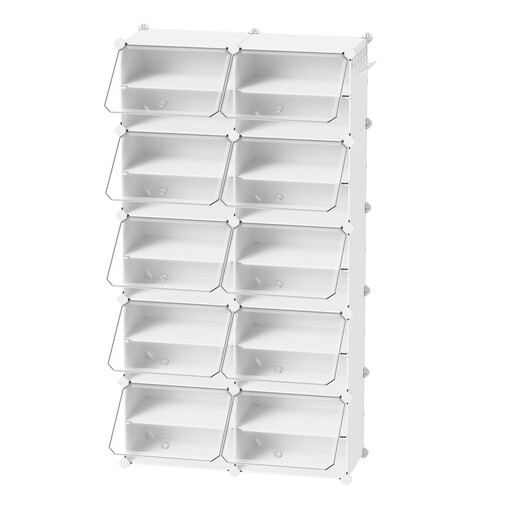
Why It Stands Out: This modular organiser is the definition of flexible storage. It can be built vertically, horizontally or even split into separate units to fit different spaces. Each of the 10 compartments is generously sized (30 x 40 x 30 cm), making it suitable for everything from high-tops to ankle boots. The translucent doors keep shoes visible yet protected from dust, and small vents promote airflow.
Pros:
Who is it for?: This is an excellent choice for families, renters or anyone whose storage needs might change over time. Its customisable nature makes it ideal for fitting into alcoves, under stairs, or inside wardrobes.
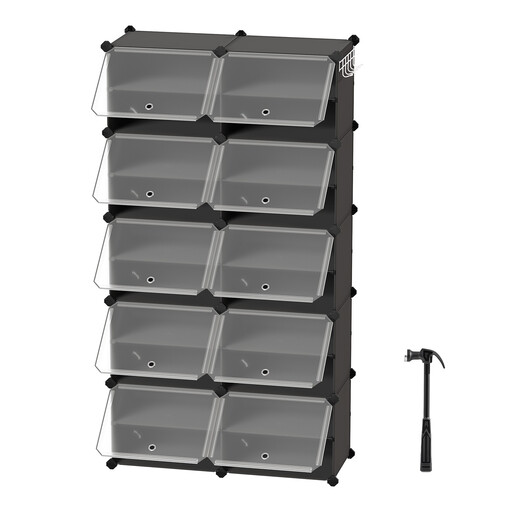
This model is also available in a sleek black finish, perfect for matching darker interior palettes or for households where scuffs and marks are a concern.
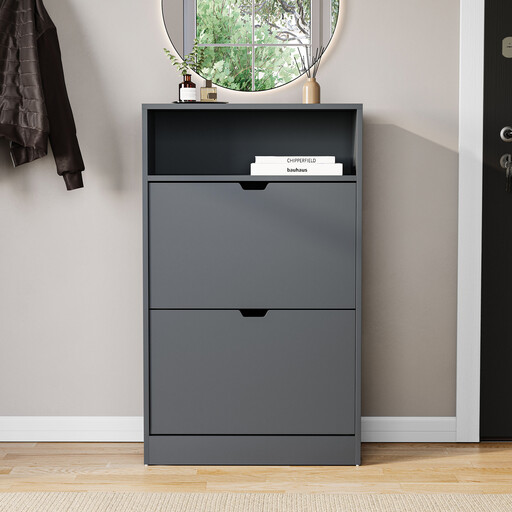
Why It Stands Out: Specifically designed for tight spots, this slim shoe cabinet has an ultra-narrow depth of just 24 cm. Its two pull-down compartments neatly conceal shoes, creating a completely clutter-free look. The clean lines, handle-free design and neutral grey colour give it a sophisticated, modern shoe cupboard aesthetic that blends seamlessly into contemporary homes. The open top shelf is a practical addition for keys, post or a decorative plant.
Pros:
Who is it for?: This cabinet is ideal for individuals or couples living in flats or homes with limited entryway space. It’s perfect for those who prioritise a clean, minimalist aesthetic and primarily wear shoes, trainers and other low-profile footwear.
If these specific models aren't quite what you're looking for, there is a wide world of storage solutions available. From taller cupboards with more capacity to low-profile benches with integrated storage, finding the right fit is key.
To see a wider variety of styles and sizes, explore our full collection of Cabinet Shelf with Doors.
1. How deep does a shoe storage cabinet need to be? The ideal depth depends on your space and shoe size. A slim shoe cabinet can be as narrow as 24 cm, which is excellent for tight hallways, but these are typically designed for shoes, not boots. For storing larger footwear like walking boots, a depth of at least 30-32 cm is recommended to ensure the doors can close properly. Always check the internal dimensions before purchasing.
2. Can you store boots in a shoe cabinet? It depends on the type of cabinet. Slim, pull-down cabinets are generally not suitable for high-ankled boots. However, a modular shoe rack like the Ochama model is a great option, as its compartments are tall enough (over 30 cm) to accommodate most ankle boots and some shorter walking boots. For taller boots like wellingtons, you may need to leave out a horizontal shelf during assembly to create a double-height compartment.
3. How do I prevent my shoe cabinet from smelling? Good ventilation is key. Look for a shoe organiser with doors that have built-in air holes, which help moisture escape and prevent odours from building up. It is also good practice to ensure shoes are completely dry before storing them. For any cabinet, using charcoal deodorisers or scented sachets inside can help keep the interior fresh.