
24/7 Customer Support

Free returns

Same-day & Next-day Delivery

Quality Guaranteed

Unlock Your Welcome Offers: FREE Delivery | Up to 80% OFF | Free 30-day JoyPlus trial
Download the APP
Silicone kitchen utensils have become a staple in modern British kitchens, and for good reason. They promise to protect our precious non-stick cookware from scratches while offering flexibility and heat resistance. However, the reality is often disappointing. Many of us have bought a new set only to find the spatula stains after one bolognese, the turner bends when flipping a simple pancake, or the handle fills with murky dishwater.
Before you invest in a new set, it is crucial to understand the common design flaws and marketing traps that lead to buyer's remorse. This guide will help you identify what truly matters in a quality utensil, ensuring your next purchase is a lasting one.
Not all silicone is created equal. Many seemingly good-value sets fail within months due to fundamental issues that are not obvious on the shelf. Here are the main culprits to watch for:
To avoid these issues, focus on a few key construction and material standards. Analysing these core parameters will help you select tools that perform well and last for years.
The most important factor is the quality of the silicone itself. Always look for utensils explicitly labelled as food-grade silicone. This means the material is stable, inert and will not react with foods or release any harmful substances when heated.
Additionally, ensure they are BPA-free cooking tools. Bisphenol-A is a chemical that was once common in plastics, and choosing BPA-free products is a sensible precaution for items that come into direct contact with your food. A quality heat resistant spatula should handle high temperatures without leaching chemicals, staining or absorbing odours.
A durable silicone utensil is never just silicone. It has a strong internal core that provides rigidity and strength.
The handle is just as important as the head. A well-designed handle is comfortable to hold and, crucially, hygienic.
Based on these practical criteria, here are a few options from our catalogue that are well-suited to different types of home cooks in the UK.
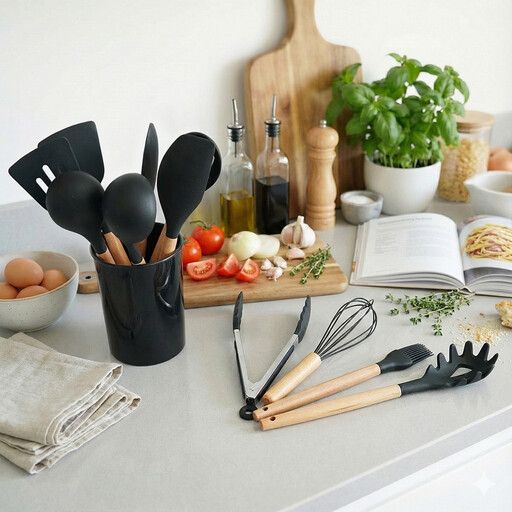
Why This Fits Their Persona: Perfect for new homeowners or anyone wanting to replace their entire collection at once. This comprehensive set provides all the essential tools needed for daily cooking and baking, removing the guesswork.
The natural wooden handles are designed for a comfortable grip, and the food-grade silicone heads are specifically made to be non-scratch, addressing the common pitfalls of poor materials and handle design.
This is a complete 12-piece set that includes a utensil holder for immediate organisation and value. The consistent rustic-chic style creates a coordinated look in the kitchen.
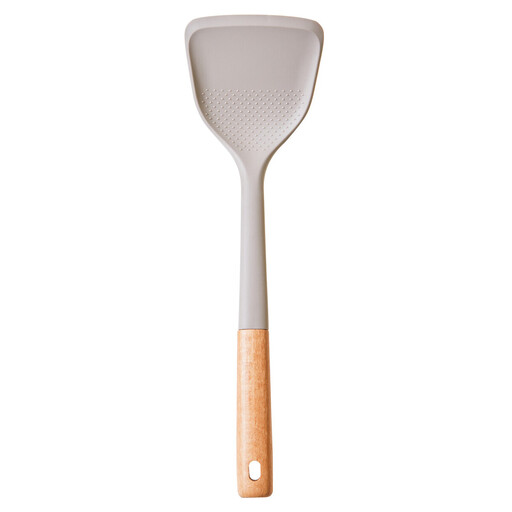
Why This Fits Their Persona: For the home cook who sees their kitchen tools as part of the decor. This turner's blend of natural wood and modern stone grey silicone is chosen for its aesthetic as much as its function, complementing contemporary kitchen styles.
Its focus on design includes an ergonomic wooden handle and a durable silicone head, avoiding the flimsy feel of cheaper alternatives. The construction is solid, providing the rigidity needed for flipping and turning.
The elegant design with a hanging loop allows it to be displayed as part of your kitchen's look. The heat-resistant, non-stick-safe head ensures it is as practical as it is stylish.
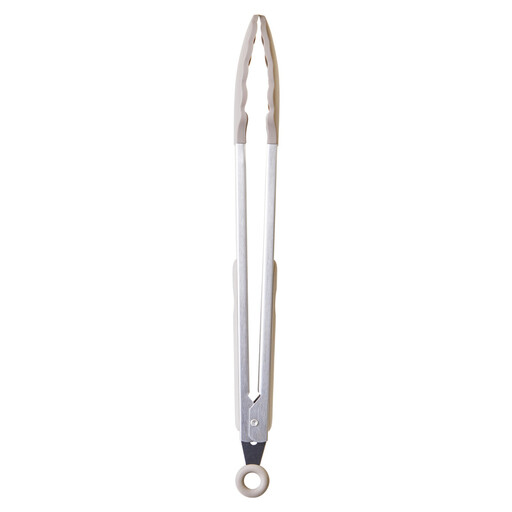
Why This Fits Their Persona: This is for the practical cook who relies on a few key tools for almost every meal. Tongs are a kitchen workhorse, and this user needs a pair that is strong, reliable and easy to clean, day in and day out.
The robust stainless steel construction provides excellent rigidity, directly countering the "flexible flaw" of cheap, all-silicone tongs. The BPA-free silicone tips ensure cookware is protected.
It combines the durability and strength of stainless steel with the gentle, non-scratch properties of silicone. The locking mechanism also makes for compact and tidy storage in a drawer.
We have compiled a complete, real-time list of products that fully satisfy these strict selection criteria and UK safety regulations.
Yes, high-quality silicone is one of the most suitable materials for use with non-stick pans. Its soft, flexible nature means it will not scratch or damage the delicate non-stick coating, unlike metal or hard plastic utensils. This helps to prolong the life of your cookware.
To prevent damage, you should always hand wash utensils with wooden handles using warm, soapy water. Never leave them to soak in the sink and avoid putting them in the dishwasher, as the high heat and prolonged exposure to water can cause the wood to swell, crack or fade. Dry them thoroughly with a towel after washing.
Food-grade silicone is a specific type of silicone that has been certified as safe for contact with food. It is produced to a higher standard to ensure it is non-toxic, odourless and does not contain any chemical fillers. It is also more stable at extreme temperatures, meaning it will not release harmful substances into your food when heated during cooking.