
24/7 Customer Support

Free returns

Same-day & Next-day Delivery

Quality Guaranteed

Unlock Your Welcome Offers: FREE Delivery | Up to 80% OFF | Free 30-day JoyPlus trial
Download the APP
As a Joybuy Product Recommendation Officer, my role is to help you navigate the crowded market of kitchen essentials. A simple item like a kitchen spoon seems straightforward, but choosing the wrong one can lead to frustration, damaged cookware and wasted money. Before you add another spoon to your drawer, let’s look at the common pitfalls many UK shoppers fall into.
Many utensils look great on the shelf but fail in a real kitchen environment. Here are the key issues to watch out for:
To ensure your new kitchen spoons are a help, not a hindrance, focus on these two non-negotiable parameters.
The material of your spoon dictates its use, durability and compatibility with your pots and pans. There is no single material that does it all.
A well-stocked kitchen has a few different types of spoons, each designed for a specific job.
Instead of a one-size-fits-all approach, we match products to specific needs. Here are our recommendations based on common UK kitchen profiles.
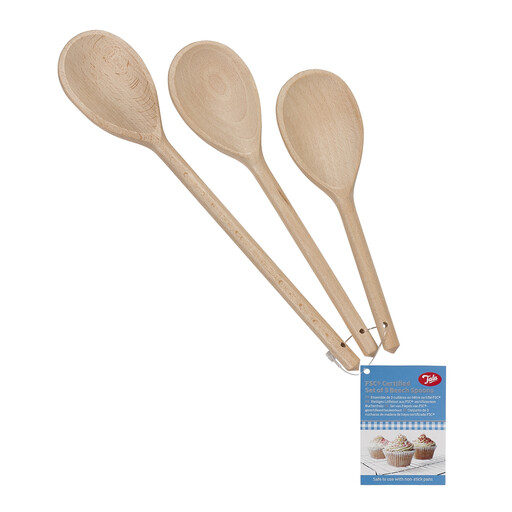
Why This Fits Their Persona: Setting up a first kitchen often involves getting a set of non-stick pans. This versatile trio of wooden spoons provides the essential tools for stirring and serving without the risk of damaging that new cookware. It's a practical, foundational choice.
Directly solves the "Non-Stick Nightmare" by providing a naturally non-abrasive material. The solid beechwood construction also avoids the weak points and melting risks of cheap plastic alternatives.
Includes three different spoon shapes for versatility. Made from durable, sustainably sourced (FSC-certified) beechwood.
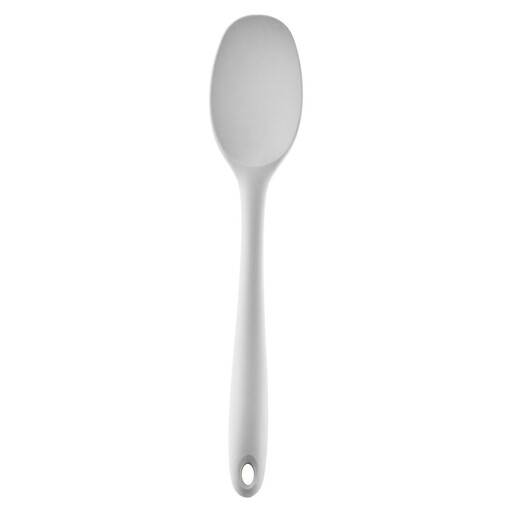
Why This Fits Their Persona: This user has invested in good non-stick cookware and their primary goal is preservation. A dedicated silicone spoon is the perfect tool, offering high heat resistance without any risk of scratching the delicate coating.
The heat-resistant silicone head is explicitly designed to be gentle on non-stick surfaces. The ergonomic, non-slip handle also addresses the ergonomic flaw, providing comfort and control during use.
Combines a protective silicone head with a comfortable handle. The hanging loop allows for easy, organised storage.
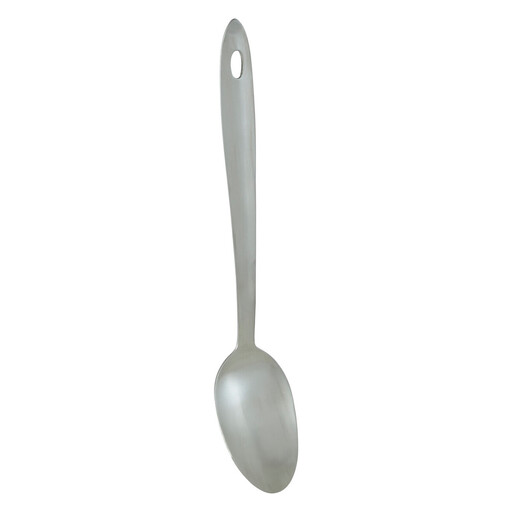
Why This Fits Their Persona: For those who value aesthetics as much as function, this spoon delivers. Its sleek, contemporary design and brushed silver finish make it suitable for both cooking in a modern kitchen and for use as a stylish serving spoon at the dinner table.
Made from robust stainless steel, this spoon is built for longevity and won't melt or warp. The wide, curved handle is designed for a comfortable grip, avoiding the ergonomic flaw of less considered designs.
Durable, long-lasting stainless steel construction. The elegant brushed finish and hanging loop offer both style and practical storage.
We have compiled a complete, real-time list of products that fully satisfy these strict selection criteria and UK safety regulations.
There is no fixed timeline, but you should replace wooden spoons if you notice they have developed deep cracks or splinters, as these can harbour bacteria. It's also time for a new one if it has become permanently stained or retains strong odours (like garlic or chilli) even after washing. To prolong their life, always hand-wash them and allow them to air dry completely.
Generally, yes, provided they are made from high-quality, food-grade silicone. Most silicone kitchen utensils are rated as heat-resistant up to around 220°C (428°F), which is suitable for most stovetop tasks. However, you should always check the manufacturer's specific guidance and avoid leaving any utensil in direct contact with a heating element or open flame.
It depends entirely on the material. Most solid stainless steel spoons are dishwasher-safe. Wooden spoons should never be put in the dishwasher, as the intense heat and prolonged exposure to water will cause them to warp and crack. For silicone spoons, especially those with wooden handles, it is best to check the product's care instructions. Hand-washing is often the safest method to maintain their condition.