Who this is for

Single-screen rally practisers

If braking points, turn-in and reading the stage are your priorities, screen placement matters as well as size. SIMRACINGCOCKPIT.GG uses screen diagonal, aspect ratio and seated viewing distance as inputs for calculating field of view (FOV).

Space- and GPU-conscious sim racers

A 27-inch QHD screen may fit a compact desk or wheel rig more readily than a wider display. Its 2560 × 1440 resolution also has fewer pixels to render than 3440 × 1440, though your game and PC still determine the frame rate you can achieve.

OLED buyers who use fixed displays

OLED may appeal if you value fast pixel response and deep blacks, characteristics described by RTINGS.com. If rally displays, timing panels or desktop windows stay in the same position for long sessions, consider image-retention risk and the exact monitor’s care and warranty terms.

What matters when choosing

27-inch QHD, 16:9

Choose when: You need a single screen for a compact desk or rig and can position it at your measured viewing distance.

Trade-off: It offers less horizontal screen area than a 34-inch 21:9 display; increasing the game’s FOV alone does not correct the physical setup.

Larger QHD, 16:9

Choose when: You want a physically larger image while retaining 2560 × 1440 resolution and have room to place the screen appropriately.

Trade-off: A larger panel takes up more space, and its size alone does not establish the correct driving perspective.

34-inch ultrawide

Choose when: A wider single-screen view is your priority and your rally game supports the intended aspect ratio.

Trade-off: Rendering 3440 × 1440 requires more pixels than 2560 × 1440, so check PC performance as well as rig width.

Concern Buying check Who this matters to
Useful view and FOV Measure seated eye-to-screen distance and available rig space; check aspect-ratio support in your rally game. With only one screen, I want stage reference points to look plausibly placed rather than simply making the image wider; around 42% of consumers put a useful, correctly scaled view first.
Motion and device fit Match native resolution, input-specific refresh limits and any desired variable-refresh mode to your device. When my existing PC or console has to drive the screen, I care more about a usable resolution and refresh combination than a headline maximum. Roughly 33% of consumers prioritise that hardware fit.
Panel and fixed-display use Compare OLED and LCD for your room and usage; read the exact model’s panel-care and warranty terms. If rally displays or desktop elements will remain visible for long sessions, I want to weigh image quality against long-term use. Around 25% of consumers put that panel trade-off first.

Buying pitfalls

  • Choosing by size or curvature alone

    A large curved monitor can still give an unsuitable driving perspective if it sits too far away or the game’s FOV does not match the setup.

    Measure from your seated eye position to the installed screen, then set FOV using its actual diagonal, aspect ratio and distance. SIMRACINGCOCKPIT.GG identifies all three as calculator inputs.

  • Assuming every connection delivers the stated refresh rate

    Refresh limits can differ by input. MSI UK lists the MAG 325QF E18V at up to 144 Hz through HDMI and 180 Hz through DisplayPort, both at 2560 × 1440.

    Check the exact monitor model, device output and cable against the mode you intend to use.

    A compatible cable or a change to game settings may be needed for your intended setup.

  • Treating fixed rally displays the same on OLED and LCD

    RTINGS.com identifies permanent image retention as a consideration for prolonged fixed content. Its long-duration testing indicates a risk, not the lifespan of an individual monitor.

    Review the OLED model’s panel-care guidance and warranty terms; compare an LCD option if unchanged rally displays or desktop elements will occupy much of your screen time.

  • Assuming every rally game handles 21:9 alike

    EA’s published EA SPORTS WRC information discusses ultrawide support for that title. It does not establish the same behaviour in another game, platform version or update.

    Check current display options for the exact rally game and platform you will use before choosing an ultrawide.

Relevant brands to consider

MSI

The MAG 274QF and MAG 325QF E18V illustrate 27-inch and larger QHD routes for a single-screen setup.

  • MSI UK specifies 2560 × 1440 and 180 Hz for both models; the MAG 325QF E18V has a 31.5-inch panel.
  • These are manufacturer specifications, not measured game performance. Check the selected model’s input-specific refresh limits.

LG UltraGear

LG’s 34GS95QE-B is a model reference for a curved OLED ultrawide route.

  • LG UK specifies a 34-inch, 3440 × 1440, 21:9 OLED panel with an 800R curve and 240 Hz refresh rate for the 34GS95QE-B.
  • A wider resolution raises rendering demands relative to 2560 × 1440. Repeated fixed-display use also warrants an OLED care and warranty check.

Alienware

The AW3423DWF provides a model reference for comparing 34-inch-class QD-OLED ultrawides.

  • Dell UK lists the AW3423DWF at 3440 × 1440 and up to 165 Hz through DisplayPort.
  • Dell UK describes this particular model as currently unavailable; its specifications are not evidence that it can currently be purchased.

Joybuy monitor choices for single-screen rally setups

These choices include compact QHD screens, a larger 16:9 option and 34-inch monitors for a wider-view setup. Decide which format fits your rig and game before comparing their panel and refresh specifications.

MSI MAG 274QF gaming monitor

MSI MAG 274QF 27-inch QHD gaming monitor

Consider this for a compact, single-screen rally rig if a 27-inch display fits your measured viewing position.

MSI UK specifies 2560 × 1440, 180 Hz and a 0.5 ms GtG minimum for the MAG 274QF; these figures do not establish the frame rate your game will deliver.

Check the required input mode and calibrate FOV after placing the screen.

View on Joybuy

LG UltraGear 34GX900A-B OLED gaming monitor

LG UltraGear 34GX900A-B 34-inch OLED, 240 Hz

Consider this larger OLED option if a wider single-screen setup is your priority and the display can fit your driving position.

The product name specifies a 34-inch OLED monitor and 240 Hz refresh rate. Check its exact native resolution, your game’s aspect-ratio options and the signal your device can supply.

For repeated fixed rally displays, read the panel-care guidance and warranty terms before choosing OLED.

View on Joybuy

Dahua 34-inch UWQHD curved gaming monitor

Dahua 34-inch UWQHD 200 Hz curved VA monitor

This is a 34-inch option for a wider single-screen layout, provided your rig has room and your rally game uses the intended format.

Its product name specifies 3440 × 1440, a VA panel, 200 Hz and a 1 ms MPRT figure. MPRT is the stated response-time measure, not an independently measured result.

Check your device’s achievable resolution and refresh rate through the chosen connection; confirm variable-refresh support if you need it.

View on Joybuy
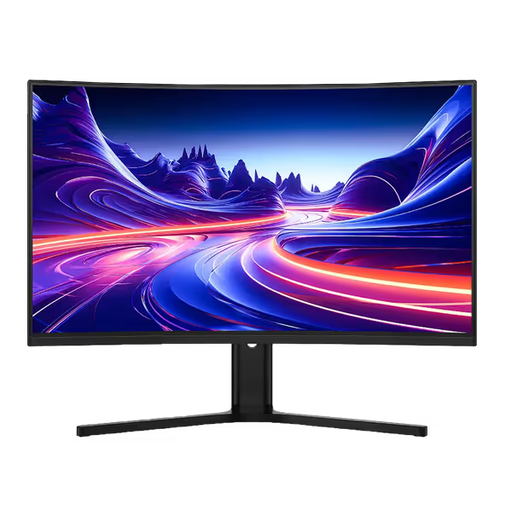
Dahua 32-inch QHD curved gaming monitor

Dahua 32-inch QHD 180 Hz curved VA monitor

Consider a larger physical 16:9 image if your desk or wheel rig can accommodate it without placing the screen too far away.

The product name specifies 2560 × 1440, a VA panel, 180 Hz and a 1 ms MPRT figure. Its resolution matches the QHD route rather than the higher-pixel-count ultrawide route.

Check the refresh mode available through your device and connection, then set FOV for the installed distance.

View on Joybuy

MAG 274QP QD-OLED X24 gaming monitor

MAG 274QP QD-OLED X24 27-inch QHD, 240 Hz

This is a compact QHD-format choice if OLED is a priority and a 27-inch screen suits your seated position.

The product name specifies 2560 × 1440, QD-OLED, 240 Hz and Adaptive-Sync. Check that your device, cable and game can use the mode you want rather than treating the refresh figure as a game-performance promise.

If you regularly leave rally displays in fixed positions, review panel-care guidance and the exact warranty terms.

View on Joybuy

Frequently asked questions

Is a 34-inch ultrawide automatically better for rally practice than a 27-inch QHD monitor?

No. An ultrawide provides a wider physical screen, but it only makes sense for your setup if the game handles its aspect ratio, the PC performs satisfactorily at the intended resolution and the screen fits your viewing position. A correctly placed 27-inch QHD monitor can be more practical on a compact rig.

How do I set FOV on one rally monitor?

Place the monitor where you will drive, measure your seated eye-to-screen distance and use the real screen diagonal and aspect ratio in the game’s FOV controls or a suitable calculator. SIMRACINGCOCKPIT.GG identifies those three measurements as calculator inputs; adjust within the controls your game actually provides.

Will my PC need more graphics capacity for 3440 × 1440?

It may: 3440 × 1440 contains more pixels than 2560 × 1440, so the same PC may produce a lower frame rate at otherwise comparable settings. EA’s published EA SPORTS WRC PC requirements give recommended graphics hardware for that game, not a promised frame rate at every resolution or preset. Check performance for your chosen title and settings.

Should I avoid OLED if I use a fixed rally display every day?

Not necessarily, but prolonged fixed content makes panel care and ownership terms important. RTINGS.com identifies burn-in as a consideration for static-heavy use, including repeated fixed game displays over long periods. Check the exact monitor’s guidance and warranty, and compare an LCD if persistent rally or desktop elements will occupy much of your screen time.