Cockpit-layout learners
If you want instruments, menus or a reference window alongside the simulation, a 34-inch 21:9 Ultra-WQHD layout is worth considering. Check that the simulation and your desktop can make use of the extra horizontal space.


Choose a 34-inch 3440 × 1440 ultrawide if your priority is horizontal room for cockpit instruments and reference windows; choose a 32-inch 4K display if fine labels and a conventional 16:9 layout matter more. Either choice depends on the simulation supporting your intended layout, your hardware and connections supporting the display mode, and the screen fitting a comfortable seated position.
If you want instruments, menus or a reference window alongside the simulation, a 34-inch 21:9 Ultra-WQHD layout is worth considering. Check that the simulation and your desktop can make use of the extra horizontal space.
If reading dense control labels and maps takes priority over extra width, a 32-inch 4K display offers a conventional 16:9 route. Confirm that your hardware can run the resolution at the settings you intend to use.
If screen position is a deciding factor, check the stand, desk depth and mounting options as carefully as the display format. The Health and Safety Executive advises placing the screen directly in front of you, with its top around eye level and the screen about an arm’s length away.
Decide whether cockpit workspace or fine detail matters more, then check the connection and seated setup needed to use your chosen display.
| Concern | What to check | Who this matters to |
|---|---|---|
| Cockpit workspace | Check for a 21:9, 3440 × 1440 layout and enough desk width; confirm that your simulation can use the wider format. | If I want instruments and a reference window visible beside the main view, horizontal room comes first. Around 36% of consumers prioritise that cockpit workspace. |
| Fine detail | Check screen size, 4K resolution and your preferred desktop scaling, alongside the source device’s output. | When small control labels and maps are my main concern, I would put detail ahead of extra width. Roughly 29% of consumers make fine detail their primary need. |
| Motion and connections | Confirm refresh-rate modes for the port you will use and variable-refresh-rate compatibility with your hardware. | For frequent viewpoint changes, I care most about the display mode my system can actually deliver. Around 21% of consumers put motion and connection compatibility first. |
| Seated positioning | Measure desk width and depth; check stand adjustment or VESA mounting against the Health and Safety Executive’s screen-position guidance. | If I cannot place a wide screen at a workable height and distance, its other features matter less to me. Roughly 14% of consumers prioritise seated positioning. |
A wide screen needs enough room to sit directly in front of you at a suitable distance. The Health and Safety Executive advises an approximately arm’s-length viewing distance and a screen top around eye level.
Measure usable width and depth, then check the stand’s adjustment range. If you plan to use an arm, confirm the monitor’s VESA pattern and the arm’s load rating.
An arm or a different desk arrangement may be needed if the supplied stand cannot place the screen appropriately.
The monitor’s maximum refresh rate does not establish the frame rate your simulation will deliver. The usable display mode also depends on the source device, input and cable.
Check the monitor’s port-specific modes and your graphics output before making high refresh rate a deciding factor.
Samsung describes glare-reduction and OLED-protection features for particular models, not a guarantee that reflections or prolonged static interfaces cease to matter.
Check the exact model’s care guidance, consider how long cockpit elements remain static, and position room lighting to limit reflections.
The Health and Safety Executive’s display-screen-equipment guidance concerns workplace screen use; it does not identify a required panel type, size or refresh rate for this gaming setup.
Use its positioning advice when arranging a seated desk. If you also use the screen regularly for work, follow your employer’s workstation-assessment process.
LG UK lists a 34-inch curved OLED ultrawide route for buyers considering a wide cockpit layout.
Samsung UK lists a 32-inch 4K QD-OLED option for a conventional-format, high-detail setup.
ASUS UK specifies a curved 34-inch Ultra-WQHD model with several ways to adjust its seated position.
Gigabyte’s M34WQ is relevant if you want to switch between a simulation system and another device or reference source.
These 34-inch ultrawide options suit a search for more horizontal room around a seated spacecraft-control view. Check each model’s desk fit and connection modes against your own setup; this product selection does not cover the 32-inch 4K route discussed above.
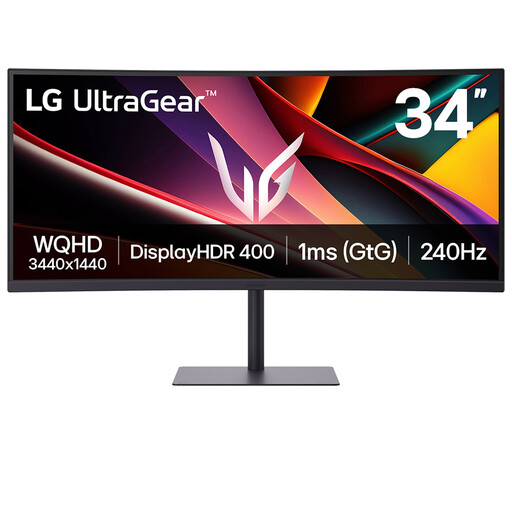 Image unavailable
Consider this ultrawide option if horizontal room for controls and reference material is your priority.
The product title specifies a 34-inch VA WQHD display and 240Hz refresh rate. Check which input mode supports the refresh rate you intend to use, and measure the available desk space.
 Image unavailable
This is an ultrawide option for keeping a spacecraft view and supporting information in a wider layout.
The product title identifies a 34-inch UWQHD display. Check the connection modes and stand-adjustment range against your hardware and seated position.
 Image unavailable
Its ultrawide format is relevant if you want room for cockpit instruments around the main view.
The product title specifies OLED, WQHD and 240Hz. Consider the care guidance for prolonged static cockpit interfaces, and confirm the input mode needed for your intended refresh rate.
 Image unavailable
The 3440 × 1440 ultrawide layout is relevant if you want controls alongside the main simulation view.
The product title specifies a VA panel and 200Hz refresh rate. Check the refresh-rate mode for your chosen input and confirm variable-refresh-rate compatibility if you need it.
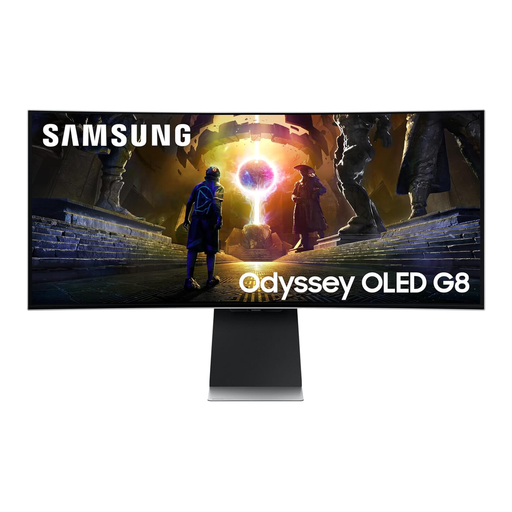 Image unavailable
This curved ultrawide option is relevant when horizontal space for spacecraft controls matters more than a conventional 16:9 layout.
The product title specifies OLED, WQHD and 175Hz. Check the input mode, variable-refresh-rate compatibility if needed, and the screen’s fit on your desk.
Choose a 34-inch 3440 × 1440 ultrawide if horizontal room for cockpit information is your main need; choose a 32-inch 4K monitor if fine labels and a conventional 16:9 layout matter more. Check that your simulation, graphics hardware and connections support the resolution and display mode you plan to use.
Place it directly in front of you, with enough desk depth to set a workable viewing distance. The Health and Safety Executive advises keeping the screen top around eye level and the screen about an arm’s length away; check the stand adjustment or intended VESA mount before buying.
The Health and Safety Executive’s workplace display-screen-equipment guidance does not prescribe a gaming-monitor size, panel type or refresh rate for this choice. Its positioning advice can help with a seated setup; if you also use the display regularly for work, follow your employer’s workstation-assessment process.