
24/7 Customer Support

Free returns

Same-day & Next-day Delivery

Quality Guaranteed

Unlock Your Welcome Offers: FREE Delivery | Up to 80% OFF | Free 30-day JoyPlus trial
Download the APP
Buying table tennis rackets can look straightforward until you compare blade materials, rubber types, grip shapes and star ratings. A low-cost bat may be suitable for occasional family games, while a carbon table tennis racket could feel too fast for someone still learning basic strokes.
The right choice depends on how and where you play. Before purchasing, consider these common traps and practical specifications.
A 9-star table tennis racket may include carbon layers and high-tension rubber, but that does not make it suitable for every player. Faster equipment can make timing errors more difficult to correct, particularly for beginners.
Star ratings are useful as a general comparison guide, but they are not a complete measurement of playing quality. Check the blade construction, rubber type and intended player level as well.
Carbon reinforcement can make a racket feel more rigid and responsive. However, a powerful blade may send the ball away quickly before a new player has developed consistent control.
For casual games, coaching sessions or developing technique, an all-wood table tennis bat may provide a more manageable feel. Carbon is more relevant for players who already understand their preferred speed, spin and stroke technique.
A table tennis racket set may contain two bats and balls, but not necessarily a net. If you plan to play on a dining table, office table or garden table, check whether the package includes a portable net and how it attaches.
Also look for storage. A carry case helps protect rubber surfaces from dust, sunlight and accidental scratches between games.
The blade is the main structural part of a racket. Common options include:
A beginner table tennis bat should generally prioritise comfortable handling and control rather than maximum speed.
Inverted rubber has a smooth surface and is commonly used for generating spin. Pips-out rubber has visible pimples and can produce a different response during blocks and returns. Some entry-level table tennis paddle designs use different rubber characteristics on each side to support varied strokes.
Look for clear information about whether the rubber is double-sided, high-tension, wear-resistant or intended for offensive play. Avoid relying only on phrases such as “professional performance” unless the construction details are also listed.
A shakehand table tennis racket has a flared or concave handle and is held in a similar manner to shaking hands. It is a familiar option for many UK club players and beginners.
A penhold table tennis racket has a shorter handle and is held between the thumb and forefinger. It supports a distinct stroke style, so it is worth selecting only if that grip is already part of your playing technique.
For children, handle comfort and overall weight are particularly important. A children’s table tennis racket with a non-slip handle may be easier to control during shorter practice sessions.
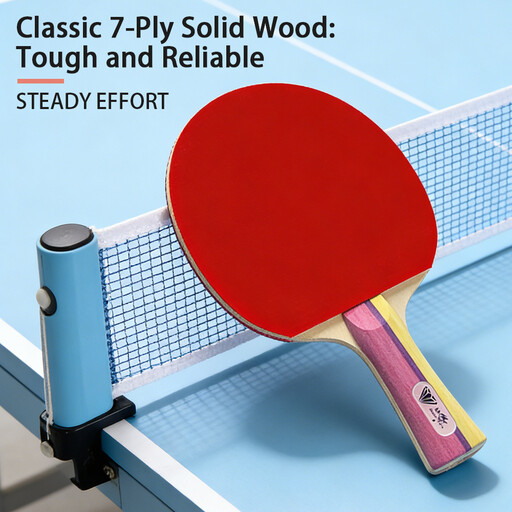
Why This Fits Their Persona: A practical single racket for students or new players who want to learn with a penhold grip without buying a full equipment bundle.
The 1-star classification and listed construction make its entry-level positioning clear, rather than implying advanced carbon performance.
7-ply solid wood blade, double-sided rubber and a non-slip, sweat-absorbing grip.
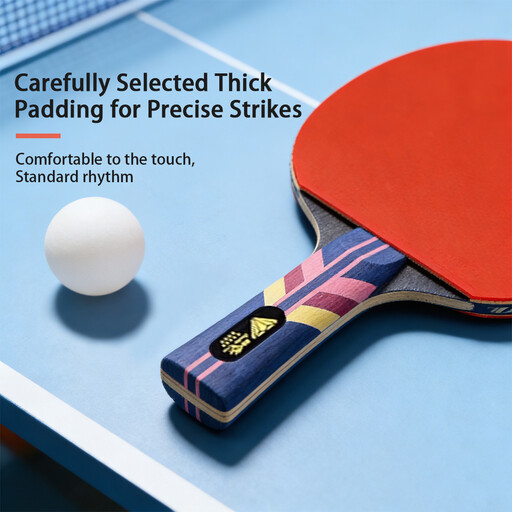
Why This Fits Their Persona: Intended for experienced shakehand players who understand the demands of a rigid, high-speed racket during serious training.
Its dual-layer carbon construction, enlarged frame and thick protective edge are specified clearly, allowing buyers to assess the design beyond the star label.
Dual-layer carbon blade, double-sided offensive inverted rubber and sweat-absorbent solid wood handle.
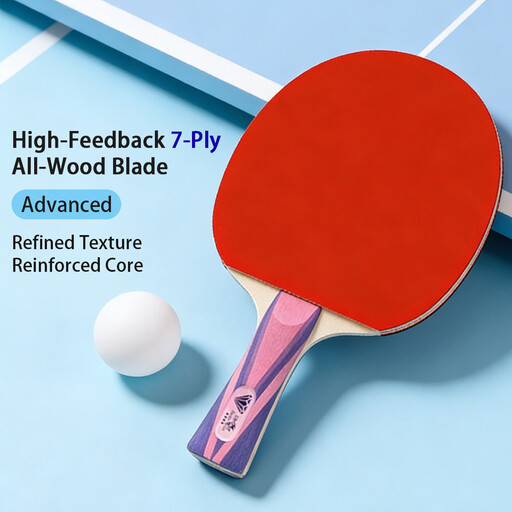
Why This Fits Their Persona: A suitable direction for advancing or intermediate players who use a penhold grip and want equipment for regular spin-focused practice.
The 7-ply all-wood construction offers a defined alternative to automatically choosing carbon for training, while the penhold handle matches a specific grip.
7-ply reinforced all-wood blade, high-elastic wear-resistant rubber and a non-slip, sweat-absorbent handle.
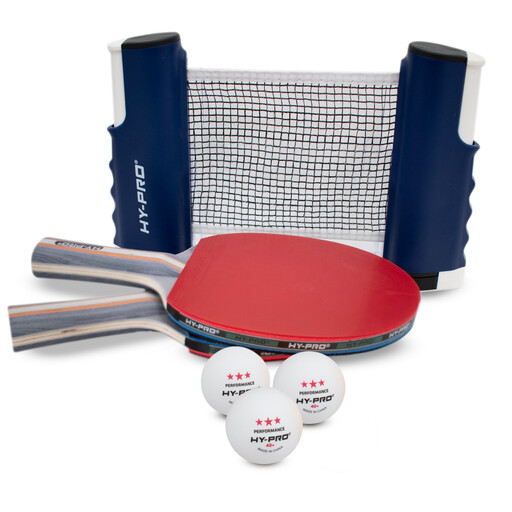
Why This Fits Their Persona: Designed for households, offices and holidays where players need a complete portable table tennis set rather than a single paddle.
The included net is listed alongside two bats, balls and a carry case, reducing the risk of buying a racket bundle that cannot be set up immediately.
Includes two bats, balls, a synthetic net and a carry case for storage and transport.
A racket does not require electrical power or ongoing running costs, but basic maintenance can help preserve its playing surface. Wipe the blade, handle and rubber with a soft, dry cloth after use. Keep the racket away from radiators, direct heat, open flames and damp storage areas.
Do not leave the rubber exposed in a garden shed or hot car. Store the racket in its case where available, and avoid dropping it or hitting tables and other hard objects with the blade edge. Replace a racket when the rubber has visibly lost its grip, started peeling or become damaged, rather than choosing solely by age.
We have compiled a complete, real-time list of products that fully satisfy these strict selection criteria and UK safety regulations.
Most indoor rackets can be used outdoors for occasional games, but dampness, wind and direct sunlight can affect the rubber and ball movement. A portable table tennis set is convenient for gardens and travel, provided it is stored indoors after use.
Lifespan depends on playing frequency, storage and impact damage. Regular players may notice rubber wear sooner than occasional users. Clean the surfaces, protect the racket from heat and replace it when the rubber becomes visibly worn or loses its intended response.
Not always. A complete table tennis balls and net set can include both playing accessories, while a bat-and-ball set may include balls but no net. Check the product contents before ordering, especially if you plan to use a standard household table.