
24/7 Customer Support

Free returns

Same-day & Next-day Delivery

Quality Guaranteed

Unlock Your Welcome Offers: FREE Delivery | Up to 80% OFF | Free 30-day JoyPlus trial
Download the APP
Choosing a new table tennis bat can feel overwhelming. With terms like 'ply', 'star ratings' and different rubber types, it's easy to get lost in the details. Whether you're buying your first bat, upgrading to something more competitive or looking for a junior table tennis bat for a young player, the right equipment can make a significant difference to your enjoyment and performance.
This guide is designed to cut through the clutter. As the Joybuy Product Recommendation Officer, my role is to provide clear, practical advice to help you select a bat that truly matches your skill level and playing style. We'll explore what key features to look for and highlight a few recommendations to get you started.
Before diving into specific products, let's cover a few essential points. Understanding these will help you make a more informed decision.
Many pre-assembled bats use a star rating system, typically from one to seven stars. This is a general indicator of performance, not an official standard, but it's a useful starting point.
The blade is the wooden core of the bat and is fundamental to its feel and power. The number of wood layers, or 'plies', affects its characteristics. A 7-ply wood bat is a popular construction, often providing a solid feel with a good balance of stiffness for power and flex for control. This construction is versatile and can be found in bats designed for various skill levels.
There are two primary grip styles: shakehand and penhold. The shakehand table tennis bat is, by far, the most common style in the UK and Europe. As the name suggests, you hold the handle as if you were shaking someone's hand. It allows for strong performance on both forehand and backhand strokes and is the standard for most players, from beginners to professionals. All the bats we recommend feature this popular and versatile grip.
Based on features, construction and intended user, here are our recommendations from the Double Fish table tennis bat collection.
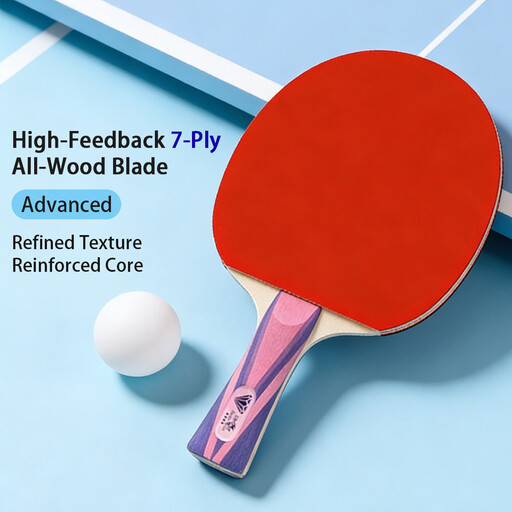
Why It Stands Out: This bat is built for the player ready to take their game to the next level. Its 7-ply all-wood blade has a reinforced core, providing excellent feedback and resilience. The high-elasticity rubber is designed to generate significant spin, giving you an edge in competitive rallies. It’s a bat that feels stable and powerful in hand.
Pros:
Who is it for?: This is an ideal intermediate table tennis bat for advancing players who have a solid foundation and want to enhance their spin and power to compete more effectively.
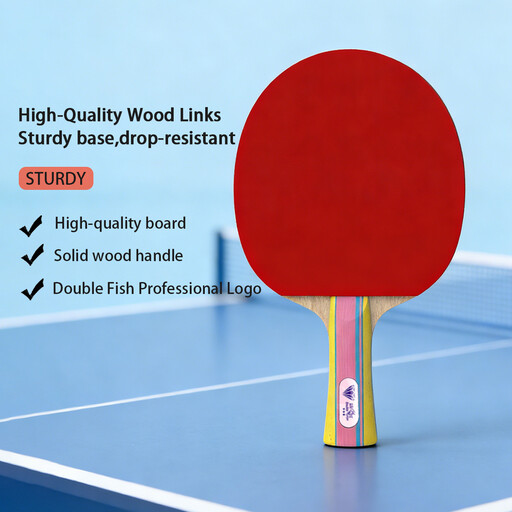
Why It Stands Out: This 3-star model offers a significant step up from basic starter bats while remaining incredibly accessible. It features a lightweight design with shock-absorbing technology, reducing fatigue for younger players or beginners. The construction is optimised for a "Fast Attack with Loop" style, helping players develop offensive techniques.
Pros:
Who is it for?: A superb beginner table tennis bat for those entering their first matches or a high-quality junior table tennis bat for children serious about learning the game.
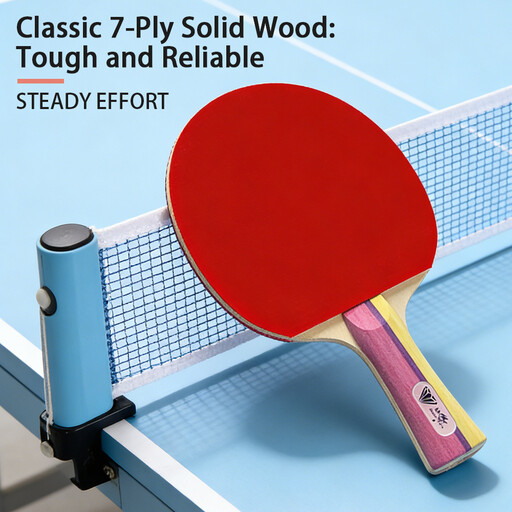
Why It Stands Out: Built on a classic 7-ply solid wood foundation, this bat is all about control and consistency. It cleverly uses double-sided rubber: one side for speed and the other for control, allowing new players to experiment. The expanded sweet spot is a forgiving feature that helps improve hitting accuracy as you learn.
Pros:
Who is it for?: The perfect entry point for absolute beginners, students or anyone looking for a reliable bat for casual family games. It’s designed to build confidence and make learning fun.
While these three bats cover a wide range of needs, we understand that every player is unique. If you're exploring equipment for various sports or want to see more entry-level choices, feel free to browse our full collection of beginner tennis racket options to find the gear that best suits you.
There is no functional difference. 'Table tennis' is the official name of the sport, and 'table tennis bat' is the formally correct term for the equipment. 'Ping pong' is a common, informal name that originated as a brand name over a century ago and many people use the term professional ping pong bat and competition table tennis bat interchangeably.
A good time to consider an upgrade is when you feel your bat is holding you back. If you can consistently execute basic strokes and find yourself wanting more speed or spin than your current bat can generate, it's likely time to move to an intermediate table tennis bat, such as a 3-star or 4-star model.
For a junior table tennis bat, the key factors are weight and handle size. A lighter bat prevents fatigue and allows for better control as a young player develops their technique. A slightly smaller or flared handle, like that on the 3-Star Double Fish model, can provide a more secure and comfortable grip for smaller hands.