
24/7 Customer Support

Free returns

Same-day & Next-day Delivery

Quality Guaranteed

Unlock Your Welcome Offers: FREE Delivery | Up to 80% OFF | Free 30-day JoyPlus trial
Download the APP
A full freezer is a modern-day luxury, but what happens when you run out of space? Whether you are a student in a compact dorm, a renter in a small flat or a homeowner needing overflow for batch cooking, a table top freezer offers a practical solution. However, the market is filled with models that look similar but perform very differently.
Before you buy, it is crucial to understand a few common pitfalls that can lead to wasted money and spoiled food. As a Joybuy Product Recommendation Officer, my role is to help you see past the marketing and focus on the features that truly matter for UK households.
Many shoppers are caught out by seemingly good deals that hide critical flaws. Here are the three most common issues to watch for:
To ensure you get a reliable and effective appliance, focus on these non-negotiable specifications.
For genuine freezing capability, you must choose a 4 star table top freezer. This is the only rating that guarantees the internal temperature can reach and maintain -18°C or lower, which is the required temperature for safely freezing fresh food (like meat, vegetables or batch-cooked meals) and storing it for up to 12 months. Anything less is only suitable for short-term storage of already-frozen items.
A 31l freezer is a popular size, but what does that mean in practice? This capacity is typically enough for a few tubs of ice cream, several pre-made meals and bags of frozen vegetables. Before purchasing, measure the space where you plan to put it—be it on a worktop or as an under counter freezer. Crucially, check the manufacturer's guidelines for ventilation. Most units require at least 5cm of clearance at the back and sides to prevent the motor from overheating.
Since 2021, UK appliances use a new A-G energy rating scale, which is much stricter than the old A+++ system. Many excellent, efficient small appliances now fall into the E or F categories. Do not be deterred by this. An E-rated small freezer for home use is often very economical. For example, a model with an annual consumption of 165 kWh would cost approximately ?46 per year to run, based on current average electricity prices.
To help you navigate the options, we have matched some suitable models to common UK user profiles.
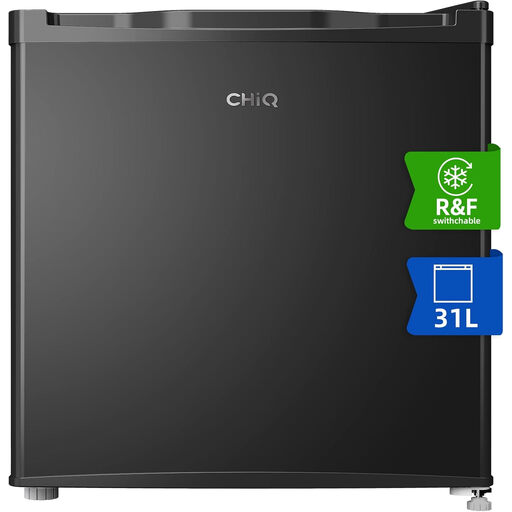
Why This Fits Their Persona: Ideal for a university dorm, home office or small kitchen where floor space is at a premium. Its compact dimensions and reversible door offer maximum placement flexibility, while the 31-litre capacity is perfect for personal use or storing extra essentials.
This is a genuine 4-star freezer, not a simple ice box, so it can safely freeze fresh food. Its 41 dB noise level makes it a true quiet countertop freezer, suitable for living spaces.
Delivers proper freezing performance in a very small footprint. The removable wire shelf helps with organisation and its E-rating ensures efficient operation.

Why This Fits Their Persona: For those who find a table top model too restrictive. This chest freezer offers a substantial 95-litre capacity for bulk buys and meal prepping, making it ideal for families needing overflow storage in a garage or utility room.
This unit avoids the noise trap by operating at an exceptionally low 38 dB. Its convertible function (switching between fridge and freezer) adds a layer of utility not found in basic models.
Massive 95L capacity and the flexibility to switch between freezer and refrigerator modes. Includes a removable basket for organising smaller items.
We have compiled a complete, real-time list of products that fully satisfy these strict selection criteria and UK safety regulations.
Yes, this is a critical step. After delivery and placement, you must let the freezer stand upright and unplugged for a minimum of 4 hours. This allows the compressor gases and oils, which get disturbed during transit, to settle. Plugging it in too soon can cause permanent damage to the cooling system.
For a manual defrost model, you should perform a defrost whenever the ice build-up on the interior walls reaches about 5mm (roughly 1/4 inch) thick. Letting the ice get thicker forces the compressor to work harder, consuming more electricity and reducing the freezer's effectiveness.
Running costs depend on the freezer's energy rating and your electricity tariff. As an example, an E-rated model like the AUCMA 95L freezer consumes around 165 kWh of electricity per year. At an average UK electricity rate of 28p per kWh, this would translate to approximately ?46.20 per year, or less than ?4 per month.