
24/7 全天候客户支持

免费退货

当日/次日达

品质保障

开启新人专享福利: 全场免邮 | 低至 2 折 | 免费试用 30 天 JoyPlus 会员
下载 Joybuy
A tumble dryer can make wet-weather laundry far easier, but choosing the wrong one may lead to high running costs, repeated maintenance and a machine that does not fit your routine. The most suitable model depends on more than drum size or a striking energy label.
Before comparing tumble dryers, consider three common buying pitfalls:
Both types collect moisture without requiring the traditional external vent found on vented dryers, making them suitable for many kitchens, utility rooms and flats. However, their operating methods differ.
Condenser tumble dryers generally use a higher drying temperature and collect water in a tank. They are often available at a lower purchase price and can offer relatively quick cycles. You will need to empty the tank and clean the lint filter regularly unless a suitable drainage arrangement is available.
Models such as the CANDY Smart Pro 10kg and Russell Hobbs 8kg condenser dryers include practical features such as delay start, sensor drying and multiple programmes. A condenser model may suit shoppers prioritising capacity, straightforward installation and an accessible initial price.
Heat pump tumble dryers recycle warm air through a closed system and typically dry at lower temperatures. This can reduce electricity consumption compared with some conventional dryers, although cycles may take longer and the purchase price can be higher.
When comparing energy efficient tumble dryers, check the appliance’s stated energy class, estimated consumption and warranty rather than relying on broad marketing language. The supplied range includes models listed as A++ or A+++, as well as an E-rated Russell Hobbs heat pump dryer. Always confirm the current product specification and energy label before ordering, as rating systems and listings can change.
Capacity should reflect your usual washing load, not just the largest load you occasionally dry.
Do not overload the drum. Laundry needs space to move so warm air can circulate evenly. A large drum does not automatically mean faster drying if it is packed too tightly.
Most freestanding tumble dryers are approximately 85cm high and 60cm wide, but depth varies significantly. For example, supplied models range from around 53cm to 64cm deep. Measure:
Follow the manufacturer’s installation instructions. Use a properly earthed wall socket rather than an extension lead, keep ventilation openings clear and avoid installing the appliance in unsuitable damp areas.
Sensor dry tumble dryers detect moisture and stop or adjust the cycle when the selected dryness level is reached. This can help avoid unnecessary drying time, but the result still depends on load size, fabric type and correct programme selection.
Useful controls may include:
A high programme count is not automatically useful. Look for settings that match your actual laundry habits.
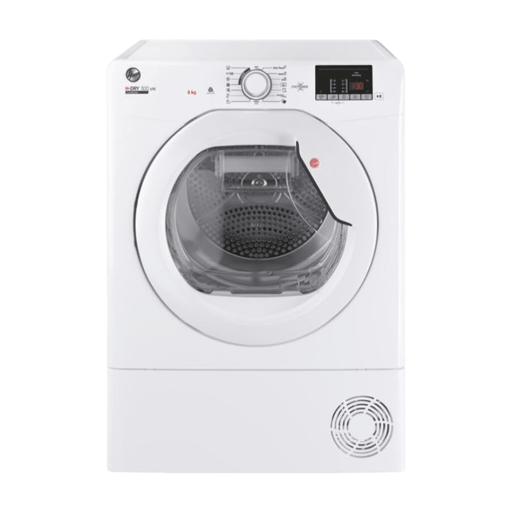
Why This Fits Their Persona: Its 8kg capacity, condenser design and 53cm listed depth suit smaller homes, couples and shoppers seeking a straightforward freestanding appliance.
It keeps the specification focused on essential drying functions rather than requiring smart connectivity.
B energy class, 12 programmes, four dryness levels and a front-accessible water tank.
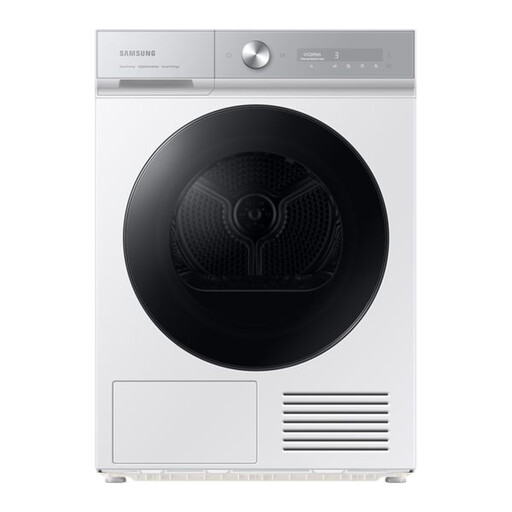
Why This Fits Their Persona: A 9kg heat pump model with app controls and a range of convenience functions suits households that value connected appliance management.
The product specification identifies the capacity, heat pump system and connectivity separately, making it easier to compare useful features.
A+++ listed energy class, Wi-Fi via SmartThings, OptimalDry sensors and a stated 62dB noise level.
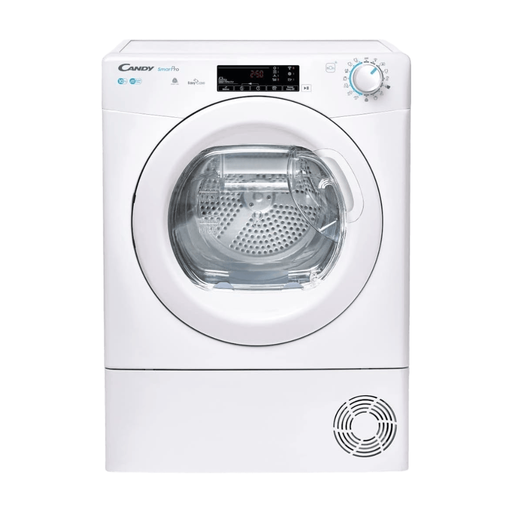
Why This Fits Their Persona: Its 10kg drum is suited to large households that regularly dry bedding, towels and substantial laundry loads.
The large capacity addresses bulky loads, while sensor drying helps avoid relying on a fixed time for every fabric type.
B energy class, 16 programmes, Wi-Fi control, 24-hour delay start and an Easy Case water collection drawer.
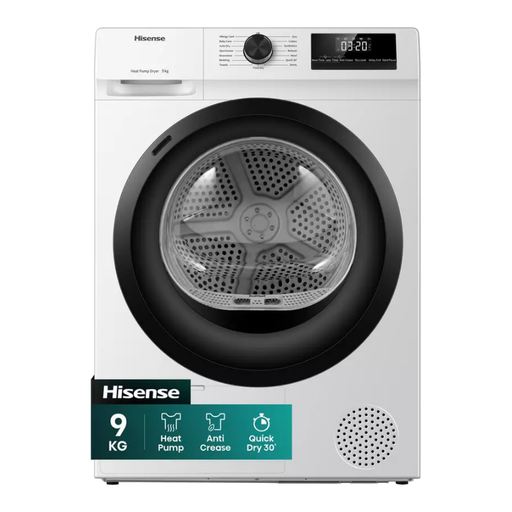
Why This Fits Their Persona: This non-smart 9kg appliance offers family capacity and heat pump operation without adding app-based controls.
It focuses on heat pump technology, capacity and maintenance access rather than connectivity features that some households may not need.
A++ listed energy class, 16 programmes, anti-crease operation and a stated 64dB noise level.
We have compiled a complete, real-time list of products that fully satisfy these strict selection criteria and UK safety regulations.
Clean the lint filter after every cycle and empty the water tank as instructed. Do not dry clothing contaminated with petrol, solvents, cooking oil or other flammable substances. Check care labels, avoid foam rubber items and keep the area around the appliance clear.
A dryer should be placed on a stable, level surface with the manufacturer’s required clearance. Do not use an extension lead, block ventilation openings or stop a cycle early unless laundry can be removed and spread out to cool safely.
They can use less electricity than some conventional condenser models because they recycle warm air and dry at lower temperatures. Actual running cost depends on the energy class, cycle selection, load size, electricity tariff and maintenance. Compare the stated energy information rather than assuming every heat pump model has the same consumption.
It does not normally need an external wall vent, giving more placement flexibility than a vented model. It still requires suitable ventilation, a stable floor, safe electrical connection and enough clearance around the appliance. Check the installation guide before placing one in a cupboard or enclosed room.
Service life varies according to construction, frequency of use, load size and maintenance. Regularly cleaning filters, emptying tanks and keeping heat exchangers and vents clear can support consistent operation. Check the warranty terms and availability of replacement parts before purchasing.