A 34-inch, 21:9 monitor with 3440 × 1440 resolution is a useful starting point when you need spreadsheet columns and an invoice visible together, provided it fits the shared desk. If two computers must stay visible or share a keyboard and mouse, check Picture-by-Picture and built-in KVM separately; for a single laptop, compatible USB-C charging and an adjustable stand may matter more. Screen position, desk space and lighting still need attention.
Who this setup suits
Accounts staff comparing figures with invoices
If you regularly move between worksheet columns, an accounting platform and an invoice or PDF, prioritise room for the windows you need to see together. LG describes side-by-side files and extended spreadsheet rows as uses for its 34BA75QE-B.
Shared-desk users switching between computers
If two computers use the desk, decide whether you need to see both sources at once, control them with one keyboard and mouse, or both. The functions are distinct, even on models that offer both.
People using a screen throughout the working day
Check whether the display can be positioned within the available desk space. The UK Health and Safety Executive’s display screen equipment guidance addresses screen position and the wider workstation, not just the choice of monitor.
What to check before buying
Choose the screen format for the accounts-and-invoices task, then check how many computers need connecting and whether the monitor can be positioned comfortably on the desk.
| Concern |
What to check |
Who this matters to |
| Side-by-side workspace |
Check for a 21:9, 3440 × 1440 display and measure its width with the stand. |
If I work across long spreadsheet rows, I want the figures and an invoice visible without repeatedly changing windows. Around 36% of consumers put side-by-side workspace first. |
| Two-computer use |
Check inputs and Picture-by-Picture for simultaneous viewing; check built-in KVM separately for keyboard-and-mouse sharing. |
When accounts and documents sit on different computers, I need to know whether I can see both and switch control without swapping peripherals. For around 29% of consumers, two-computer use is the main concern. |
| Workstation fit |
Check stand adjustment, desk depth and screen position, including potential reflections. |
I use the screen for long stretches, so its position has to work with my desk, chair and lighting. Workstation fit comes first for around 21% of consumers. |
| Single-laptop connection |
Confirm the laptop supports USB-C display output and that the monitor’s stated power delivery meets its charging requirement. |
If I normally connect just one laptop, I would rather keep the connection straightforward than prioritise controls for a second computer. Around 14% of consumers place single-laptop simplicity first. |
Common buying mistakes
-
Assuming Picture-by-Picture includes KVM
Picture-by-Picture shows two inputs at once; a built-in KVM lets one keyboard and mouse control connected computers. A desk may need both functions.
Check the exact monitor model for each feature separately.
-
Assuming USB-C guarantees a one-cable setup
A monitor’s charging capability varies by model, and the laptop must also support display output through the connection you intend to use.
Compare the stated power delivery with the laptop’s charging requirement and confirm its USB-C video support.
-
Choosing screen width without checking desk space
A wide display can compete with paper invoices, a keyboard and a mouse for space. The Health and Safety Executive advises positioning the top of the screen at eye level and the screen about an arm’s length away.
Measure the monitor’s footprint with its stand and plan where the screen and other work materials will sit.
-
Treating screen comfort features as a workstation solution
A curved panel or a low-blue-light or flicker-reduction claim does not settle questions about furniture, lighting, reflections or posture.
Assess the complete desk arrangement and any applicable workplace display screen equipment requirements before relying on individual monitor features.
Brands and relevant models
Dell
The Dell Pro 34 Plus USB-C Hub Monitor P3425WE is a business-oriented 34-inch ultrawide for a desk that needs laptop connectivity and device switching.
- Dell lists 3440 × 1440 resolution, USB-C power delivery up to 90W, 1GbE Ethernet, KVM and up to 150 mm of height adjustment for the P3425WE.
- Check the intended computers and inputs; those connections and switching features should not be assumed for other Dell ultrawides.
LG
LG’s 34-inch UltraWide range includes models aimed at side-by-side work and, on selected models, two-computer setups.
- LG lists WQHD IPS, USB-C power delivery up to 90W, RJ45, Picture-by-Picture and built-in KVM for the 34BA75QE-B.
- Features differ by model: LG states USB-C charging up to 65W for the 34WR55QK-B. Check charging capacity, stand movement and KVM on the exact variant.
Samsung
The Samsung ViewFinity S6 S65UC is relevant when a shared desk needs a 34-inch curved display and control of two connected sources.
- Samsung describes KVM control using one keyboard and mouse, alongside split-screen, Picture-in-Picture and Picture-by-Picture modes for this model.
- Confirm the detailed USB-C power specification against the laptop’s requirements before planning a charging setup.
V7
The V7 L340WQ-HAS-E is a 34-inch WQHD model to consider where two-source viewing and an adjustable stand matter.
- V7 specifies USB-C power delivery up to 65W, Picture-by-Picture, KVM and 100 mm of vertical stand adjustment for this model.
- Check the laptop’s display and charging requirements and measure the available desk space before choosing this configuration.
Ultrawide monitors on Joybuy
These monitors offer wide screens to consider for viewing accounts beside invoices. For a shared desk, check each exact model’s device-switching functions, laptop connections and physical fit before deciding.
 No image available
Acer X Predator X49X 49-inch curved QD-OLED monitor
Consider this wider screen if you need extensive horizontal room for accounts and invoice windows, but measure the shared desk carefully before choosing a 49-inch display.
32:9 Double Quad HD display; 240Hz refresh rate. Confirm the connected computer’s video and charging compatibility if you intend to use USB-C.
View on Joybuy
 No image available
Philips Evnia 6000 34M2C6500 34-inch WQHD monitor
The 34-inch format is relevant if you want accounts and an invoice side by side without moving to a 49-inch screen; check the stand’s footprint against the desk.
3440 × 1440 resolution; two HDMI inputs and DisplayPort; height, swivel and tilt adjustment. If the desk needs laptop charging or two-computer control, check those functions on this exact model.
View on Joybuy
 No image available
Dahua 34-inch curved UWQHD monitor, 200Hz
Its ultrawide format suits a layout with spreadsheet content beside an invoice; check whether the curved screen and its stand fit the shared workstation.
3440 × 1440 resolution; VA panel; two HDMI and two DisplayPort 1.4 connections. Confirm Picture-by-Picture or KVM separately if two computers must be viewed or controlled together.
View on Joybuy
 No image available
Lenovo R34w-30 34-inch UWQHD gaming monitor
Consider the wide display for keeping accounts and invoice material on screen together, while checking its full footprint and positioning on the desk.
34-inch UWQHD display. Confirm the required connections, USB-C charging, Picture-by-Picture and KVM on the exact model if any are essential to your setup.
View on Joybuy
 No image available
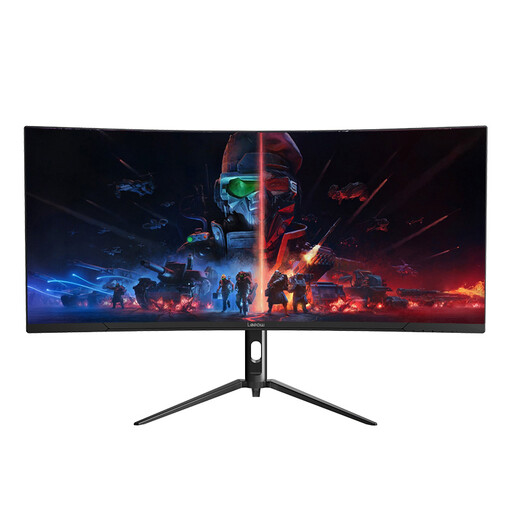
Lepow HC-SJ34MZ5 34-inch curved ultrawide monitor
The wide screen is relevant to placing a spreadsheet beside an invoice; confirm that the stand allows the screen position your shared desk requires.
3440 × 1440 resolution and 165Hz refresh rate. Check USB-C charging, Picture-by-Picture and built-in KVM on this model if the desk needs them.
View on Joybuy
Frequently asked questions
Is a 34-inch ultrawide a sensible starting point for accounts and invoices?
Yes, if your main task is keeping spreadsheet columns and a separate document visible together. LG describes side-by-side files and extended spreadsheet rows for its 34-inch, 21:9 WQHD 34BA75QE-B; check the available desk depth and whether your work also involves long portrait documents.
Do I need both Picture-by-Picture and KVM?
You need both if two computer inputs must remain visible at once and one keyboard and mouse must control them. Picture-by-Picture handles simultaneous display, while KVM handles peripheral control; confirm both on the exact monitor you choose.
Will USB-C always display video and charge my laptop through one cable?
No: the laptop must support the required USB-C display connection, and the monitor’s power delivery must meet its charging needs. Dell specifies up to 90W for the P3425WE, while V7 specifies 65W for the L340WQ-HAS-E; those figures apply to those particular models.
Does a shared accounts workstation need a DSE assessment?
The UK Health and Safety Executive says employers must assess workstations for employees who use display screen equipment daily as part of their normal work for continuous periods of an hour or more. The assessment concerns the whole workstation and individual requirements; it does not prescribe a particular ultrawide monitor.
How should a wide monitor be positioned?
The Health and Safety Executive advises placing the top of the screen at eye level and the screen about an arm’s length away. Arrange the screen and keyboard to avoid twisting, and check lighting for reflections and glare.


