A 34-inch, 3440 × 1440 ultrawide is a useful choice if you want a render, reference images and 3D application panels visible together—and the complete monitor fits your desk. For colour-sensitive work, choose stated colour-space coverage and calibration features that match your output workflow, but do not treat them as a substitute for colour management. Check your laptop’s video connection and charging needs before making USB-C a deciding feature.
Who this setup suits
Colour-critical 3D students
If lighting and material colours matter to a portfolio, video or assessed render, look beyond gamut figures to the display’s calibration documentation and your application’s colour-management settings. The International Color Consortium distinguishes calibration from profiling, while the Blender Manual explains why renders need conversion for the display.
Small-room render multitaskers
A wide screen can keep a viewport, render preview, references and coursework in view, provided the monitor and its stand leave room for a keyboard and other desk work. Compare assembled dimensions with the usable desk surface before choosing a 34-inch model.
USB-C laptop-first users
A monitor with compatible USB-C video and power delivery may reduce desk cables. Check the laptop’s display-output capability and charging requirements against the exact monitor and cable before relying on a one-cable setup.
What matters when choosing
Decide how you need to judge render colour, measure the space available for the complete monitor, and check your laptop connection before treating refresh rate as a priority.
| Concern |
What to check |
Who this matters to |
| Render colour |
Match the stated colour mode or gamut to your intended output. For colour-sensitive work, check the exact model’s calibration documentation and your application’s profile settings. |
If colour decisions affect my portfolio or assessed renders, I need to judge them in a managed workflow. Roughly 29% of consumers put render colour first. |
| Desk fit |
Compare assembled monitor width and stand depth with usable desk space; check arm and desk compatibility if you plan to mount it. |
On a small desk, I still need space for a keyboard and coursework after positioning the screen. Around 29% of consumers make desk fit their primary concern. |
| Laptop connection |
Check the laptop’s supported external resolution and USB-C video mode, then compare its charging needs with the monitor’s power delivery. |
If my laptop is my main workstation, I want the display connection to work without an unsuitable charging arrangement. Approximately 24% of consumers prioritise laptop connectivity. |
| Useful features |
Prioritise the workspace and connections you will use; consider higher refresh rates when viewport motion, animation or gaming also matters. |
When I mainly inspect still renders, I do not want motion features to distract from the display and desk requirements I use every day. Roughly 18% of consumers put feature selection first. |
Buying mistakes to avoid
-
Treating gamut coverage as a colour-match guarantee
Coverage and factory calibration describe parts of a display’s capability, not how every render will appear elsewhere. The International Color Consortium describes calibration and profiling as complementary steps; the Blender Manual also calls for conversion to the display colour space.
Match the monitor mode to your intended output, use an appropriate profile where supported, and check representative renders on the intended delivery medium.
Colour-critical work may also call for a calibration device or profiling service.
-
Measuring screen width but not the stand
A screen can fit across a desk while its stand takes up space needed for a keyboard. BenQ lists the PD3420Q at 825.8 mm wide and 244.3 mm deep with its stand.
Measure usable desk width and depth, then compare the exact model’s assembled dimensions. If considering an arm, check its mounting pattern, load rating and desk-clamp fit.
An arm may be needed if the supplied stand prevents a workable desk layout.
-
Assuming any USB-C port provides one-cable operation
A monitor’s USB-C features alone do not establish what a particular laptop can output or how it charges.
Check the laptop’s port specification, supported external resolution and charging requirements against the monitor’s video and power-delivery documentation.
Depending on that combination, you may still need a separate charger, adapter or dock.
-
Choosing refresh rate ahead of render-review needs
A higher refresh rate may matter for moving viewport content, but it does not establish colour accuracy or correct render display.
Settle desk fit, workspace, colour-workflow requirements and connectivity first. Give refresh rate more weight if animation, rapid viewport movement or gaming is also part of your use.
Brands to consider
BenQ
The PD3420Q is a 34-inch creative-work ultrawide with stated colour-space coverage and a factory calibration report.
- BenQ lists 3440 × 1440 resolution, 100% sRGB, 100% Rec.709 and 98% P3 coverage for the PD3420Q.
- Its stated 60 Hz refresh rate is a consideration if fast-moving viewport work is important. Check its 825.8 mm width and 244.3 mm depth with stand against your desk.
ASUS ProArt
The PA348CGV combines a 34-inch, 3440 × 1440 IPS display with colour-oriented specifications and up to 120 Hz refresh rate.
- ASUS states 100% sRGB and Rec.709 coverage, 98% DCI-P3 coverage, Calman verification and Delta E <2 for this model.
- Those manufacturer specifications do not replace profiling or correct colour-management settings for the render you are reviewing.
LG
The 34WQ75C-B is a 34-inch, 3440 × 1440 IPS ultrawide with stated sRGB coverage and laptop-connection features.
- LG lists 99% sRGB coverage, USB-C and an RJ45 network port for the 34WQ75C-B.
- If individual-unit colour accuracy matters, check the exact model’s calibration documentation rather than relying on the coverage figure alone.
Samsung ViewFinity
The 34-inch S65UC is a curved ultrawide aimed at a desk shared by a laptop or more than one source device.
- Samsung describes USB-C, LAN and an integrated KVM switch for controlling two connected sources with one keyboard and mouse.
- For colour-sensitive renders, assess the exact display and your managed workflow separately from its docking features.
Ultrawides for render-review work
These Joybuy listings cover wide screens that could keep a render and application windows in view. They include gaming-oriented models and a larger 49-inch option, so check colour-workflow needs and assembled desk fit rather than assuming the same setup suits every student room.
 No image available
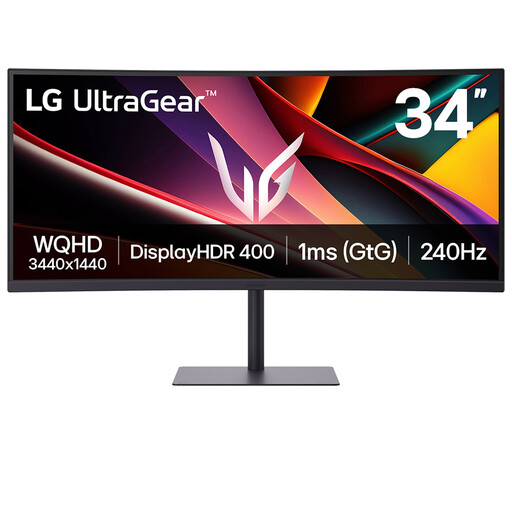
LG UltraGear 34G630A-B 34-inch VA WQHD 240 Hz monitor
Consider this wide display if you want room for render review alongside application panels. Its stated 240 Hz refresh rate is a motion feature, not a measure of render colour accuracy.
Check the assembled stand dimensions against your desk, and confirm the colour documentation and laptop charging arrangement needed for your work.
View on Joybuy
 No image available
Lenovo R34w-30 34-inch UWQHD gaming monitor
Its 34-inch UWQHD format is relevant when you want a render and 3D application visible across one screen.
Measure for the complete monitor and stand, and check the exact model’s colour documentation if your render decisions are colour-sensitive.
View on Joybuy
 No image available
Dahua 34-inch 3440 × 1440 VA curved 200 Hz monitor
The 3440 × 1440 format suits a workspace with a render beside application panels. The title also states 85% DCI-P3 coverage and two HDMI and two DisplayPort 1.4 inputs; the coverage figure alone does not establish colour accuracy.
Check dimensions with the base fitted before deciding whether it fits your desk.
View on Joybuy
 No image available
Philips Evnia 6000 34M2C6500 34-inch WQHD monitor
Its stated 3440 × 1440 resolution offers a wide layout for render checking. The title lists height, swivel and tilt adjustment, with refresh rates of 175 Hz over DisplayPort and 100 Hz over HDMI.
Confirm the assembled footprint and the colour information relevant to your intended output before choosing it for a small desk or colour-sensitive work.
View on Joybuy
 No image available
CRUA 49-inch 5120 × 1440 32:9 curved monitor
Consider its larger 32:9 workspace only if you need extensive room for a render and multiple work areas. The title specifies a VA panel, 165 Hz refresh rate, HDMI 2.1 and DisplayPort 1.4 inputs; its stated 120% sRGB figure is not a calibration result.
Check the assembled dimensions and desk capacity. If mounting it, confirm that the 75 × 75 mm VESA arm is rated for the monitor; the listing advises using two people to move it.
View on Joybuy
Common questions
Will a wide-gamut or factory-calibrated monitor make my renders look right everywhere?
No: those display features cannot control every viewing device or replace colour management in your 3D application. The International Color Consortium explains that calibration and profiling work together for consistency, and the Blender Manual describes conversion to the display device’s colour space.
Is 3440 × 1440 suitable for checking a 3D render?
It is a useful 34-inch ultrawide format when you want a render and application panels visible side by side. Choose it for that layout, then assess colour requirements and desk fit separately rather than treating resolution as a complete measure of render-review suitability.
Can one USB-C cable carry my laptop’s display signal and charge it?
Yes, if the laptop and monitor support compatible USB-C video output and the monitor supplies enough power for the laptop’s charging needs. Check both devices’ exact port specifications and the cable before planning a one-cable desk setup.
What should I measure before putting a 34-inch ultrawide on my desk?
Measure the usable desk width and depth, then compare them with the monitor’s dimensions including its stand. For scale, BenQ lists the PD3420Q at 825.8 mm wide and 244.3 mm deep with its stand; another model may have a different footprint.


