What matters when choosing
For space-trading games, the choice between a 34-inch OLED, a 34-inch VA and a 45-inch OLED starts with the space available and the screen scale you want. Panel and refresh specifications then need to be checked against your lighting, connections and PC performance.
34-inch QD-OLED ultrawide
Choose when: You want a 21:9 cockpit view in the smaller of the two screen-size classes considered here.
Consider: Dell UK lists the AW3425DW at 240Hz, while Samsung UK lists the G85SD at 175Hz; neither maximum tells you the frame rate your PC will achieve.
45-inch curved OLED ultrawide
Choose when: You want a larger physical display and can assess an 800R curve from your usual seat.
Consider: LG UK lists the 45GS95QE-B at 3440 × 1440, the same resolution listed for the cited 34-inch models; the change is in screen scale, not pixel count.
34-inch VA ultrawide
Choose when: You prefer a VA panel while keeping the 34-inch, 21:9 format.
Consider: Dell UK lists its VA AW3425DWM at 180Hz and 1ms GtG; compare exact models rather than applying those figures to every VA display.
| Concern |
What to check |
Who this matters to |
| Panoramic view |
Confirm game support for 21:9 and 3440 × 1440, including how cockpit displays and menus appear. |
If I spend long sessions navigating and checking trade routes, I want the wide format to work with the games I play. Around 42% of consumers would put that panoramic view first. |
| Motion and frame rate |
Compare your expected in-game frame rate at the chosen resolution with the monitor’s refresh rate; check the GPU, port and adaptive-sync combination. |
When movement gets busy, I want the display choice to suit what my PC can actually output. For around 33% of consumers, matching motion to PC performance would be the primary need. |
| Screen scale and fit |
Measure usable desk width and depth, allow for the stand or arm, and assess the curve from your normal seat. |
I have a dedicated room, but a larger curved screen still needs to feel comfortable at my desk. Physical fit would come first for around 25% of consumers. |
Brands worth comparing
These model ranges illustrate different ultrawide choices; the specifications below apply to the named monitors, not every display from each brand.
Alienware
Dell UK lists both QD-OLED and VA options in its 34-inch, 3440 × 1440 curved Alienware range.
- The AW3425DW is listed with a QD-OLED panel, 240Hz maximum refresh rate, HDMI 2.1 and DisplayPort 1.4.
- The VA AW3425DWM has different stated figures—180Hz and 1ms GtG—so check the complete specification for the model you choose.
Samsung
Samsung UK positions the 34-inch Odyssey OLED G8 G85SD as a QD-OLED ultrawide with Gaming Hub.
- Samsung lists 3440 × 1440, 175Hz and its OLED Glare Free feature for this model.
- Samsung says refresh rate and response time can vary with the input source; assess its glare claim against your room lighting.
LG UltraGear
LG UK’s 45GS95QE-B is a route to a larger curved OLED screen while retaining a 21:9, 3440 × 1440 format.
- LG lists a 45-inch panel, 800R curvature and 240Hz maximum refresh rate for the 45GS95QE-B.
- That model needs a suitable viewing position; LG notes that viewing assumptions vary with distance and posture.
Joybuy ultrawide monitors
These choices focus on 34-inch ultrawides for a panoramic games-room setup, including OLED and VA models. Compare each listing’s panel, connections and refresh conditions with your PC before choosing.
 No image available
Lenovo R34w-30 34-inch UWQHD gaming monitor
Consider this 34-inch ultrawide if you want a curved screen for your trading-route setup. Check its dimensions against your desk and confirm that your games and graphics card support the resolution and frame rate you intend to use.
View on Joybuy
 No image available
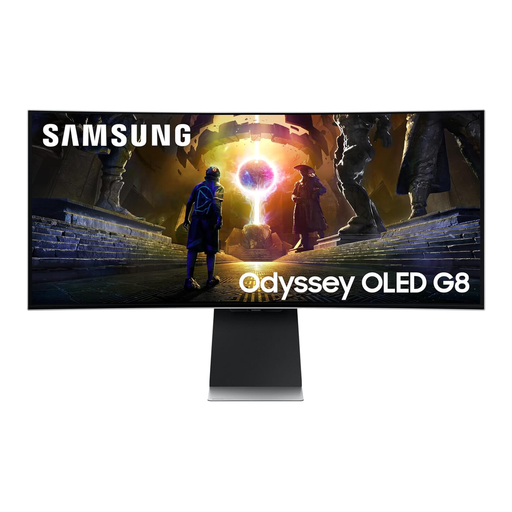
Samsung Odyssey G8 LS34DG850SUXXU 34-inch curved OLED
This 34-inch model suits a 21:9 cockpit-style setup if you want Samsung’s stated OLED Glare Free feature. Samsung UK lists the G85SD at 3440 × 1440 and 175Hz, and says refresh rate and response time can vary with the input source; assess the display under your room lighting.
View on Joybuy
 No image available
Dahua 34-inch 3440 × 1440 curved VA monitor
This 34-inch VA ultrawide is a choice for a wide cockpit view when connection-dependent refresh rate matters. Its listing states 200Hz at 3440 × 1440 over DisplayPort and 100Hz at that resolution over HDMI 2.0; check your port and cable path before relying on the higher figure.
View on Joybuy
 No image available
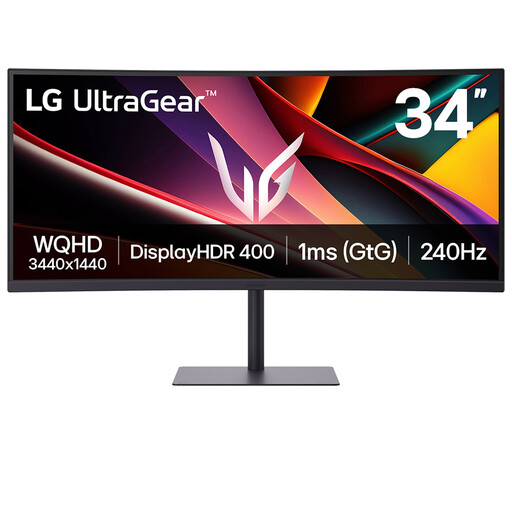
LG UltraGear 34G630A-B 34-inch VA WQHD
Consider this VA ultrawide if you want a 34-inch format with a stated 240Hz maximum refresh rate. The listing conditions 240Hz on a compatible graphics card and DisplayPort 1.4 or HDMI 2.1 connection; check your games’ frame rates as well as that connection.
View on Joybuy
 No image available
LG UltraGear 34GX900A-B 34-inch OLED WQHD
This 34-inch OLED ultrawide has a stated 240Hz maximum refresh rate for consumers considering a high-refresh cockpit display. Check whether your PC can make use of it; the product description also warns that prolonged static images can pose a burn-in risk and recommends using screen-protection features.
View on Joybuy
Frequently asked questions
Is a 45-inch ultrawide better for space-trading games than a 34-inch one?
Not automatically: the cited 34-inch and LG 45-inch routes share a 21:9, 3440 × 1440 resolution, so the larger model principally changes the screen’s physical scale and curvature. LG UK notes that viewing assumptions vary with distance and posture; check both from your normal seat.
Will a 240Hz monitor make my game run at 240 frames per second?
No. A monitor’s refresh rate describes its screen updates, not the frames your PC produces. Check your expected game performance at your chosen ultrawide resolution before making 240Hz a deciding factor.
How can I check whether my setup supports the stated refresh rate?
Check the monitor’s specification for the exact resolution, port and refresh-rate combination, then compare it with your graphics card and cable. Dell UK lists 3440 × 1440 at 240Hz through DisplayPort 1.4 and HDMI 2.1 for the AW3425DW; Samsung UK cautions that the G85SD’s refresh rate can vary with the input source.
What should I do with an old monitor in the UK?
Check which electrical-equipment reuse, collection or recycling option accepts monitors in your area or through the seller. GOV.UK identifies electrical and electronic equipment as covered by the UK waste electrical and electronic equipment framework.


