For a single-laptop checkout-testing desk, a USB-C ultrawide can free the socket used by the laptop charger if the laptop supports USB-C Power Delivery and the monitor supplies enough power; the monitor itself still needs mains power. If you regularly test on two computers, consider Picture-by-Picture and a built-in KVM as well, while checking both computers’ connections and the space available on your desk.
Who this setup suits
Testers with one laptop and few sockets
If your checkout tests run mainly on one laptop, monitor charging could let you leave its separate charger unplugged. Confirm that the laptop accepts USB-C Power Delivery and that the monitor’s output meets its charging needs.
Testers using two computers
If you switch between a work laptop and another test computer, Picture-by-Picture can keep both sources visible, while a built-in KVM can let them share a keyboard and mouse. Both devices still need suitable connections.
Testers who need room for several windows
A 34-inch, 21:9 WQHD screen is worth considering when you want a checkout page, developer tools and test notes in view together. Treat laptop charging as a separate compatibility check, not an automatic benefit of a wide screen.
What to check before buying
One laptop, one USB-C connection
Choose when: Your laptop supports USB-C video and Power Delivery at a wattage the monitor can supply.
Trade-off: The monitor still needs a mains socket, and an insufficient charging output leaves you needing the laptop charger.
Two computers, shared controls
Choose when: You regularly need to view two test sources or control them with one keyboard and mouse.
Trade-off: Picture-by-Picture and KVM functions do not resolve either computer’s video or charging requirements.
Wide screen, existing charger
Choose when: Side-by-side testing space matters but your laptop cannot use suitable monitor charging.
Trade-off: The monitor and laptop charger normally need separate mains connections.
| Concern |
What to check |
Who this matters to |
| Freeing a socket |
Match the laptop’s USB-C charging requirement to the monitor’s Power Delivery output; check the cable arrangement. |
If I test on one laptop, I want to unplug its separate charger without interrupting my work. Around 36% of consumers put freeing that socket first. |
| Testing on two computers |
Check for built-in KVM and Picture-by-Picture, then map both computers to the available video and USB connections. |
When I compare checkout behaviour across two computers, I need to see or control both without adding a separate KVM. For around 29% of consumers, that two-device workflow is the main concern. |
| Space for testing windows |
Compare 34-inch, 3440 × 1440 models and check desk width, stand depth and your preference for a curved screen. |
I need the checkout page, developer tools and notes visible together more than I need monitor charging. Keeping those windows in view comes first for around 21% of consumers. |
| Connection compatibility |
Check the exact laptop’s USB-C charging and video specifications against the monitor’s stated connections. |
If a one-cable setup fails with my laptop, I will still need another charging or display connection. Around 14% of consumers primarily want to avoid that mismatch. |
Mistakes to avoid
-
Assuming any USB-C monitor replaces the laptop charger
USB-C charging output varies by model: LG UK specifies up to 65 W for the 34WR55QK-B and up to 90 W for the 34WQ75C-B. A USB-C socket alone does not establish whether your laptop can charge from either monitor.
Compare the exact laptop’s accepted USB-C charging method and wattage with the monitor’s stated Power Delivery output before relying on a single cable.
If the combination cannot charge the laptop adequately, you may still need its original power adapter and a socket for it.
-
Choosing a KVM for a one-computer desk
A built-in KVM shares keyboard and mouse control between connected sources; it does not increase USB-C charging power. Its practical value depends on whether you regularly use a second computer.
Prioritise KVM and Picture-by-Picture only if two-source testing is part of your usual workflow. For one laptop, establish charging and video compatibility first.
-
Trying to solve the socket shortage with more adaptors
Adding equipment to an unsuitable or overloaded extension creates an electrical-fire risk. London Fire Brigade advises a fused inline extension rather than a plug-in cube adaptor and warns against overloading extensions.
Check the extension’s rating and the requirements of everything connected to it; do not chain extensions or use extra adaptors as a substitute for a suitable electrical arrangement.
Brands to consider for this setup
Dell
Dell UK lists USB-C hub features on its 34-inch P3424WE business monitor.
- The P3424WE specification lists up to 90 W USB-C Power Delivery, 1GbE RJ45 and four downstream USB-A ports.
- Dell’s product page labels this model unavailable. Check availability and the exact ports and charging output of any alternative model.
LG
LG UK lists 34-inch UltraWide models with different USB-C charging outputs and connection features.
- LG specifies up to 65 W USB-C Power Delivery for the 34WR55QK-B and up to 90 W for the 34WQ75C-B and 34BA75QE-B.
- Those outputs are model-specific; check the chosen monitor’s cable arrangement and your laptop’s charging compatibility.
Samsung
Samsung Business UK presents the 34-inch ViewFinity S6 S65UC for work involving more than one source.
- Samsung describes a built-in KVM that lets two connected sources share one keyboard and mouse.
- Check the full specification for the exact model’s USB-C charging output before counting on it to replace a laptop charger.
Ultrawide monitors on Joybuy
These screens offer ultrawide space for checkout-testing windows, including 34-inch models and a larger 49-inch option. If freeing a socket or sharing controls between computers is essential, confirm the chosen model’s charging output and two-source functions against your devices before buying.
 No image available
Acer Predator X49X 49-inch QD-OLED ultrawide monitor
Consider the larger screen if your testing desk has room for a 49-inch display and you want to assess a two-computer setup.
The listed format is 32:9 with a 1800R curve, HDMI, DisplayPort and USB-C. Check the exact USB-C charging output, KVM and Picture-by-Picture functions, and desk fit before relying on them for your setup.
View on Joybuy
 No image available
LG UltraGear 34GX900A-B 34-inch OLED WQHD monitor
This 34-inch ultrawide is a screen-size option for keeping checkout-testing windows together on one display.
The listed refresh rate is 240 Hz. If you need the monitor to replace a laptop charger, check its exact USB-C Power Delivery output and your laptop’s charging requirements; also measure the available desk space.
View on Joybuy
 No image available
Philips Evnia 6000 34M2C6500 34-inch monitor
Consider its wide screen if fitting the checkout page, developer tools and notes into one workspace is your main aim.
The listed resolution is 3440 × 1440, with two HDMI inputs and DisplayPort. Match those inputs to your computer, and confirm USB-C charging capability separately if you need to free a socket.
View on Joybuy
 No image available
Dahua 34-inch UWQHD curved gaming monitor
The 34-inch ultrawide format is relevant if you want testing windows side by side and plan to keep using your existing laptop charger.
The listed resolution is 3440 × 1440, with two HDMI and two DisplayPort 1.4 inputs. Check your computer’s video connection and confirm any USB-C charging capability separately if socket reduction is essential.
View on Joybuy
 No image available
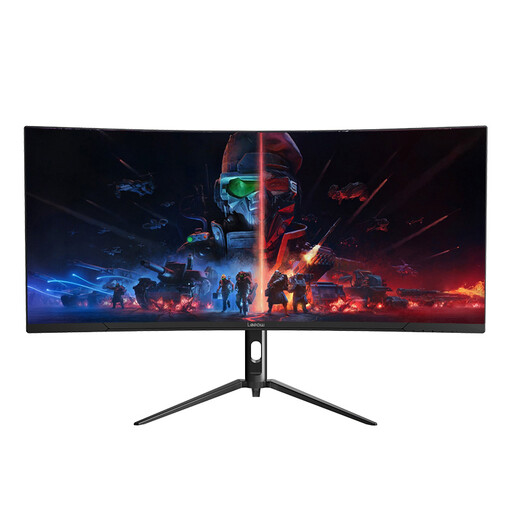
Lepow HC-SJ34MZ5 34-inch curved ultrawide monitor
This model’s wide format is worth considering when several checkout-testing windows need to remain in view.
The listed resolution is 3440 × 1440 and the refresh rate is 165 Hz. Check the required video connection and confirm USB-C Power Delivery capability separately before planning to leave the laptop charger unplugged.
View on Joybuy
Frequently asked questions
Can an ultrawide monitor free up a plug socket?
Yes, if its USB-C Power Delivery output can charge your laptop while the monitor carries the display connection. You can then leave the laptop’s separate mains adapter unplugged, although the monitor still needs a socket. Check both devices’ specifications and the required cable.
Does a USB-C port guarantee one-cable laptop charging?
No. The laptop must accept charging through USB-C Power Delivery, and the monitor must provide suitable wattage as well as the video connection you need. Check the exact laptop model rather than treating the presence of a USB-C port as sufficient.
Do I need a built-in KVM for checkout testing?
A built-in KVM is useful if you regularly control two connected computers with one keyboard and mouse. Samsung Business UK describes that function on its ViewFinity S6 S65UC; if you test on only one computer, prioritise its display and charging compatibility instead.
Can I chain extension leads when sockets are limited?
Do not chain extensions or overload one to accommodate the testing desk. London Fire Brigade advises using a suitable fused inline extension rather than a plug-in cube adaptor. Check the extension’s stated rating against all equipment connected to it.


