Start with a 34-inch, 3440 × 1440 ultrawide if your computer can drive it and your desk has room for the screen and stand. For laptop-based SDR review, consider an IPS model with compatible USB-C video and charging; if gaming matters too, a high-refresh VA model is another route, but check its connections, adjustment and colour workflow separately.
Who this setup suits
Students who need more timeline space
If a timeline, media bins, controls and preview compete for space, a 3440 × 1440 ultrawide offers a wider single-screen layout. The useful arrangement still depends on the editing software and whether the computer supports the display.
Students building a USB-C laptop desk
A compatible laptop and monitor can combine display output, data and charging in one connection. Check the laptop’s video capability and charging requirement before making that connection central to your choice.
Students editing and gaming on one screen
A high-refresh ultrawide can serve both activities. Gaming specifications do not establish colour accuracy, and the monitor’s ports and stand may matter more during a long editing session.
What to check before choosing
Decide how much timeline space you need, then check the physical desk fit and laptop connection. Treat refresh rate and colour specifications as separate decisions rather than substitutes for those checks.
USB-C IPS ultrawide
Consider it when: you review SDR projects from a compatible laptop and want display, data and charging through one connection.
Accept that: USB-C video support and sufficient charging power must match your laptop; stated sRGB coverage does not establish calibration.
IPS Black hub ultrawide
Consider it when: the monitor will anchor a fixed laptop workstation and you will use its hub and adjustable stand.
Accept that: those workstation features may add little to a setup used mainly for timeline width.
High-refresh curved VA ultrawide
Consider it when: one screen needs to accommodate both timeline review and games.
Accept that: gaming features do not establish the USB-C connections, stand adjustment or colour monitoring your editing setup may require.
| Concern |
Buying check |
Who this matters to |
| Timeline workspace |
Check native resolution and whether your computer can drive it; measure screen and stand dimensions against the desk. |
I need a timeline and preview visible together without running out of desk space. Around 42% of consumers put this workspace need first. |
| Laptop and desk setup |
Confirm USB-C video support and charging requirements, then check the stand footprint and available adjustment. |
Connecting my laptop at a fixed desk should not leave me with an awkward screen position or an unusable one-cable plan. For around 25% of consumers, this setup need comes first. |
| Editing and gaming |
Compare the connections and stand adjustment you need for editing with the refresh-rate features you want for games. |
If one monitor has to serve editing and gaming, I want its gaming features without giving up the connections my work needs. That mixed-use need comes first for around 33% of consumers. |
Common buying mistakes
-
Choosing by diagonal size alone
A 34-inch ultrawide and its stand need enough usable desk width and depth. Dell lists height, swivel and tilt adjustment for the U3425WE, while the Samsung Odyssey G5 LC34G55TWWPXXU listing specifies tilt adjustment.
Measure the desk, allow room for your keyboard and compare the exact monitor’s assembled dimensions and stand footprint. Check height adjustment if your seating and desk height make it important.
A stand that does not position the screen comfortably may require a riser or monitor arm.
-
Assuming any USB-C port provides one-cable use
A monitor’s USB-C socket cannot provide the intended display and charging setup unless the laptop supports the required video output and can use the monitor’s stated power delivery.
Check your laptop maker’s USB-C documentation and charging requirement. LG specifies up to 90 W power delivery for the 34WQ75C-B; also check the cable required for its connection.
Depending on the laptop and peripherals, you may still need a separate charger, dock or compatible cable.
-
Treating gaming or gamut figures as colour calibration
A high refresh rate, HDR label or colour-coverage figure does not establish suitability for colour-critical delivery. Adobe explains that Premiere’s display behaviour also depends on colour-management settings and the monitor’s ICC profile.
For SDR timeline review, assess the display alongside your intended software workflow. For colour-critical work, establish the target colour space and calibration and monitoring requirements separately.
-
Comparing screens without planning the whole desk
A workstation-oriented monitor may provide charging and hub connections that another monitor does not. Those differences matter only in relation to the laptop and peripherals you actually use.
List the connections, stand adjustment and accessories your setup requires, then check each exact model against that list before ordering.
Relevant brands to consider
LG
LG’s 34WQ75C-B is a reference point for a 34-inch, 3440 × 1440 IPS ultrawide in a laptop-based SDR editing setup.
- LG UK specifies USB-C, RJ45, up to 90 W USB-C power delivery and sRGB 99% coverage (typical).
- One-cable use depends on the laptop; the coverage figure does not establish calibration or reference-monitor accuracy.
Dell
Dell’s UltraSharp U3425WE suits consideration for a fixed desk where hub connections and screen positioning will be used regularly.
- Dell UK lists a 34.1-inch, 3440 × 1440 IPS Black curved display, 120 Hz refresh rate, 90 W power delivery and height, swivel and tilt adjustment.
- Check whether the hub and stand features answer a need in your setup rather than choosing them for timeline width alone.
Samsung
Samsung’s Odyssey G5 LC34G55TWWPXXU illustrates a 34-inch ultrawide route for a screen shared between editing and gaming.
- Samsung UK lists a curved 3440 × 1440 VA display and 165 Hz refresh rate.
- The Joybuy listing identifies HDMI and DisplayPort connections and tilt adjustment; check your laptop connection and desired screen height against that configuration.
Ultrawide monitors on Joybuy
These monitors offer different ways to gain timeline space, from 34-inch displays that may be easier to plan around a student desk to a 49-inch option that needs a particularly careful fit check. Compare each model’s stated format with your computer, connections and available space.
 No image available
Dahua 34-inch 200 Hz curved gaming monitor
Consider this format if you want a wide timeline display that will also be used for gaming.
The title specifies a 34-inch VA panel, 3440 × 1440 resolution, 200 Hz refresh rate, two HDMI connections and two DP 1.4 connections.
Check the assembled footprint and your computer’s support for the resolution and refresh rate. The stated DCI-P3 85% coverage does not establish calibration.
View on Joybuy
 No image available
Philips Evnia 6000 34M2C6500 ultrawide monitor
This 34-inch option is worth considering when timeline space and screen positioning both matter at a fixed desk.
The title specifies 3440 × 1440 resolution, two HDMI connections and DisplayPort, with 175 Hz stated for DisplayPort and 100 Hz for HDMI. It also lists height, swivel and tilt adjustment.
Check the screen and stand footprint, your computer’s supported output and your colour requirements before choosing it for editing work.
View on Joybuy
 No image available
Acer X Predator X49X 49-inch QD-OLED monitor
Consider its 49-inch, 32:9 format only if a much wider screen fits the desk and viewing position you have in mind.
The title specifies a curved QD-OLED display, Double Quad HD, 240 Hz refresh rate, HDMI, DisplayPort and USB-C.
Measure the assembled footprint carefully. If you plan to use USB-C for a laptop, check video support and charging requirements; a gamut claim alone does not establish calibration.
View on Joybuy
 No image available
Lenovo R34w-30 34-inch UWQHD gaming monitor
Its 34-inch ultrawide format may suit a student who wants more room for a timeline and preview on one display.
The product title identifies the R34w-30 model and UWQHD format.
Confirm the exact numeric resolution, computer compatibility and assembled footprint before ordering. For colour-critical work, check the monitoring requirements rather than relying on coverage claims alone.
View on Joybuy
 No image available
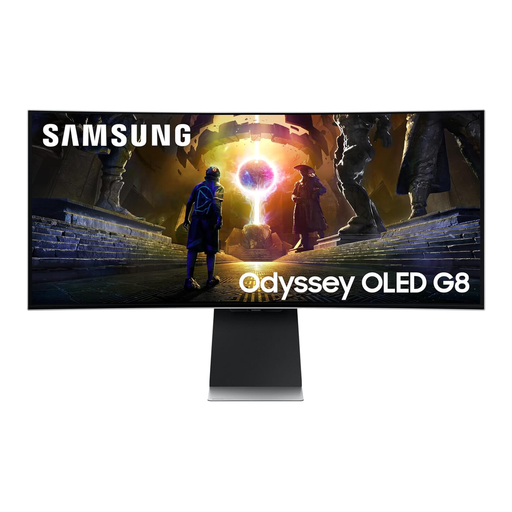
Samsung Odyssey G8 LS34DG850SUXXU 34-inch OLED monitor
This 34-inch ultrawide is an option to examine if the same desk display will be used for timeline review and gaming.
The title specifies a curved OLED WQHD display and 175 Hz refresh rate.
Check the assembled dimensions and your computer’s supported display output. Establish the colour workflow you need separately from the gaming specifications.
View on Joybuy
Frequently asked questions
Is a 34-inch, 3440 × 1440 ultrawide useful for reviewing a video timeline?
Yes, if your computer supports its native resolution and the screen fits your desk. LG describes its 21:9, 3440 × 1440 format as allowing programs to sit alongside one another, which is useful when a timeline and preview compete for space; it does not determine editing performance or make the screen a reference display.
Can one USB-C cable connect the display and charge my laptop?
It can when the laptop supports video output over USB-C and its charging needs fit the monitor’s power-delivery capability. LG specifies display connection, data transfer and up to 90 W power delivery for the 34WQ75C-B, with its specified USB-C cable used for that connection. Check your laptop documentation before relying on a one-cable setup.
Do sRGB coverage and HDR wording establish suitability for professional colour grading?
No. A coverage figure or HDR label does not establish calibration or the monitoring conditions needed for colour-critical delivery. Adobe’s guidance explains that Premiere’s display behaviour depends in part on colour-management settings and the monitor’s ICC profile; define your target colour space and monitoring workflow before selecting a display for that work.
What should I measure before putting an ultrawide on a student-room desk?
Measure usable desk width and depth, then compare them with the exact screen and stand footprint while allowing space for your keyboard and a comfortable viewing position. Check stand adjustment too: Dell lists height, swivel and tilt for the U3425WE, whereas the Samsung Odyssey G5 LC34G55TWWPXXU listing specifies tilt adjustment.


