What matters when choosing?
Decide whether horizontal view or 4K detail is more useful in your games, then weigh persistent interface elements against OLED panel care and check the connections and desk setup needed for your chosen screen.
34-inch ultrawide OLED
Consider it when: You want a 21:9 cockpit view and space for instruments or other windows beside the game.
Trade-off: Persistent HUDs and maps make the model’s panel-care features and warranty terms important.
34-inch ultrawide VA LCD
Consider it when: You want a wide view without OLED-specific static-image care.
Trade-off: The cited BenQ EX3410R has a lower listed refresh rate than the cited OLED ultrawides; manufacturers’ response-time figures are not directly comparable tests.
16:9 4K OLED
Consider it when: You value resolution for maps and instrument text more than a 21:9 horizontal view.
Trade-off: You give up the ultrawide format and still need to consider OLED care for fixed interfaces.
| Concern |
What to check |
Who this matters to |
| View and interface space |
Check your games’ 3440 × 1440 support and the available desk width. |
If I want to see more of the cab while keeping route tools in view, horizontal space is my first priority. Roughly 33% of consumers put that wide-view need first. |
| Static interfaces |
For OLED, check panel-care controls, your fixed-HUD habits and the exact model’s warranty terms. |
When maps or dashboards stay put for hours, I want to understand the panel-care commitment before choosing a display. Around 25% of consumers prioritise that static-interface concern. |
| Motion and connections |
Confirm the refresh mode at your chosen resolution and input, plus graphics-card and adaptive-sync compatibility. |
If I frequently pan across roads or stations, I care whether my setup can use the monitor’s stated modes. Approximately 25% of consumers make compatible motion handling their main concern. |
| Desk setup and glare |
Measure the desk and check stand adjustment or mounting options and likely reflections. |
For a long session at my desk, positioning the screen and managing reflected light matter more to me than another display feature. Roughly 17% of consumers put setup fit first. |
Our Top Recommendations
These Joybuy choices include ultrawide monitors for a broader simulation view and a 16:9 4K option for consumers prioritising resolution. Compare the panel-care commitment, intended connection and desk fit for each model before deciding.
 No image available
Lenovo R34w-30 34-inch UWQHD Gaming Monitor
Consider this ultrawide LCD route if a broader cockpit layout is your priority and you prefer not to manage an OLED panel.
Check that your games, graphics card and chosen connection support the resolution and refresh mode you intend to use.
View on Joybuy
 No image available
Dahua 34-inch UWQHD 200 Hz Curved VA Gaming Monitor
This curved LCD ultrawide suits a setup where a wide simulation view takes priority over choosing OLED.
Its stated resolution is 3440 × 1440. Confirm the refresh mode available through your intended connection and check adaptive-sync compatibility if you need it.
View on Joybuy
 No image available
LG UltraGear 34GX900A-B 34-inch OLED Gaming Monitor
Consider this OLED ultrawide if you want a broad cockpit view and are prepared to follow the panel-care guidance for persistent interfaces.
LG lists a 21:9, 3440 × 1440 display and 240 Hz for the 34GX900A-B. Check its care controls, warranty terms and the mode supported by your PC connection.
View on Joybuy
 No image available
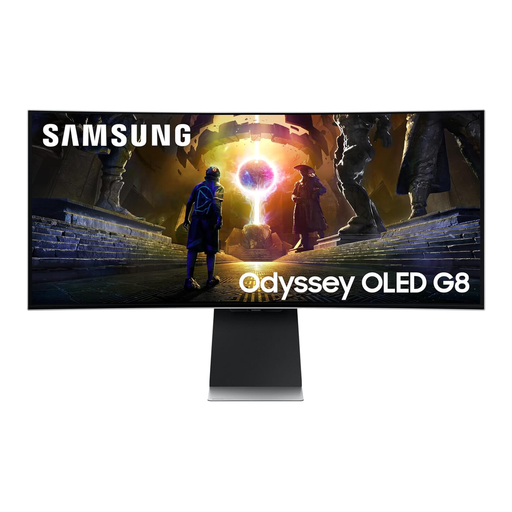
Samsung Odyssey G8 LS34DG850SUXXU 34-inch Curved OLED Gaming Monitor
Consider this ultrawide if room reflections matter in your cockpit setup, while accounting for OLED care when maps and HUD elements stay fixed.
Samsung lists 3440 × 1440 resolution, 175 Hz and OLED Glare Free treatment for the G85SD. Check the exact model’s panel-care terms and your intended connection mode.
View on Joybuy
 No image available
Dahua 32-inch 4K 165 Hz Curved OLED Gaming Monitor
This 16:9 option is worth considering if 4K resolution matters more to you than the horizontal span of an ultrawide screen.
The product title specifies 3840 × 2160 and 165 Hz. Check whether your PC can run the intended mode, and review OLED-care controls and warranty terms for fixed simulation interfaces.
View on Joybuy
Common questions
Is a 34-inch ultrawide always the right choice for transport simulations?
No. A 21:9 screen makes sense when you want horizontal cockpit and interface space, but check game support, desk fit and the mode your PC can run. A 16:9 4K display may suit you better when resolution for instruments and maps matters more than width.
Can I use an OLED monitor for hours with a fixed simulation HUD?
You can consider OLED, but persistent HUDs make panel care an important part of the decision. LG says prolonged static images may cause faint marks on OLED monitors; check the exact model’s protection controls, usage guidance and warranty terms before buying.
Will a higher listed refresh rate make my simulation look smoother?
Not by itself. Your game, graphics card, cable and monitor input must support the mode you plan to use. Check those conditions before comparing advertised rates, and do not treat different manufacturers’ response-time figures as identical tests.
What should I check for longer sessions at a desk?
Check that you can position the monitor sensibly, manage reflections and take breaks or change activity. For work use, the UK Health and Safety Executive’s display-screen-equipment guidance also addresses workstation assessment and risk reduction by employers; monitor features alone do not replace those measures.


