Choose a 40-inch 5120 × 2160 ultrawide if vertical room for artwork, panels and a reference is your priority. A 34-inch 3440 × 1440 creator monitor is worth considering when documented colour modes and two-source features matter more than canvas height; a 49-inch 5120 × 1440 screen favours width rather than height. Whichever layout you choose, check the exact model’s colour-profile workflow, inputs and computer compatibility before relying on it for review.
Who is this for?
Colour-critical vector reviewers
If you compare artwork with brand assets or proofs, check the monitor’s documented colour modes and calibration information alongside your ICC-profile workflow. A quoted colour gamut alone cannot establish how your review setup will display colour.
Single-canvas multitaskers
If artwork, tool panels and references must remain visible on one desktop, compare vertical as well as horizontal resolution. The Dell U4025QW and LG 40WP95CP-W are documented 5120 × 2160 options for a taller workspace.
Two-source workstation users
If the second area needs to show another computer rather than another window, look for Picture-by-Picture on the exact model. A KVM switch may also matter if you want to share a keyboard and mouse; BenQ documents both features for the PD3420Q.
What matters when choosing?
Decide whether your second area will show another window or a separate video source, then compare canvas height, colour setup and the connections your desk requires.
40-inch 5K2K ultrawide
Consider it when: Artwork height and room for surrounding panels matter most on a single desktop.
Trade-off: Confirm desk fit and whether your computer, cable and chosen port can drive the intended 5120 × 2160 setup.
34-inch 3440 × 1440 creator ultrawide
Consider it when: A smaller display with documented creator colour modes or Picture-by-Picture suits your review setup.
Trade-off: Its 1440-pixel height leaves less vertical workspace than a 2160-pixel 5K2K display.
49-inch 32:9 ultrawide
Consider it when: Two broad side-by-side work regions matter more than a taller canvas.
Trade-off: Samsung describes its 5120 × 1440 Odyssey G9 G91F as equivalent to two side-by-side 16:9 screens, but that layout still has 1440 vertical pixels.
| Concern |
What to check |
Who this matters to |
| Colour reliability |
Check model-specific colour modes and calibration information, then set the appropriate operating-system ICC profile for your review work. |
If I compare vector colours with approved artwork, I need a review setup I can configure consistently. Around 31% of consumers would put colour reliability first. |
| Canvas and reference space |
Compare both dimensions of the native resolution, particularly 5120 × 2160 against 5120 × 1440, and assess your preferred scaling. |
Keeping the artwork, panels and a reference visible makes usable canvas height my main concern; roughly 25% of consumers would prioritise this workspace need. |
| Two-input viewing |
Confirm Picture-by-Picture support and the required input combination; check KVM setup if you also need to switch peripherals. |
When my reference comes from a second computer, another application window will not do the job. Around 25% of consumers would put simultaneous sources first. |
| Desk and connection fit |
Measure the monitor and stand against your desk, and check your computer, cable and selected port against the intended display setup. |
I need the display to fit my workstation and connect as planned before its extra width is useful; about 19% of consumers would make practical fit their primary concern. |
Buying pitfalls
-
Judging workspace by width alone
A 49-inch 5120 × 1440 display is wider than the 40-inch 5120 × 2160 models discussed here, but it has fewer vertical pixels for artwork and panels.
Compare both resolution figures at the scaling you expect to use; choose the taller layout if canvas height is the limiting factor.
-
Taking a wide-gamut claim as a complete colour workflow
Adobe explains that an ICC profile describes the configured monitor to the operating system. A gamut figure does not replace selecting the intended colour mode and using the appropriate profile.
Check the exact model’s colour documentation and configure its profile; calibrate if your work requires measured accuracy.
A workflow requiring measured accuracy may also call for calibration equipment or a calibration service.
-
Assuming multiple ports mean two pictures at once
HDMI, DisplayPort or USB-C inputs do not, by themselves, establish that a monitor can show two computers simultaneously. Picture-by-Picture and KVM functions are model-specific.
List both devices and their ports, then check the monitor’s supported source combination and layout before buying.
Your chosen connection path may also require suitable cables or adapters.
-
Leaving the return process until after setup
A large display can take effort to unpack, test and repack. A retailer’s change-of-mind terms are distinct from remedies for a faulty item; GOV.UK notes that a fault found after acceptance may call for repair or replacement.
Read the seller’s written return and warranty terms before ordering, and retain the packaging while you check the display and connections.
Brands to consider for this workflow
Dell
Dell’s UltraSharp U4025QW is a 39.7-inch option for a single, tall vector-art workspace.
- Dell UK specifies 5120 × 2160 resolution and an IPS Black panel for this model.
- Check whether your computer and connection path support the resolution and refresh rate you intend to use.
LG
LG’s 40WP95CP-W offers a 39.7-inch 5K2K workspace with Thunderbolt 4 connectivity.
- LG UK specifies a 5120 × 2160 Nano IPS panel and hardware-calibration support for this model.
- Confirm that your computer supports the display connection and the colour setup your work needs.
BenQ
BenQ’s PD3420Q is a 34-inch creator-display option when colour documentation and two-source controls matter.
- BenQ UK documents 3440 × 1440 resolution, 100% sRGB and Rec.709 coverage, Picture-by-Picture and KVM for the PD3420Q.
- Its 1440-pixel height provides less vertical workspace than a 5120 × 2160 display.
ASUS ProArt
The PA34VCNV is a 34-inch option with documented creator colour specifications and Picture-by-Picture.
- ASUS UK specifies 3440 × 1440 resolution, 100% sRGB coverage and Picture-by-Picture for this model.
- Set up the appropriate ICC profile and confirm that its inputs suit your two-source arrangement.
Samsung
Samsung’s 49-inch Odyssey G9 G91F addresses the need for two broad, side-by-side work regions.
- Samsung UK describes its 32:9 layout as equivalent to two side-by-side 16:9 screens.
- Its 5120 × 1440 resolution does not provide the canvas height of a 5120 × 2160 display; its layout does not establish colour-calibration suitability.
Joybuy products for side-by-side work
These 34-inch and 49-inch ultrawides offer space for artwork beside another window. If you need a separate computer in each area or colour-critical review, confirm the exact model’s two-source functions and colour setup rather than relying on screen width alone.
 Image unavailable
Acer X Predator X49X 49-inch curved QD-OLED monitor
Consider its wide 32:9 layout when side-by-side work takes priority over canvas height.
- The product name specifies a 49-inch QD-OLED display and Double Quad HD resolution.
- Check the supported Picture-by-Picture source combination and your computer’s display connection before planning a two-computer setup.
- Confirm the colour-mode, ICC-profile and calibration workflow before colour-critical review.
View on Joybuy
 Image unavailable
Dahua 34-inch UWQHD 200Hz curved monitor
Its 34-inch ultrawide format suits artwork beside a reference window on one computer, provided 1440 pixels of height meet your needs.
- The product name specifies 3440 × 1440 resolution, a VA panel, two HDMI inputs and two DisplayPort 1.4 inputs.
- Multiple inputs alone do not establish simultaneous two-source viewing; check Picture-by-Picture support if that is essential.
- Check its model-specific colour modes and profile workflow before using it for colour-critical review.
View on Joybuy
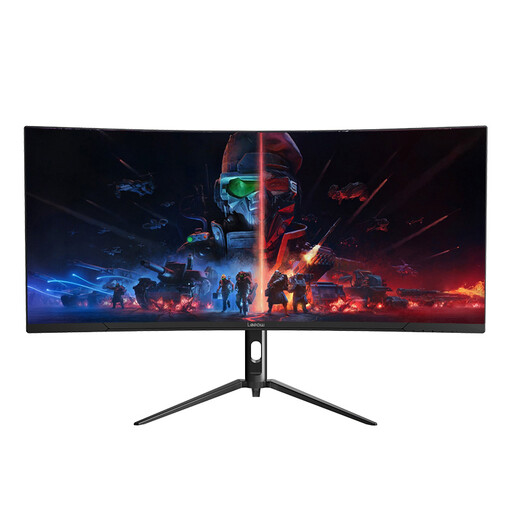 Image unavailable
Lepow HC-SJ34MZ5 34-inch curved ultrawide monitor
Consider this 34-inch format for a vector canvas beside panels or a reference application on one desktop.
- The product name specifies 3440 × 1440 resolution and a 165Hz refresh rate.
- If the second area must show another computer, confirm Picture-by-Picture support and the required inputs.
- Check the colour-management documentation and stand adjustment against your review setup.
View on Joybuy
 Image unavailable
CRUA 49-inch 5120 × 1440 curved ultrawide monitor
Its 32:9 layout gives artwork and another application room side by side, while its 1440-pixel height calls for a separate canvas-height check.
- The product name specifies a 165Hz VA display with two HDMI 2.1 and two DisplayPort 1.4 inputs.
- Confirm Picture-by-Picture and the colour-profile workflow if either is essential to your review process.
- Check the supplied stand’s adjustment functions before planning the desk setup.
View on Joybuy
Frequently asked questions
Can one ultrawide replace two monitors for vector-art review?
It can provide two work areas for applications on one computer, but showing two separate computers requires an appropriate two-source function. BenQ documents Picture-by-Picture for the PD3420Q, and ASUS documents it for the PA34VCNV; check the exact model’s supported input combination and layout.
Is a wide colour gamut enough for accurate vector-art review?
No. Adobe explains that an ICC profile describes the monitor’s configured colour behaviour to the operating system. Choose the intended monitor colour mode, use the appropriate profile and calibrate if your work requires measured accuracy.
Should I choose 5120 × 2160 or 5120 × 1440?
Choose 5120 × 2160 when vertical room for the vector canvas and panels matters most; Dell’s U4025QW and LG’s 40WP95CP-W are documented examples. Choose 5120 × 1440 when an especially wide, side-by-side layout is the priority, while accepting its lower vertical pixel count.
What if the monitor does not suit my setup after delivery?
Check the retailer’s written change-of-mind terms before ordering and test the monitor while you still have its packaging. If it is faulty, that is a different matter from simply changing your mind: GOV.UK notes that a fault discovered after acceptance may require repair or replacement.


