
24/7 Customer Support

Free returns

Same-day & Next-day Delivery

Quality Guaranteed

Unlock Your Welcome Offers: FREE Delivery | Up to 80% OFF | Free 30-day JoyPlus trial
Download the APP
Choosing among upright freezers can look straightforward until you compare capacity, installation measurements, defrost systems and energy labels. A freezer that appears suitable online may not fit beneath your worktop, open safely beside a wall or provide the usable storage space your household needs.
The following guide highlights common buying pitfalls and matches different freezer designs to practical UK household needs.
A freezer may display a large gross capacity, but internal drawers, shelves and cooling components reduce the space available for food. Always check the net capacity, which gives a more realistic indication of how much frozen food you can store.
Storage layout also matters. Transparent drawers or separate compartments make it easier to organise meat, vegetables, batch-cooked meals and desserts. A slightly smaller freezer with practical compartments may be more convenient than a larger model with one difficult-to-access cavity.
A freezer measuring approximately 55cm wide may still require clearance at the sides, rear and top for ventilation. Door swing is another frequently overlooked issue. If the hinge is beside a wall or cabinet, the door may not open far enough to remove drawers.
Check all of the following before ordering:
For integrated freezers, the cabinet niche and door-fixing system must match. A sliding hinge and a fixed hinge are not automatically interchangeable.
Terms such as frost-free, No Frost and Total No Frost describe systems intended to reduce or prevent ice accumulation, but buyers should still check the precise product specification. Some compact and under-counter freezers use manual defrosting, which requires periodic maintenance.
Manual-defrost models can be straightforward and may suit occasional use, but frost build-up reduces available space and can affect operation if ignored. No Frost freezers usually require less hands-on maintenance, although they may have a higher purchase price and different energy consumption characteristics.
The right format depends on available floor space and shopping habits:
As a broad planning guide, an 80–90-litre under-counter freezer may suit everyday supplementary storage, while a 180–212-litre tall or integrated model is more appropriate for larger households and regular batch cooking.
UK appliances use the current A–G energy label scale. Several models in this selection are E-rated freezers. An E rating should not be interpreted as a guarantee of a particular electricity bill: actual running costs depend on the appliance’s annual kWh figure, room temperature, thermostat setting, usage and energy tariff.
When comparing energy-efficient freezers, look for the annual energy consumption figure where provided, rather than relying only on the letter rating. Keeping the door closed, maintaining clear ventilation and regularly defrosting a manual model can also support efficient operation.
A 4-star freezer is designed for storing frozen food at approximately -18°C and for freezing fresh food, subject to the manufacturer’s instructions. This is useful for households that batch-cook or freeze supermarket ingredients.
Adjustable thermostats provide basic control, while electronic controls may offer more precise settings and functions such as Super Freeze. Quick-freeze features can be useful after adding a large quantity of fresh food, but they do not remove the need to follow food-safety guidance.
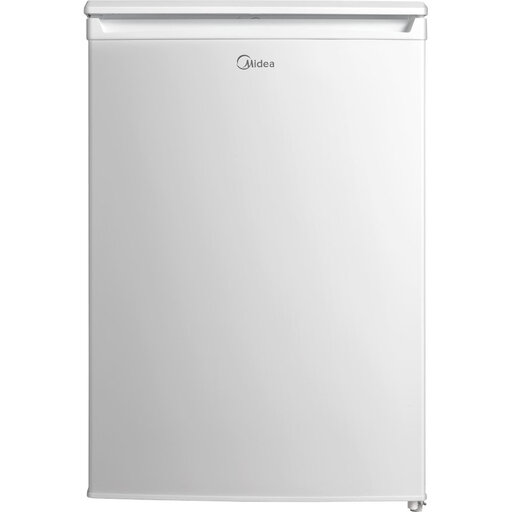
Why This Fits Their Persona: Its 84.5cm height and 55.3cm width make it suitable for smaller kitchens, utility rooms or as an additional freezer, with 86 litres of listed capacity.
The listed dimensions, three transparent drawers and reversible door help buyers assess fit and accessibility before purchase. It uses manual defrosting, which is clearly stated rather than hidden behind vague frost claims.
86-litre capacity; 39 dB noise level; reversible door and two-year manufacturer warranty.
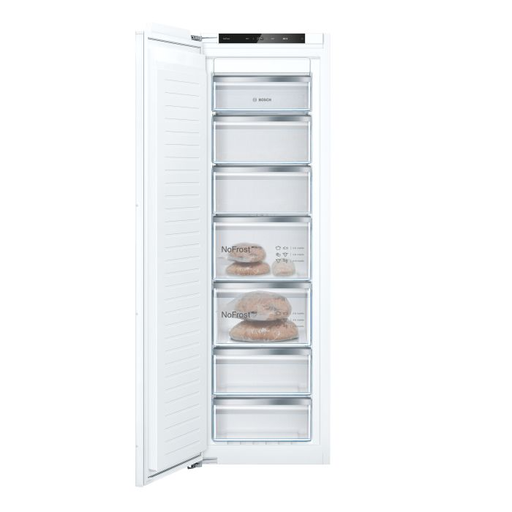
Why This Fits Their Persona: It is designed for a fitted kitchen and offers 212 litres of storage, NoFrost technology and a fixed hinge system for a flush furniture-door installation.
The required niche is listed as 177.5 x 56 x 55cm, helping kitchen renovators compare cabinet measurements. The hinge type is specified rather than left unclear.
212-litre capacity; 35 dBA listed noise level; NoFrost, BigBox storage and SuperFreezing function.
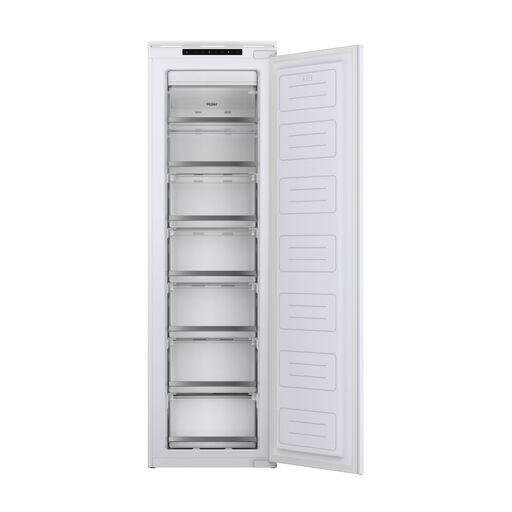
Why This Fits Their Persona: Its 200-litre capacity and nine transparent drawers suit large families, meal preppers and households buying frozen food in bulk.
The fully integrated format, 176.9cm height and sliding hinge are identified clearly, helping buyers confirm compatibility with tall cabinetry before ordering.
200-litre capacity; Total No Frost; nine transparent drawers and 41 dBA listed noise level.
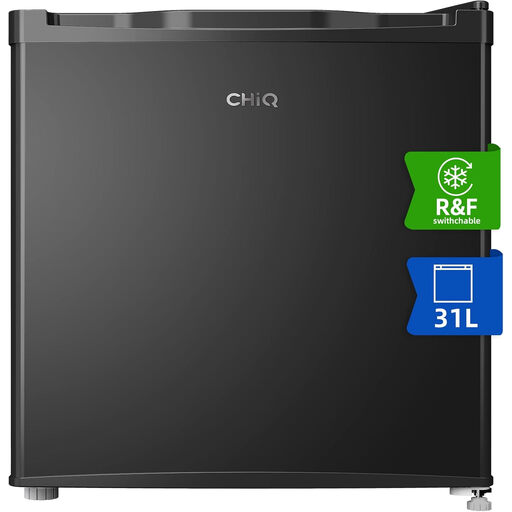
Why This Fits Their Persona: At 496mm high and 474mm wide, this mini freezer can provide extra storage in a compact flat, home office or student room where floor space is limited.
The 31-litre capacity is clear, so buyers are less likely to mistake a supplementary mini freezer for a family-sized appliance. It also requires manual defrosting, which is stated upfront.
4-star freezer rating; reversible door; adjustable thermostat and 41 dB listed noise level.
We have compiled a complete, real-time list of products that fully satisfy these strict selection criteria and UK safety regulations.
Before switching on a new freezer:
Not automatically. Running cost depends on the appliance’s annual energy consumption, size, insulation, usage and room temperature. Upright freezers can make everyday organisation easier, while chest freezers may use floor space differently. Compare the kWh figure on the energy label and select a capacity that matches your actual needs.
Check the freezer’s stated climate class and installation instructions before placing it in a garage or outbuilding. A standard under-counter model may not be designed for very low ambient temperatures. Some chest freezers are specifically listed for colder environments, but suitability should always be confirmed from the product documentation.
Lifespan varies with build quality, installation, ventilation, usage and maintenance. Keeping the door seal clean, avoiding overloading, maintaining airflow and following defrosting instructions can support reliable operation. Check the warranty terms and arrange suitable professional installation for integrated freezers.