Cross-device commuters
If you move files between a USB-C phone, tablet or newer laptop and a USB-A computer, connector coverage matters. A dual-connector drive may avoid a separate adapter, but each device still needs to support the storage setup.


Choose a dual-connector USB flash drive when moving files between USB-A and USB-C devices is the main challenge, a portable hard drive when carrying a large collection between computers is the priority, or a portable SSD for repeated large transfers on computers that can use its faster connection. Before buying, check the ports, file formats and power requirements of every device you intend to use; a matching connector alone does not guarantee access or the drive’s rated speed.
If you move files between a USB-C phone, tablet or newer laptop and a USB-A computer, connector coverage matters. A dual-connector drive may avoid a separate adapter, but each device still needs to support the storage setup.
If you repeatedly carry large project folders or media files between computers, check the complete connection rather than the drive’s speed rating alone. Samsung states that the cited T7’s maximum speeds require a compatible host, cable and USB mode.
If an entire collection must travel together, capacity may determine the choice. Seagate’s cited Basic portable hard-drive line includes options up to 5TB; check the capacity and computer compatibility of the particular drive you choose.
Choose it when: You regularly connect to both USB-A and USB-C devices and want one drive without a separate adapter.
Bear in mind: Capacity and transfer ratings depend on the exact model; phone file-format support needs checking too.
Choose it when: Carrying a large set of files between compatible computers matters more than using the smallest device.
Bear in mind: It needs a cable, and Apple says external hard drives often need external power when used with an iPhone.
Choose it when: You repeatedly move large files and your computers can use the drive’s specified USB mode.
Bear in mind: A headline speed may not be attainable through an older port or unsuitable cable.
For consumers moving large files between their own devices, identify the one constraint that would most affect the transfer before comparing drives. If you already own suitable storage, a compatible adapter may also be worth considering, provided the receiving device can access and power the drive.
| Concern | What to check | Who this matters to |
|---|---|---|
| Device compatibility | Check each device’s port and supported file formats; for iPhone storage, Apple also specifies a single data partition. | If I move files between a phone and computers with different ports, I need the drive to open on each one. Around 33% of consumers put compatibility first. |
| Transfer speed | Compare the exact model’s read and write ratings with the USB mode supported by the host and cable. | When I carry large projects repeatedly, time spent transferring them is my main concern. Around 27% of consumers prioritise transfer speed. |
| Portable capacity | Size the complete set of files you will carry, then check the drive variant and available space. | I need a whole collection to travel together, rather than selecting only a few files. Around 20% of consumers make capacity their primary concern. |
| Secure transport | Follow your employer’s rules for work files and check an encryption method that the intended devices can use. | If the drive carries personal or work data, I worry most about who could access it if it is lost. Around 20% of consumers put secure handling first. |
A connector can fit while the device cannot access the drive’s file format or supply enough power. Apple says an external hard drive used with an iPhone often needs external power.
Check the ports, supported formats and power arrangement at both ends of the transfer before buying.
A phone setup may also require a compatible adapter or powered hub.
Samsung says the cited T7’s maximum read and write speeds require USB 3.2 Gen 2 support from the host and cable, as well as UASP.
Check the computer port and the cable you will actually use before treating the rated speed as a deciding factor.
Microsoft lists a 4GiB maximum file size for FAT32. A single video or disk image can therefore fail to copy even when the drive has enough free space.
Check your largest individual file and choose a format supported by every intended device before formatting the drive.
The Information Commissioner’s Office warns that moving personal data to insecure removable storage can increase the risk of loss. Encryption can help protect stored information against unauthorised access if a device is lost or stolen.
Follow employer policy, carry only the files needed and use an appropriate encryption method with credentials you can manage securely.
The cited T7 is a portable SSD to consider for repeated transfers between compatible computers.
The cited Basic portable hard-drive line is relevant when a large collection of files must move between compatible computers.
The cited Ultra Dual Drive USB Type-C is a flash-drive option for connecting compatible USB-C and USB-A devices.
These portable SSDs, dual-connector flash drives and portable hard drive address different ways of carrying large files. Match the particular drive to your transfer size, device ports and supported file formats.
 No image available
Consider this portable SSD for repeated large-file transfers between computers. The listed variant is 2 TB and USB 3.2 Gen 2; check that your host, cable and file format suit the intended devices.
 No image available
Consider this 1TB portable SSD if your transfer route includes a compatible computer or iPhone 15/16. Its title specifies USB 3.2 Gen 2 and rated speeds of up to 1,050MB/s read and 1,000MB/s write; check the host connection and phone storage requirements before relying on either use.
 No image available
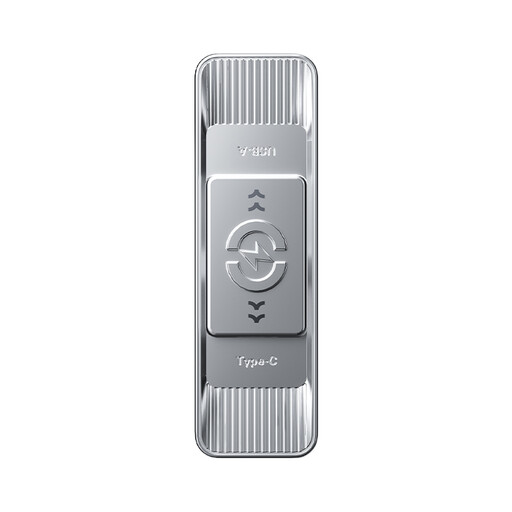
Consider this drive when you need USB-A and USB-C connectors on the same 512GB device. Its title specifies USB 3.2 Gen 1 and up to 570MB/s read; check file-format support on every receiving device.
 No image available
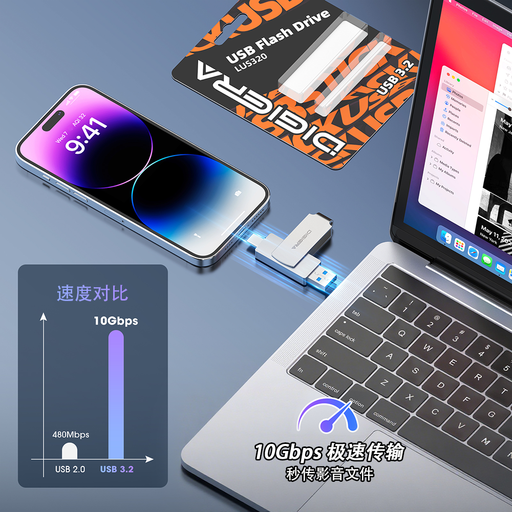
Consider this USB-A and USB-C drive if your complete transfer set fits within its 128GB capacity. The title specifies USB 3.2 and up to 500MB/s read; check the format required by your devices.
 No image available
Consider this portable hard drive when carrying a large collection of files between computers is the priority. Its listed capacity is 5TB; for transfers involving Windows, confirm that the intended computer can use the drive’s Mac-oriented setup before buying.
ExFAT is a practical format to check for a drive shared between Windows and Mac: Apple identifies it as Windows-compatible. Confirm support on any phone or other device in the route, and copy off files you need to keep before reformatting.
The drive may be formatted as FAT32, which Microsoft lists as having a 4GiB maximum for an individual file. Check its format and your video’s size before choosing a replacement format supported by all your devices.
An iPhone can access compatible external storage, but a portable hard drive may need an external power source. Apple advises checking the connector or adapter, power arrangement, supported format and single-partition requirement for the intended setup.
There is no universal requirement to encrypt every work USB drive. The Information Commissioner’s Office says the UK GDPR requires security appropriate to the risk when personal information is involved and identifies encryption as one possible measure; your employer’s policy may set stricter requirements.
Unlock the iPhone first: Apple says storage accessories require the iPhone or iPad to be unlocked before use. Then check that the drive has one data partition, uses a supported format and has the connection and power it needs.