Buying priorities
Start with the ports and permissions on the computers you use most often, then match capacity and transfer performance to the files you actually carry.
| Priority |
What to check |
Your needs |
| Connector compatibility |
Check the physical ports on both regular computers. Choose USB-A, USB-C or a dual USB-A/USB-C drive; use an adaptor only where it is suitable and permitted. |
I want to connect directly at home and at work or college, rather than discover that the drive does not fit one of my computers. |
| Large-file transfer time |
Compare the exact model’s stated read and write figures, USB version, host-port capability and cable. A USB-C connector alone does not establish speed. |
I move large folders often enough that copying time matters, so I need write performance that fits my computers rather than an impressive headline figure alone. |
| Windows and Mac sharing |
Plan the file system before loading files. Apple Support specifies ExFAT for Windows-compatible volumes over 32 GB and MS-DOS (FAT) for 32 GB or less; formatting erases existing files. |
I need the same drive to work across Windows and macOS without having to reformat it after important files are already on it. |
| Permission and data protection |
Confirm the organisation’s removable-media policy, approved encryption method and recovery process. The National Cyber Security Centre says organisations may restrict peripheral access according to risk and need. |
I need to know whether a personal drive can be used for work or study files before I rely on it for a transfer. |
| Travel durability |
Look at the exact model’s enclosure and any stated protection claims. Safely eject the drive after copying; Which? advises this step to help prevent data corruption. |
I carry the drive between locations, so I want a practical design for everyday transport and a routine that reduces avoidable file loss. |
Joybuy product options
Joybuy product options for moving files between home, work and study computers, including portable SSDs for larger transfers and dual-connector flash drives for mixed USB-A and USB-C ports.
 No image available
Samsung T7 Shield Portable SSD 1 TB, MU-PE1T0R
A portable SSD option for frequent large project-folder transfers across USB-C and USB-A computers.
The listing states USB 3.2 Gen 2, 1,050 MB/s read, 1,000 MB/s write, ExFAT guidance, USB-C-to-C and USB-A-to-C cables, plus an IP65 rating and an up-to-3-metre drop claim. Check both computers’ USB capability before expecting the stated maximum speeds, and do not submerge the drive.
Joybuy
 No image available
Lexar ES4 Portable SSD 1 TB Magnetic Set
Consider this portable SSD for large folders moving between computers with USB-C and USB-A connections.
The listing states USB 3.2 Gen 2, up to 1,050 MB/s read and 1,000 MB/s write, with USB-C-to-C and USB-A-to-C cables. It also states Lexar DataShield 256-bit AES encryption software; check local approved-device and recovery-key requirements before using it for authorised sensitive files.
Joybuy
 No image available
MOVESPEED 512 GB Dual-Interface Flash Drive, YSUSP05-512GSR
A compact dual-connector option for routine files and sizeable media batches across mixed USB-A and USB-C computers.
The listing states USB 3.2 Gen 1, USB-A and Type-C connectors, up to 570 MB/s read, 520 MB/s write, 3D NAND flash and a zinc-alloy housing. Prepare a suitable Windows-and-Mac format before loading files, and check host-port capability for realised speeds.
Joybuy
 No image available
DigiEra 128 GB Dual-Interface Flash Drive, LUS320
A dual USB-A and USB-C flash-drive option for documents, coursework and moderate media transfers between mixed devices.
The listing states USB 3.2, ExFAT formatting, up to 500 MB/s read, approximately 400 MB/s write and a 360° swivel metal body. Check that 128 GB suits the expected volume of video, design or research files, and remember that transfer rates depend on the host connection.
Joybuy
 No image available
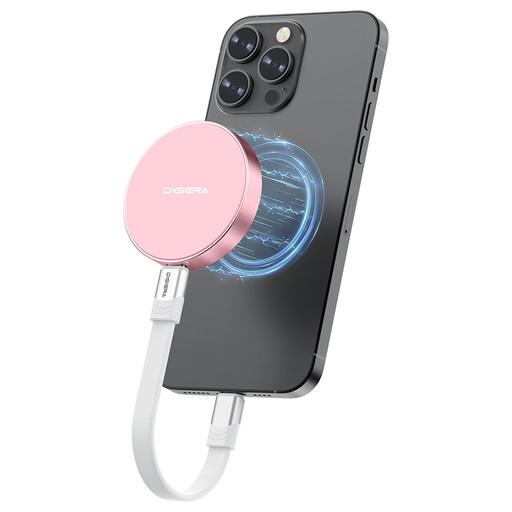
DigiEra 1 TB Magnetic Portable SSD, LPS2000M-3
A USB-C portable SSD for large project or media folders where both regular computers have compatible USB-C connections.
The listing states USB 3.2 Gen 2×2, up to 2,000 MB/s read, 1,800 MB/s write, an aluminium body, 1,500G shock resistance and vibration resistance. Check port compatibility, cable requirements and the intended Windows-and-Mac format before routine transfers.
Joybuy
Frequently asked questions
Can a workplace or university block my personal USB drive?
Yes. The UK National Cyber Security Centre advises organisations to assess the benefits and risks of external interfaces and to apply technical controls that can restrict or disable peripheral access when it is not required. Confirm the local IT or information-security policy before buying a personal drive for work or study use.
Which format should I use for a drive shared between Windows and Mac computers?
For a Windows-compatible drive, Apple Support specifies MS-DOS (FAT) for volumes of 32 GB or less and ExFAT for volumes over 32 GB. Formatting erases the drive, so copy files elsewhere first.
Do I need encryption for files carried on a USB drive in the UK?
For an organisation handling personal data, UK GDPR requires security measures appropriate to risk, and the Information Commissioner’s Office identifies encryption as effective protection for personal information stored on USB and other removable media. Your employer or education provider may require an approved device or encryption process; personal users may also wish to protect sensitive files.
Will a USB-C drive always transfer files faster than USB-A?
No. USB-C is a reversible connector shape, not a guaranteed data rate. Check the drive’s stated USB specification and the capability of both computers’ ports and cable; Samsung conditions its T7 Shield maximum speeds on a USB 3.2 Gen 2-capable host, compatible cable and UASP.
How should I disconnect the drive after transferring files?
Use the operating system’s eject function before unplugging. Which? advises safe ejection after copying files to help prevent data corruption.


