For a crisp-style snack with a substantial protein contribution, look for an explicitly vegan product and compare protein per pack as well as per 100g. Myprotein lists 11g per 25g bag for its Vegan Protein Crisps, while KETTLE Vegan Sheese & Red Onion and Seabrook Sea Salted list 8.0g and 5.9g per 100g respectively; check the exact flavour’s ingredients, salt and allergen information before choosing.
Who is this for?
Vegans looking for a portable protein snack
If you want a ready-to-eat savoury snack that contributes protein, compare the amount in the bag you would eat, not just the figure per 100g. Check that the exact product is described as suitable for vegans.
Shoppers considering a change from potato crisps
If crisp texture and familiar flavours still matter, compare conventional vegan potato crisps with chickpea-based or dedicated protein snacks. Their ingredients and declared protein amounts differ by product.
Vegans who also need to check allergens
Vegan suitability and allergen suitability are separate checks. Read the ingredients and precautionary statements for the particular pack if you need to avoid milk, soya or another named allergen.
What should you check?
Dedicated vegan protein crisps
Consider when: You want protein from a single, portable bag; Myprotein lists 11g per 25g bag for its Vegan Protein Crisps.
Bear in mind: Check the chosen flavour’s nutrition and allergens rather than assuming every variant has the same details.
Chickpea-based crisps
Consider when: You want a chickpea-based crisp-style snack and can compare the protein figure on the particular pack.
Bear in mind: Pea Pops says three flavours in its range are suitable for vegans, so choose by flavour rather than assuming the whole range qualifies.
Vegan potato crisps
Consider when: Familiar potato-crisp texture and an explicitly vegan recipe matter more to you than the protein amount.
Bear in mind: KETTLE and Seabrook’s named vegan potato-crisp examples list substantially less protein per 100g than Myprotein’s dedicated protein crisp.
| Priority |
What to check |
Your needs |
| Protein amount |
Read protein per pack for the portion you would eat, then per 100g to compare pack sizes. Myprotein lists 11g per 25g bag and 45g per 100g for its Vegan Protein Crisps; it notes that nutrition can vary slightly by flavour. |
I want to know how much protein the snack I actually eat contributes, rather than relying on a protein-focused name. |
| Vegan suitability |
Check the statement for the exact flavour. KETTLE identifies Vegan Sheese & Red Onion as vegan, and Seabrook identifies Sea Salted as suitable for vegans; a statement about one recipe does not cover every flavour. |
A vegetable ingredient or a vegetarian label alone would not settle whether this particular pack belongs in my vegan basket. |
| Salt and nutrition |
Compare salt alongside protein, using the same portion basis where possible. Myprotein lists 0.50g salt per 25g bag. GOV.UK explains that front-of-pack traffic-light information can help compare nutrients where it is displayed. |
If I have crisps regularly, I want to see the salt and other nutrition information as well as the protein figure. |
| Allergens |
Read the ingredient list, allergen declaration and any ‘may contain’ statement on the exact pack. GOV.UK cautions that vegan labelling does not guarantee the absence of animal-origin allergens. |
I need a separate check for an allergen I avoid; a vegan statement does not answer that question on its own. |
| Snack type |
Check whether the product is a potato crisp, a chickpea crisp or another crisp-style snack, then compare its own nutrition panel. |
Potato-crisp texture may matter more to me than changing snack type for a different protein amount. |
Common buying mistakes
-
Assuming vegan potato crisps are high in protein
KETTLE lists 8.0g protein per 100g for Vegan Sheese & Red Onion and Seabrook lists 5.9g for Sea Salted; Myprotein lists 45g per 100g for its dedicated vegan protein crisp. Vegan suitability does not establish protein content.
Compare protein per pack and per 100g. Choose conventional potato crisps for their own qualities, rather than treating the vegan label as a protein claim.
-
Taking ‘vegetarian’ to mean ‘vegan’
Walkers describes its Salt & Vinegar crisps and McCoy’s its Salted crisps as suitable for vegetarians, while REAL says six recipes in its range are suitable for vegans. Those statements do not establish that every flavour is vegan.
Look for an explicit vegan or suitable-for-vegans statement for the exact flavour and current pack.
-
Checking protein but overlooking salt
A protein-focused product still has other nutrition information to compare. Myprotein lists 0.50g salt per 25g bag for its Vegan Protein Crisps.
Read the salt figure for the portion you expect to eat and use front-of-pack traffic-light information where available.
-
Using ‘vegan’ as an allergen-free guarantee
GOV.UK cautions that vegan labelling does not guarantee the absence of animal-origin allergens. Ingredient and cross-contact information therefore matters separately to anyone avoiding a specific allergen.
Check the pack’s allergen declaration and precautionary wording for the allergen relevant to you.
Brand and product references
These examples refer to named products or recipes, not to every flavour made by each brand.
KETTLE Chips
A potato-crisp reference for shoppers looking for an explicitly vegan flavour.
- KETTLE describes Vegan Sheese & Red Onion as suitable for vegans and lists 8.0g protein per 100g.
- That named flavour lists less protein per 100g than Myprotein’s Vegan Protein Crisps; compare the portion you would eat too.
Seabrook
A conventional potato-crisp reference where the Sea Salted recipe’s vegan status is stated.
- Seabrook identifies Sea Salted as suitable for vegans and lists 5.9g protein per 100g.
- Its listed protein amount is lower than the dedicated protein-crisp example, so compare products by their declared figures.
Tyrrells
Naked (no salt) is a potato-crisp reference for comparing ingredients and salt.
- Tyrrells lists potatoes and sunflower oil, 6.9g protein per 100g and 0.06g salt per 100g for Naked (no salt).
- Its product information says ‘may contain milk’ and does not explicitly state vegan suitability; check the current pack before considering it for vegan shopping.
Walkers
A familiar potato-crisp range that needs flavour-by-flavour checking for this decision.
- Walkers lists 5.8g protein per 100g for its Salt & Vinegar crisps.
- That product page says suitable for vegetarians and ‘may contain milk’; it does not establish vegan suitability.
McCoy’s
A potato-crisp comparison point rather than an established vegan option.
- McCoy’s lists 6.6g protein per 100g for its Salted flavour.
- The page describes that flavour as suitable for vegetarians and says ‘may contain milk’; check for an explicit vegan statement on any flavour you consider.
REAL Hand Cooked Crisps
A range with some vegan recipes, rather than a range-wide vegan designation.
- REAL says six recipes in its range are suitable for vegans.
- Check which recipe you are buying and read its own protein figure rather than extending the range statement to every pack.
Joybuy product options
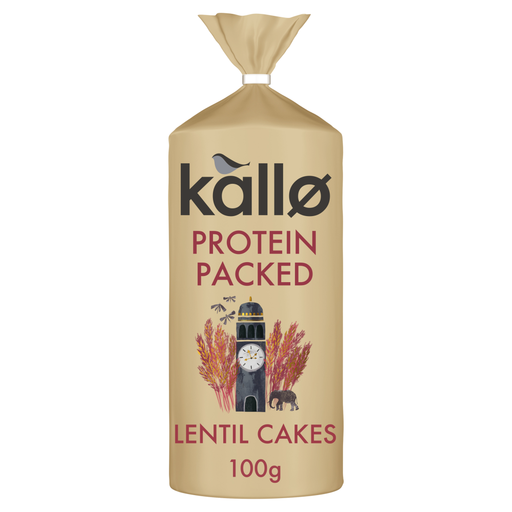
This lentil-cake option is a vegan crisp-style snack for shoppers willing to choose a different texture from potato crisps.
 No image available
Kallo Protein Packed Lentil Cakes 100g
These 100g lentil cakes are described as suitable for vegans and have a different texture from traditional potato crisps. The product description notes that they are produced in a facility that handles milk; check the pack’s allergen information if milk cross-contact matters to you.
View on Joybuy
Questions about vegan protein crisps
What should I compare first when choosing a vegan protein crisp?
Start with protein per pack, then use protein per 100g to compare different pack sizes. Check the exact flavour’s vegan statement, ingredients, salt and allergen information as separate parts of the decision.
Does ‘vegan’ mean a crisp is safe for someone with a milk or egg allergy?
No. GOV.UK cautions that vegan labelling does not guarantee the absence of animal-origin allergens. Read the exact pack’s ingredients, allergen declaration and any ‘may contain’ statement for the allergen concerned.
Do vegan potato crisps provide as much protein as dedicated protein crisps?
Not in these named examples: KETTLE lists 8.0g per 100g for Vegan Sheese & Red Onion and Seabrook lists 5.9g for Sea Salted, compared with Myprotein’s 45g per 100g for Vegan Protein Crisps. Myprotein notes that nutrition may vary slightly by flavour, so compare the particular packs you are considering.


