
24/7 Customer Support

Free returns

Same-day & Next-day Delivery

Quality Guaranteed

Unlock Your Welcome Offers: FREE Delivery | Up to 80% OFF | Free 30-day JoyPlus trial
Download the APP
For anyone in the UK passionate about cooking Asian cuisine, the move towards a plant-based diet can present a challenge: how do you replicate those deep, savoury and complex flavours without traditional ingredients like oyster or fish sauce? The market is now filled with vegetarian cooking sauces, but not all are created equal. Many promise authentic taste but deliver little more than salt and sugar.
As a Joybuy Product Recommendation Officer, my role is to help you navigate the options and find sauces that genuinely enhance your cooking. Before you add another bottle to your basket, let's look at a few common pitfalls that can lead to disappointing meals and wasted money.
To avoid these traps, focus on a few key parameters when you're choosing a sauce. Understanding these will help you select a product that delivers on its promise of flavour.
Umami is the cornerstone of savoury Asian cooking. In plant-based sauces, this flavour is typically derived from a few key ingredients. A good sauce will clearly list these high on its ingredients list.
A quick scan of the ingredients can tell you a lot about a sauce's quality. Look for a short, recognisable list. Pay attention to:
To help you get started, we've matched a few standout products to different cooking styles and preferences.

Why This Fits Their Persona: This is an ideal pantry staple for anyone needing a reliable, direct replacement for traditional oyster sauce. Its balanced flavour works beautifully in everyday stir-fries with tofu and vegetables, or as a base for marinades, without requiring any special adjustments.
It avoids the "flavour vs. filler" trap by using fermented soybeans, wheat and real mushroom powder high on the ingredients list to build a genuine umami base, rather than relying solely on salt and sugar.
Highly versatile for stir-frying, braising and marinating. Provides a classic, rich flavour profile that is familiar and easy to incorporate into many dishes.

Why This Fits Their Persona: Perfect for the cook who monitors sugar intake but refuses to compromise on flavour. This sauce is specifically formulated with natural, zero-calorie sweeteners, making it suitable for low-sugar diets while delivering a premium, complex taste.
It directly counters the "one-note umami" trap by blending four different types of mushrooms (Matsutake, Shiitake, Red Pine and Hericium Erinaceus). It also avoids the high-sugar filler trap by using an Erythritol and Monk Fruit blend.
Contains 0g of sugar per 100g. The multi-mushroom blend provides a uniquely complex and layered umami sauce for vegans that stands out from standard options.
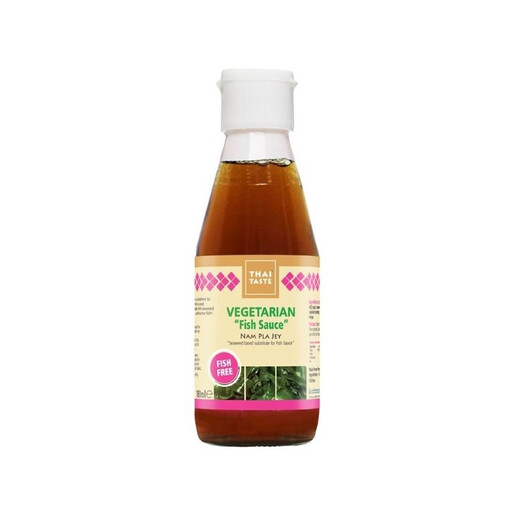
Why This Fits Their Persona: For the cook dedicated to authentic Thai or Vietnamese flavours, a generic savoury sauce won't do. This vegan fish sauce is specifically designed to replicate the pungent, salty kick essential for dishes like Pad Thai, Som Tam (green papaya salad) and N??c ch?m dipping sauces.
This is a specialist product, not a general-purpose sauce. It avoids the trap of trying to be everything by focusing on one job: being a convincing plant-based substitute for fish sauce, using soybean protein to create its distinct flavour.
Provides the specific pungent and salty flavour profile that is otherwise very difficult to achieve in vegan Southeast Asian cooking. It's a crucial ingredient for authenticity.
We have compiled a complete, real-time list of products that fully satisfy these strict selection criteria and UK safety regulations.
1. Can vegetarian oyster sauce be used exactly like regular oyster sauce? In most recipes, yes. Plant-based versions are designed to be a direct 1:1 substitute in stir-fries, marinades and glazes. The main difference is the flavour source; a vegetarian oyster sauce will have a more earthy, mushroom- or soy-based umami note compared to the briny taste of traditional oyster sauce. Also, pay attention to the consistency, as some may be slightly thicker or thinner.
2. How do I get that 'fishy' taste in vegan Asian sauces? Replicating the unique pungent flavour of fish sauce is a common goal. The most straightforward way is to use a dedicated vegan fish sauce, which is often made from fermented soybean protein or seaweed to create that salty, savoury profile. For a DIY approach, some home cooks add a small amount of kombu (a type of kelp) or miso paste to their dishes to introduce a similar marine-like depth.
3. How long do vegetarian cooking sauces last after opening? Always refer to the product's label for specific guidance. As a general rule, these sauces should be tightly sealed and stored in the refrigerator after opening. Thanks to their high salt and/or sugar content, they are well-preserved and can last for several months. For the best flavour and quality, it is advisable to use them within 1 to 3 months of opening. If you ever notice a change in smell, colour or any signs of mould, you should discard the product.