
24/7 Customer Support

Free returns

Same-day & Next-day Delivery

Quality Guaranteed

Unlock Your Welcome Offers: FREE Delivery | Up to 80% OFF | Free 30-day JoyPlus trial
Download the APP
Finding the right wall hooks can feel like a small task, but choosing incorrectly can lead to a cascade of frustrations: fallen coats, damaged walls and a home that feels more cluttered than organised. For many of us, especially renters and students, the fear of drilling holes or peeling paint makes finding a simple storage solution a genuine challenge.
As the Joybuy Product Recommendation Officer, my role is to help you navigate these choices. We will look past the marketing claims to focus on what truly matters. Before you buy another set of hooks that ends up in a drawer, let's examine the common pitfalls that lead to wasted money and unnecessary wall repairs.
To ensure your wall hooks work as intended, focus on matching the product's specifications to your specific needs. Here are the three most important factors to consider.
The single biggest factor for success is matching the hook type to your wall. Not all no drill hooks are created equal.
Always check the stated weight capacity, but interpret it with caution. A 2kg rating is for a static, dead-weight load. A wet towel or a backpack being pulled on and off exerts dynamic force that can exceed this.
The material dictates a hook's longevity, especially in certain rooms.
To help you choose, we have matched some practical options to common user needs.
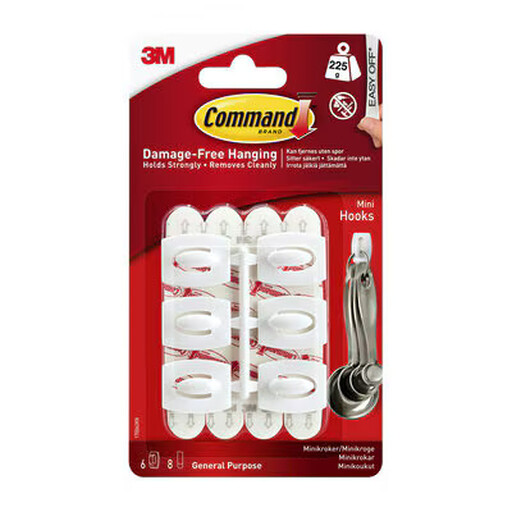
Why This Fits Their Persona: This is a go-to for anyone living in rented accommodation or university halls. They offer a reliable way to hang lightweight items like keys, decorations or cables without risking a deposit over wall damage. The multi-pack format is cost-effective for organising a small footprint.
It directly addresses the "damage-free deception" by using a well-documented stretch-release technology. When the instructions are followed, it removes cleanly from suitable surfaces without peeling paint or leaving residue.
No tools required: Easy to apply and remove. Versatile: Works on painted walls, tiles, metal and glass.
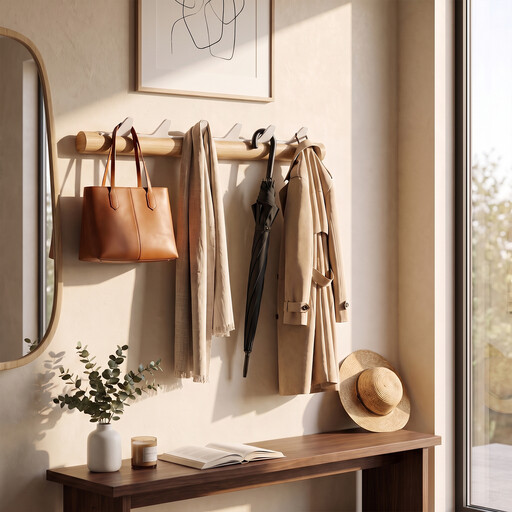
Why This Fits Their Persona: For a busy household entryway, adhesive solutions often aren't enough. This wall-mounted rack is built to handle the daily chaos of school bags, heavy winter coats and dog leads. It's a permanent, robust solution for homeowners looking to create a dedicated and tidy drop-zone.
It bypasses the "strong hold" illusion of adhesives entirely. By requiring a secure wall mounting, it provides a stated load capacity of up to 30kg (66 lbs), which is far beyond what any non-permanent hook can reliably offer.
High weight capacity: Genuinely heavy-duty for coats and bags. Durable materials: Solid rubberwood and aluminium alloy hooks are built to last.
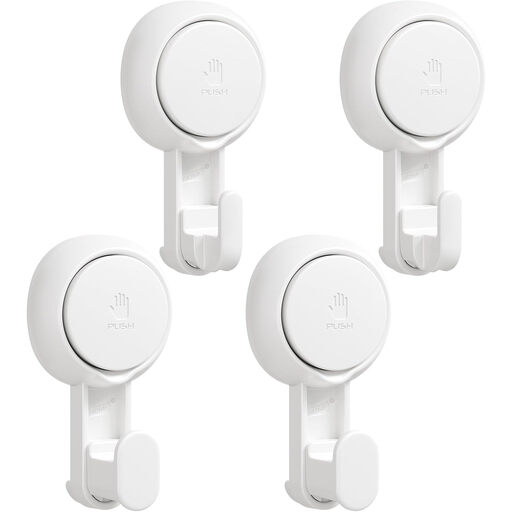
Why This Fits Their Persona: This user needs a reliable hook for inside a shower or in a steamy bathroom. These suction hooks are specifically designed for wet, non-porous surfaces like glass and glossy tiles, providing a strong, damage-free hold for towels, loofahs and robes exactly where they are needed.
It solves the "humidity hang-up" by using vacuum suction technology instead of adhesive. This method is waterproof and unaffected by steam, ensuring a reliable hold as long as the surface is smooth and airtight.
1-second installation: No tools or waiting time required. Repositionable: Can be easily removed and re-installed multiple times without losing suction power.
We have compiled a complete, real-time list of products that fully satisfy these strict selection criteria and UK safety regulations.
1. How can I make sure my adhesive hooks don't fall down? Success with adhesive hooks comes down to preparation. First, ensure the surface is on the approved list (usually smooth tile, glass, metal or sealed, smooth paint). Clean the area thoroughly with an isopropyl rubbing alcohol wipe and let it dry completely. Apply the hook and press firmly for at least 30 seconds. Finally, and most importantly, wait for the recommended time (often 1 hour, but check the packaging) before hanging anything. This allows the adhesive to cure and form a strong bond.
2. Can I use adhesive or suction hooks on wallpaper? It is generally not recommended. Most adhesive hooks will either fail to stick properly to the texture of the wallpaper or will tear the paper and backing when removed. Suction hooks require a non-porous, airtight surface, which wallpaper is not. For papered walls, your safest options are screw-in hooks or over-door solutions.