
24/7 Customer Support

Free returns

Same-day & Next-day Delivery

Quality Guaranteed

Unlock Your Welcome Offers: FREE Delivery | Up to 80% OFF | Free 30-day JoyPlus trial
Download the APP
Wall lights can improve visibility, define an entrance or add a decorative layer to a room, but the wrong fitting may create glare, require unexpected rewiring or deteriorate outdoors. Before choosing based on appearance alone, check the light output, installation method, bulb compatibility and protection rating.
This guide compares practical options for UK homes, including outdoor wall lights, indoor wall lights, LED wall lights, modern wall sconces and directional fittings.
A wall light with a warm glow may look attractive in a product image but provide little useful light for steps, paths or doorways. Lumens are more useful than wattage when comparing brightness. For example, a decorative fitting may use only a few watts and produce a subtle glow, while a larger integrated LED fitting may provide several hundred lumens for general illumination.
Consider the intended purpose:
“Outdoor” in a product title does not replace checking the IP rating. An IP54 fitting is protected against limited dust ingress and water splashes, making it suitable for many sheltered exterior positions. However, placement still matters. A light under a porch has different exposure from one on an uncovered garden wall facing driving rain.
Check whether the fitting is suitable for:
The mounting surface, cable entry point and installation quality also affect long-term performance.
Some wall lights use integrated LEDs, while others accept replaceable bulbs such as E14 wall lights or E27 wall lights. Integrated LED fittings can offer a neat appearance and low power consumption, but the light source is not normally replaced like a standard bulb. Replaceable-bulb sconces provide more flexibility over colour temperature, brightness and future bulb changes.
Hardwired wall lights should be installed by a qualified electrician. Renters should also check landlord permission before drilling into walls or altering fixed electrical wiring.
Lumens indicate the visible light output. A 630-lumen fitting, for instance, is more suitable for practical illumination than a small atmospheric lamp producing a much lower output.
Colour temperature is measured in Kelvin:
Up and down wall lights spread light across the wall and can create an architectural effect. Downward-facing or adjustable fittings are generally more suitable when you need light directed onto a reading area, worktop or pathway.
For outdoor wall lamps, the IP code is a key selection point. The first digit relates to protection from solid particles, while the second concerns water protection. IP54 offers protection from dust and splashing water, but it should not automatically be treated as suitable for immersion or every exposed installation.
Always follow the manufacturer’s installation instructions and local electrical requirements. Ensure the wall can support the fitting, seal cable entry points correctly and isolate the power at the circuit breaker before maintenance.
Check the bulb fitting before ordering:
Do not exceed the stated wattage. Dimmable wall sconces usually require a compatible external dimmer and suitable dimmable bulbs. A dimmer is not automatically included simply because a fitting is described as dimmable.
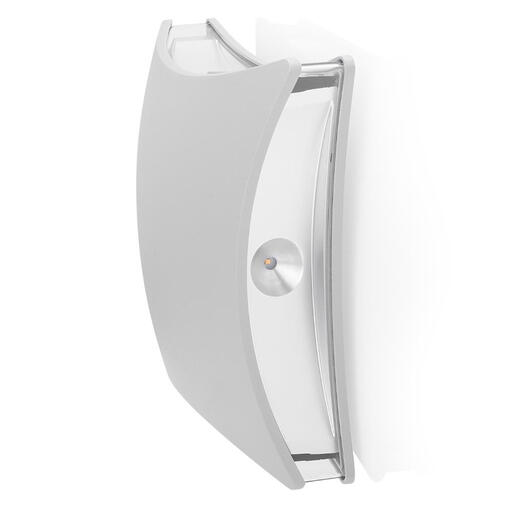
Why This Fits Their Persona: A straightforward option for homeowners refreshing a porch, patio, terrace or pathway without buying separate bulbs.
The integrated LED specification, 4W total consumption and IP54 rating are stated clearly, helping avoid confusion over bulb costs and basic outdoor protection.
Brushed aluminium finish, four integrated LEDs and warm 3000K up-and-down illumination.
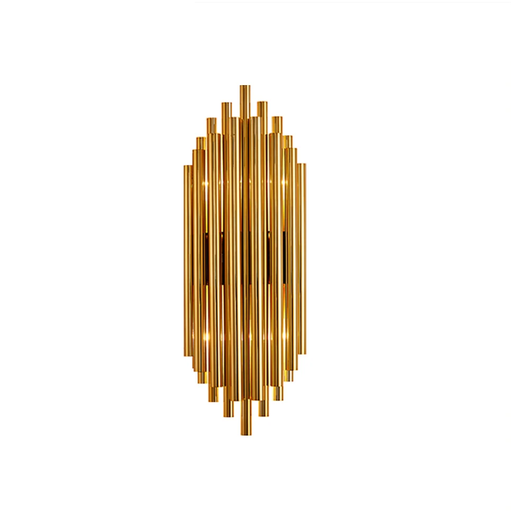
Why This Fits Their Persona: Designed for homeowners and interior designers seeking a statement fitting for hallways, living rooms or other indoor areas.
The listing specifies two E14 sockets, a 5W maximum per bulb, flush-mount installation and the need for an external dimmer.
Fluted stainless steel shade, gold finish and light directed both upwards and downwards.
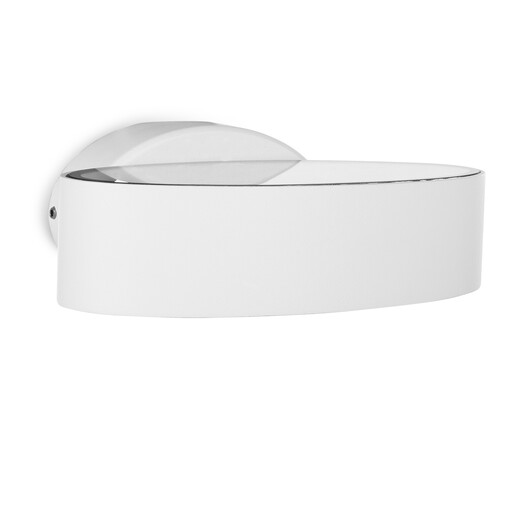
Why This Fits Their Persona: Suitable for frequently used entrances, garages, stairwells, sheds and porches where consistent practical lighting is important.
Its stated 630-lumen output makes the brightness easier to assess than relying on appearance or wattage alone, while IP54 identifies its weather protection level.
9W integrated LED, warm 3000K light and stated lifespan of up to 30,000 hours.
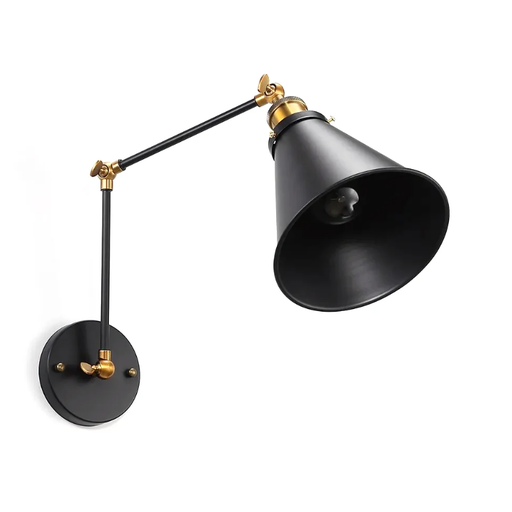
Why This Fits Their Persona: A practical match for reading corners, bedside spaces, home offices and work areas where directional adjustment is useful.
The product is marked for indoor use only and specifies a maximum 40W E27 bulb, reducing the risk of unsuitable outdoor installation or incompatible bulbs.
Two adjustable swing arms, black-and-brass finish and compatibility with an external dimmer.
We have compiled a complete, real-time list of products that fully satisfy these strict selection criteria and UK safety regulations.
Integrated LED wall lights generally use less electricity than older halogen fittings, but running cost depends on wattage, daily usage and the household electricity tariff. To estimate consumption, multiply the fitting’s wattage by hours used, then convert watt-hours into kilowatt-hours.
For example, a 4W light used for five hours each evening consumes approximately 0.02kWh per day. A 9W fitting used for the same period consumes approximately 0.045kWh per day. Your tariff determines the final cost.
For safety:
Motion sensor wall lights can reduce unnecessary operating time around garages, side entrances and paths. Check the sensor’s detection range, activation duration and sensitivity, as nearby roads, trees or passing pedestrians can affect operation.
Some are, provided their IP rating and installation position are appropriate. IP54 weatherproof wall lights can resist dust and water splashes, but they should be installed according to the manufacturer’s instructions and protected from exposure where required.
They can use less electricity than higher-wattage conventional fittings, but the actual saving depends on wattage, usage time and your electricity tariff. Compare both lumens and watts rather than choosing solely by the LED label.
Hardwired fittings should be installed by a qualified electrician in accordance with applicable UK electrical requirements. Battery-powered or plug-in products may have different installation arrangements, but always follow the supplied instructions.