
24/7 Customer Support

Free returns

Same-day & Next-day Delivery

Quality Guaranteed

Unlock Your Welcome Offers: FREE Delivery | Up to 80% OFF | Free 30-day JoyPlus trial
Download the APP
Choosing between washing powder and laundry detergent is not simply a matter of picking a familiar fragrance. The right format, dosage, wash temperature and fabric suitability all affect cleaning results and the cost of each load. UK households also need to consider hard water, frequent low-temperature cycles, children’s clothing and limited storage space.
This guide explains the practical details to check before buying, then matches several options to different laundry routines.
A larger box or bottle may appear better value, but pack weight alone does not show how many loads it covers. Concentrated laundry detergent often uses a smaller dose, while a larger laundry powder may require more product per wash.
Always compare:
A 2.2 kg pack offering 44 washes, for example, should be assessed by its approximate cost per wash rather than its shelf size.
Scented laundry detergent can leave fabrics smelling fresh, but fragrance does not indicate how well a formula handles dirt, grease or stains. A strong perfume may also be unsuitable for shoppers who prefer lightly scented products.
Look at the formula and usage guidance instead. Ingredients such as anionic surfactants, non-ionic surfactants and enzymes are commonly used in washing detergent. Oxygen-based bleaching agents and optical brighteners may also appear in products designed for whites and general laundry.
Many UK households use 20°C or 30°C cycles to reduce energy use and protect fabrics. However, not every washing powder dissolves at the same speed, and the correct programme still matters.
Choose a clearly labelled low-temperature laundry detergent or a product whose instructions specify suitability for cooler washes. Avoid exceeding the recommended dose, as extra powder or liquid can increase residue without necessarily improving results.
Laundry powder is often practical for regular family washing and may suit shoppers who want a larger pack. It should be stored in a dry place because moisture can cause clumping and make dosing less accurate.
Liquid laundry detergent dissolves readily and is convenient for low-temperature cycles. It can also be useful when you want to measure a precise amount for different load sizes. Keep the bottle upright and follow the label dosage, particularly in hard-water areas.
Eco laundry detergent strips are lightweight and pre-portioned. They can reduce packaging bulk and avoid spills, although buyers should check the recommended number of strips for load size, water hardness and soil level. Strips are not automatically suitable for every fabric or stain type.
A product’s stated wash count is only a guide. A family washing several loads each week may benefit from bulk laundry detergent, but only if the pack can be stored securely and the price per wash is favourable.
For example, the Daz Cherry Blossom 6 kg format includes dosage instructions based on load size and water hardness. A smaller 2.1 kg pack may be more suitable for flats, occasional washing or shoppers who want to try a fragrance before committing to a larger quantity.
For mixed everyday loads, choose a product labelled for detergent for whites and colours. Optical brighteners are commonly included in powders intended to maintain a brighter appearance in white fabrics, while colour-care positioning may appeal to households washing coloured garments frequently.
A non-bio laundry detergent contains no biological enzymes and is often selected by people who prefer that type of formula for everyday clothing. Always read the packaging for fabric restrictions, fragrance allergens and safety directions. Detergent should be kept away from children, and powder should be handled carefully to avoid inhaling fine particles.
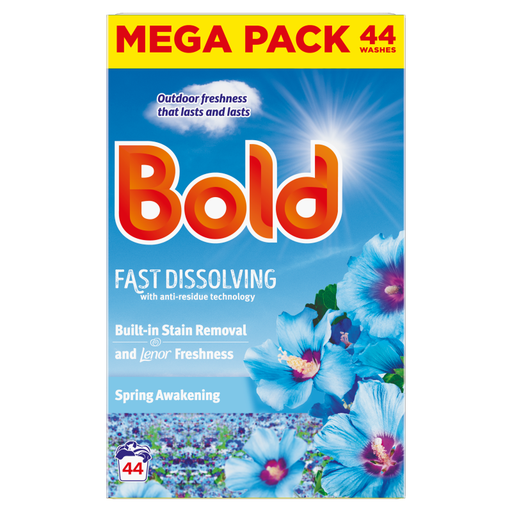
Why This Fits Their Persona: A 2.2 kg pack is suited to regular household washing, with an all-in-one powder format and a floral Spring Awakening fragrance.
The stated pack size and powder format make it easier to compare ongoing use rather than judging value by fragrance or packaging alone.
Includes surfactants, enzymes and oxygen-based bleaching agents; the listing describes a fast-dissolving powder for different water temperatures.
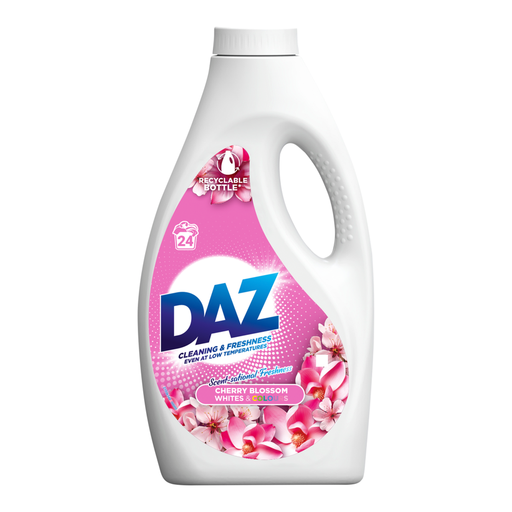
Why This Fits Their Persona: A liquid format with a stated 24-wash capacity suits shoppers who prefer measured dosing and a product described for 20°C cycles.
Dosage guidance is provided for 4–5 kg, 6–8 kg and 9 kg-plus loads, helping avoid using the same amount for every wash.
Liquid formula; listed for whites and colours; dosage can be increased for very hard water.
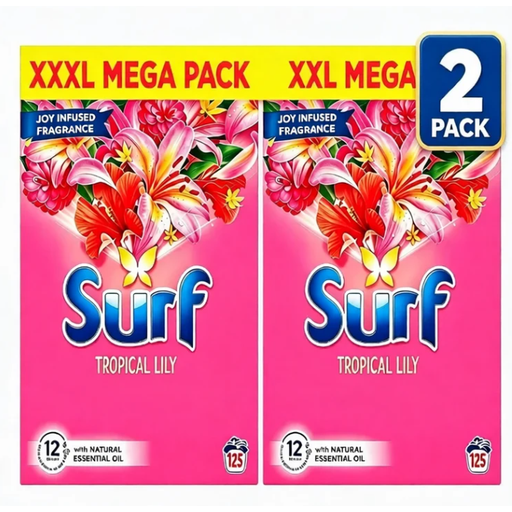
Why This Fits Their Persona: The two-pack format is designed for frequent laundry users who want a high stated wash count and a tropical lily fragrance.
The 125-wash figure gives heavy users a clearer basis for comparing bulk laundry detergent with smaller packs.
Recyclable cardboard packaging is stated; instructions specify a 50g dose and advise adding powder to the drawer.
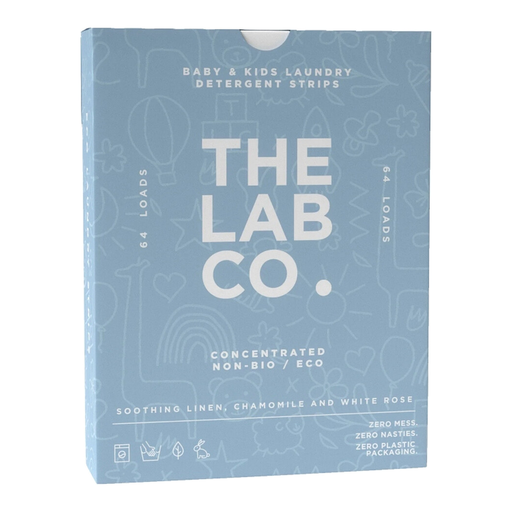
Why This Fits Their Persona: Pre-portioned strips suit smaller homes, shared accommodation and shoppers who want compact storage without a bottle or box of powder.
Its instructions distinguish between one strip for a 4–5 kg light-soil load and two strips for larger or heavily soiled loads.
Non-bio strip format; stated capacity of 64 loads; designed for machine washing and hand washing.
We have compiled a complete, real-time list of products that fully satisfy these strict selection criteria and UK safety regulations.
Not necessarily. Compare the shelf price with the stated number of washes, then consider whether hard water requires an additional dose. Powder can offer practical value in larger packs, while concentrated liquid may use less product per load.
Only if the product instructions indicate suitability for low-temperature washing. Several listed Daz formulas specify use in 20°C cycles, while dosage and programme selection still need to follow the packaging.
Storage conditions matter. Keep detergent tightly closed in a cool, dry place away from moisture and direct sunlight. For the precise shelf-life or expiry information, check the product packaging rather than relying on the purchase date.