
24/7 Customer Support

Free returns

Same-day & Next-day Delivery

Quality Guaranteed

Unlock Your Welcome Offers: FREE Delivery | Up to 80% OFF | Free 30-day JoyPlus trial
Download the APP
A watercolour paint set can be an affordable way to start painting, but product descriptions often make similar kits sound interchangeable. A compact case may contain only a few useful colours, a “complete” kit may include accessories you will rarely use, and a large palette can become awkward if the pans are difficult to activate or clean.
Whether you are buying for a child over three, a student, a hobby artist or a travelling illustrator, focus on the format, colour selection and included tools rather than packaging claims. The following guide explains the main buying pitfalls and highlights suitable options for different types of user.
A 24 colour watercolour set or 38 colour watercolour set may offer plenty of variety, but a larger number does not automatically mean better results. Check whether the colours can be activated easily, whether the palette leaves room for mixing and whether the case is practical to carry.
Beginners often need a manageable selection of primary, secondary and earth tones rather than dozens of shades they do not yet know how to combine. A 12-colour watercolour set with useful accessories may be more convenient for sketching, journalling or school projects than a larger box.
Some watercolour sets include one basic brush, while others provide a water brush, palette, pencil, sponges or paper. Check the component list carefully. You may still need suitable watercolour paper, a cloth and a separate mixing surface.
A brush included in a set is useful for starting, but it may not provide the range of tips needed for broad washes and fine details. If you already own brushes, prioritise the paint format and case design instead.
Water-based paints are convenient, but wet paint should not be sealed inside a case immediately after use. Allow pans or cups to dry before closing the lid, and rinse brushes promptly. Otherwise, moisture and pigment residue can make the kit untidy or affect the brush shape.
For children aged three to eight, adult supervision is recommended. Paints described as non-toxic are still not food safe and should not be swallowed or used as face paint. Sets containing small pans, caps, brushes or pointed accessories are not suitable for children under three.
A watercolour pan set uses solid cakes that require water for activation. Firm pressed pans are generally convenient for classrooms, home use and travel because they create less mess than liquid paint and are easy to store.
Semi-moist pans are softer and may activate more quickly with a damp brush. They can suit users who want faster colour application, but the case should be allowed to dry before storage.
Gouache is different from traditional watercolour. A gouache paint set usually produces a more opaque, matte finish and is useful for illustration, bold shapes and design work. Acrylic paint is another separate medium: an acrylic paint set dries quickly and becomes water-resistant when dry, making it suitable for surfaces such as card, wood, glass and canvas. It is not the most convenient choice for transparent watercolour washes.
Compare both the number of colours and the quantity per colour. The HIMI solid sets available in 24 and 38 colours contain pressed pans, while the HIMI gouache options use liquid or jelly-style cups and tubes with stated gram or millilitre capacities.
More colours can reduce the need for mixing, but learning to mix a smaller palette can be useful for students and beginners. For frequent painting, a larger selection may reduce interruptions, particularly when working on colour studies, illustration or classroom projects.
A lid that doubles as a mixing palette can reduce the number of accessories you need to carry. A water brush with a refillable reservoir is also practical for outdoor sketching because it removes the need for a separate water pot.
However, water brushes need cleaning between colours and should be emptied after use. For broader technique practice, an additional brush set with fine, medium, broad, round, wash or fan shapes may offer more control than the single brush supplied with a starter kit.
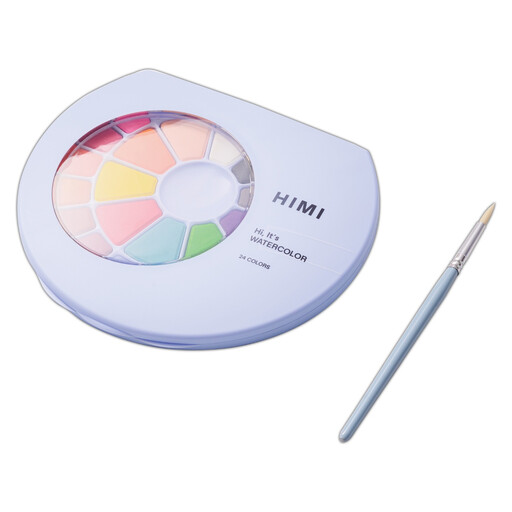
Why This Fits Their Persona: The 24-pan format gives beginners, parents and students a straightforward starting palette for home painting, school activities and basic colour studies.
It clearly states the 24 solid pans, included synthetic brush and lid mixing palette, avoiding uncertainty about the basic contents.
Firm pressed pans; compact blue case; water-based formulation; one brush included.
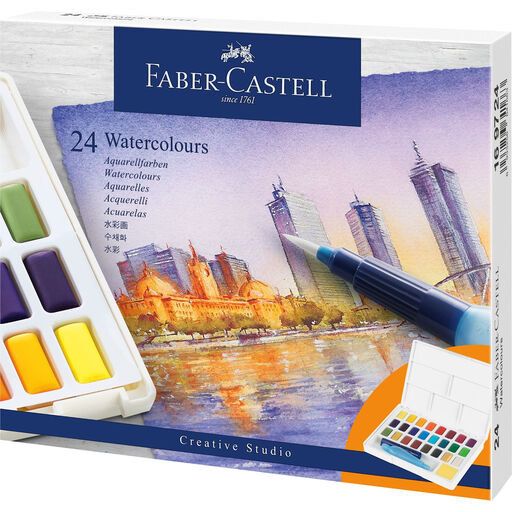
Why This Fits Their Persona: Suitable for hobby artists and illustrators who want a structured kit with a detachable palette and water brush for studio or outdoor use.
The detachable palette and stated water brush specification make the mixing and portability features clear rather than implied by the packaging.
24 colours; detachable mixing palette; refillable water brush; ring for holding the paintbox.
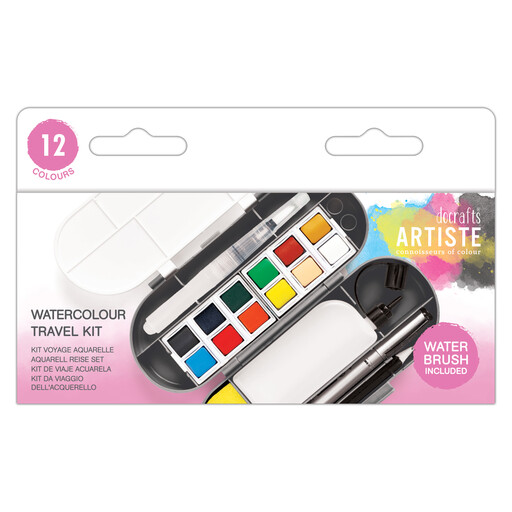
Why This Fits Their Persona: This portable watercolour set is designed for sketchbooks, journalling, outdoor painting and travel, with several accessories in one compact kit.
The listing specifies 12 pans, a water brush, palette, hand water bottle, sponges, pencil and needle point pen, so the accessory count is transparent.
Pocket-friendly format; water brush; mixing palette; sketching accessories included.
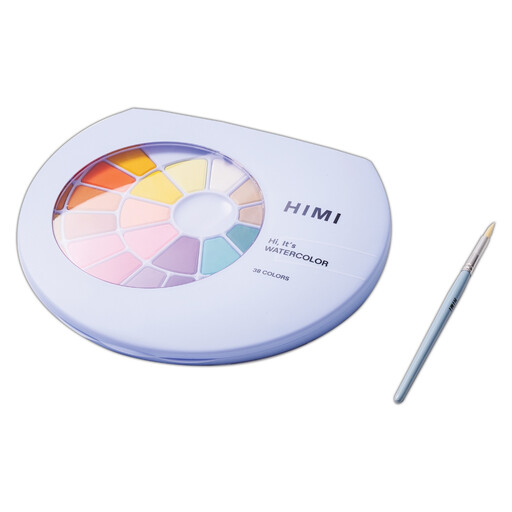
Why This Fits Their Persona: The broader palette suits illustrators, teachers, hobby artists and users who regularly work across varied subjects and colour schemes.
The stated 38-pan count and 12 g capacity per pan provide more useful information than a vague claim about an “extensive” palette.
38 solid pans; 12 g per pan; integrated mixing lid; synthetic brush; portable case.
We have compiled a complete, real-time list of products that fully satisfy these strict selection criteria and UK safety regulations.
Yes. A beginner watercolour set with solid pans, a mixing palette and one brush provides a simple way to practise washes, blending and layering. Choose a manageable colour range and add suitable watercolour paper, as ordinary printer paper can buckle when wet.
There is no fixed lifespan. Usage frequency, pan size, cleaning habits and storage conditions all affect how long they remain usable. Allow pans to dry before closing the case, keep the lid secure and avoid contaminating colours with dirty water or brushes.
Usually, yes. At minimum, you may want watercolour paper, a clean water container and a cloth or tissue. A portable watercolour set with a water brush can reduce the equipment needed outdoors. For detailed or frequent work, a separate watercolour paint brush set can provide a wider range of shapes and sizes.