
24/7 Customer Support

Free returns

Same-day & Next-day Delivery

Quality Guaranteed

Unlock Your Welcome Offers: FREE Delivery | Up to 80% OFF | Free 30-day JoyPlus trial
Download the APP
A waterproof phone pouch can protect your smartphone from rain, splashes, sand and accidental drops, but not every product labelled “waterproof” is suitable for swimming, kayaking or beach use. A low-cost pouch may look convincing online yet become difficult to seal, interfere with your touchscreen or fail to keep your phone afloat.
This guide from the Joybuy Product Recommendation Officer explains what to check before buying a waterproof phone bag, followed by practical recommendations for different types of UK users.
Terms such as “waterproof”, “dive-ready” and “50m” can be interpreted too broadly. A pouch may be designed for recreational water exposure without being suitable for extended deep diving, high-pressure conditions or repeated underwater use.
Check whether the listing provides a recognised rating, such as IPX8, and read the stated depth and duration carefully. Even then, the seal must be used correctly and checked regularly.
A transparent window may allow touchscreen use above the surface, but water pressure and moisture can reduce responsiveness underwater. This can make unlocking the phone, changing camera settings or answering calls frustrating.
For swimming, snorkelling or kayaking, start video recording beforehand or use your phone’s physical buttons where possible. A waterproof phone holder with a clear window is useful for access, but it cannot guarantee normal touchscreen performance in every condition.
A universal waterproof phone case is only useful if your smartphone fits without stressing the seal. Bulky cases may also prevent the closure from locking properly. Sand, salt, chlorine and repeated folding can affect the material and closure over time.
Look for a double-lock seal, an adjustable lanyard and enough internal space for your phone. Rinse the pouch with fresh water after use in the sea or a swimming pool, then dry it fully before storage.
IPX8 indicates protection against continuous immersion under conditions specified by the manufacturer or testing body. It does not mean that every IPX8 product has identical depth or duration limits.
Some listed 2-in-1 waterproof phone pouches state IPX8 protection and specify submersion at 10 metres for up to 30 minutes. Treat this as a product-specific condition, not a general guarantee for all waterproof phone pouches. For everyday beach trips, rain and poolside use, a properly sealed pouch may be sufficient; for diving, choose equipment specifically designed for that activity.
Many current smartphones have large screens and thick protective cases. A phone pouch for smartphones up to 6.7 inches may fit many iPhone, Samsung Galaxy and Google Pixel models, but screen size alone does not confirm compatibility.
Measure your phone with its case fitted and compare it with the seller’s stated dimensions. Avoid forcing the device into a tight pouch, as this can place pressure on the closure and reduce touchscreen usability.
A secure closure is more important than decorative features. A zip-lock and fold-over system can provide an additional barrier when correctly closed. Before every water activity:
A floating phone pouch can make retrieval easier if it falls into a pool, lake or calm sea. However, flotation should not encourage users to release their phone in moving water or rough conditions.
The following options suit different buying priorities rather than one universal use case.
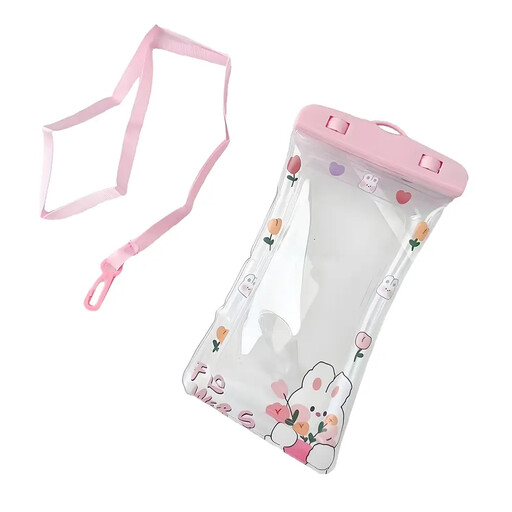
Why This Fits Their Persona: A practical option for occasional beach days, rainy walks, water parks and family holidays where straightforward phone protection is the main requirement.
The instructions require a dry-tissue immersion test before first use and regular checks, helping buyers avoid relying on an untested seal.
Designed to protect against water, sand, dust and snow; includes an inflatable construction and lanyard.
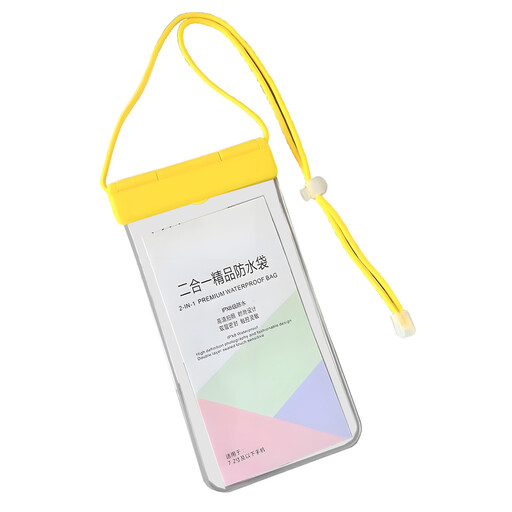
Why This Fits Their Persona: Suitable for active travellers and users who want one accessory for wet-weather protection and everyday carrying.
Its listed double-lock closure and stated IPX8 rating provide clearer specification information than a vague “waterproof” label alone.
Fits most smartphones up to 6.7 inches; has a transparent touchscreen window, detachable lanyard and listed floating design.
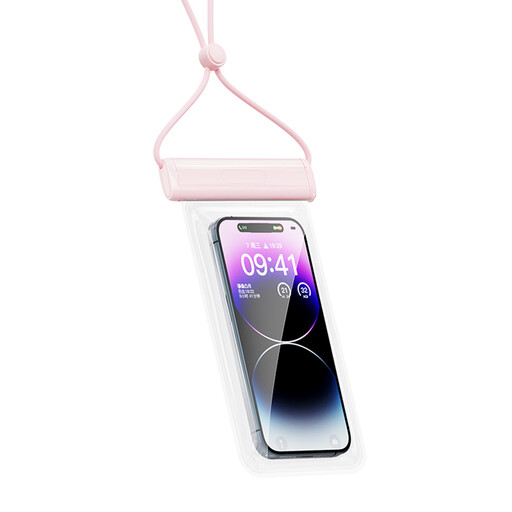
Why This Fits Their Persona: A practical match for swimmers, anglers, boaters and kayakers who need a lanyard-equipped pouch for repeated recreational outings.
The product guidance emphasises tissue testing, checking seals before each use and avoiding sharp objects, rather than treating the printed model name as unlimited protection.
Designed for protection from water, sand, dust and snow; includes a secure lanyard and guidance for saltwater and chlorinated-water care.
We have compiled a complete, real-time list of products that fully satisfy these strict selection criteria and UK safety regulations.
For a phone pouch for swimming, kayaking or beach use, preparation matters as much as the material:
A waterproof pouch is a protective accessory, not phone insurance. If your activity involves deep diving, strong currents or significant pressure, use equipment specifically rated for those conditions.
Many pouches are intended for recreational immersion, but suitability depends on the product’s stated rating, depth and duration. Test the seal first, keep the closure fully locked and remember that touchscreen response may be reduced underwater.
There is no fixed lifespan. Wear depends on sunlight, saltwater, chlorine, folding, temperature and how often the seal is opened. Inspect it before every use and replace it if the closure or material becomes brittle, distorted or damaged.
Some models are listed as floating phone pouches, while others are not. Confirm flotation in the product details rather than assuming that trapped air will keep every pouch above water. Even a floating design should be secured with its lanyard in moving water.