
24/7 Customer Support

Free returns

Same-day & Next-day Delivery

Quality Guaranteed

Unlock Your Welcome Offers: FREE Delivery | Up to 80% OFF | Free 30-day JoyPlus trial
Download the APP
A pair of women’s padded 3/4 cycling leggings can make commuting, leisure rides and indoor training more comfortable, but product pages often focus on impressive-sounding features without explaining what they mean in practice. The wrong pair may ride up, retain sweat, lack useful storage or feel uncomfortable after an hour in the saddle.
Before buying, look beyond colour and headline claims. These are the most common pitfalls to avoid.
Many women’s cycling capris look similar to gym leggings, but ordinary activewear may not include a cycling pad. A high-waisted fit and four-way stretch can support movement, yet they do not necessarily reduce pressure from the saddle.
For regular cycling, check that the listing clearly states padded, chamois or cycling pad. If it only mentions a soft fabric or high waistband, it may be intended for general exercise rather than riding.
Padding varies in thickness, shape and construction. A thin foam insert may be suitable for short indoor sessions, while longer recreational rides may benefit from a multi-density 3D gel chamois. However, extra bulk is not automatically more comfortable. A poorly shaped pad can bunch up or create pressure points.
Look for a pad designed to sit against the areas that contact the saddle, with smooth edges and a close-fitting garment that keeps it in position.
A pair of leggings can feel comfortable when standing but shift during repeated pedalling. Features such as silicone leg grippers, a supportive waistband and stretch fabric help reduce movement.
The UK’s changeable weather also makes moisture management important. Breathable, moisture-wicking and quick-dry cycling leggings can feel more practical than heavy fabric that stays damp. Finally, check the pocket design. A small zipped pocket may hold a key or card, but it may not accommodate a large smartphone.
For short commutes or occasional leisure rides, basic padded cycling shorts for women may be sufficient. For longer-distance recreational cycling, a 3D gel chamois with more than one density can provide structured cushioning across different areas.
Padding should not replace correct saddle position or cycling clothing fit. It is designed for comfort, not to provide medical or therapeutic protection.
A high-waisted cycling legging with a wide waistband can provide a secure feel while bending forwards over the handlebars. An arc-shaped waistband is also useful for reducing exposed gaps at the back when riding.
At the lower leg, silicone grippers can help create anti-slip cycling leggings that stay in place. Measure your waist and hips and compare them with the individual listing rather than relying only on your usual clothing size. A pad that shifts is often a sign that the garment is too loose or unsuitable in shape.
For warm rides, prioritise breathable cycling bottoms with moisture-wicking fabric and four-way stretch. Quick-dry properties can be useful after a rainy commute or a high-intensity indoor session.
Some listings include UPF 50+ cycling trousers as a product specification. This is a fabric performance claim supplied for the product and should not be treated as a substitute for other sun-protection measures. Reflective details can also improve visibility in low-light conditions, but cyclists should still use suitable lights and follow UK road-safety guidance.
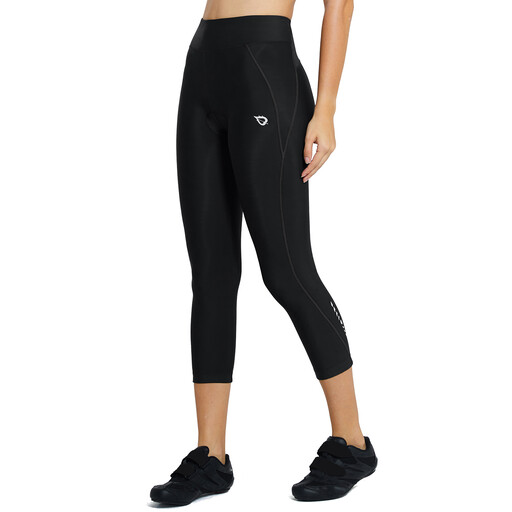
Why This Fits Their Persona: A practical option for new cyclists who want one pair for commuting, casual rides and occasional longer outings. The 3/4 length can feel less restrictive than full-length trousers during milder UK weather.
The listing specifies a multi-density 3D gel chamois, silicone leg grippers and a high, wide waistband rather than describing the item as general-purpose leggings only.
Breathable moisture-wicking fabric, a rear zipped utility pocket, reflective elements and a stated UPF 50+ specification.
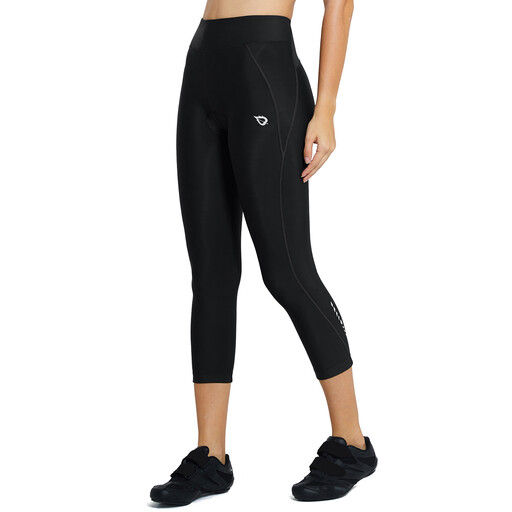
Why This Fits Their Persona: Suits riders who prioritise a defined waistband, secure fit and practical details for frequent road cycling, commuting or weekend rides.
The product information identifies the pad, waistband, silicone grippers and zipped storage, making the main cycling functions easier to verify before purchase.
High, wide arc-shaped waistband, multi-density 3D gel chamois, quick-dry fabric and reflective elements.
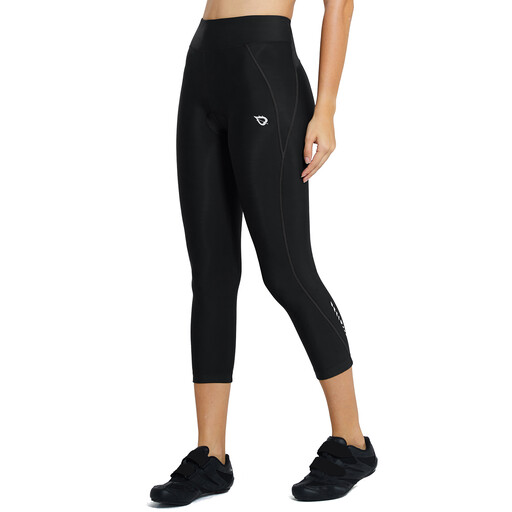
Why This Fits Their Persona: A practical fit for riders who spend more time in the saddle, including longer recreational routes, regular commuting and repeated indoor training sessions.
The stated chamois construction addresses the risk of buying unpadded activewear, while silicone leg grippers help limit upward movement during repeated pedalling.
The listing specifies moisture-wicking fabric, a rear zipped pocket, reflective details and machine-wash care instructions.
We have compiled a complete, real-time list of products that fully satisfy these strict selection criteria and UK safety regulations.
Yes, they can work well for commuting, particularly in mild weather. The cropped length offers more ventilation than full-length cycling trousers, while padding, reflective details and a zipped pocket can be useful on urban routes. For rain or colder temperatures, consider layering with weatherproof overtrousers.
Lifespan depends on riding frequency, washing method, saddle friction and fabric quality. Occasional riders may use one pair for a considerable period, while frequent cyclists may notice wear sooner. Following the care instructions and avoiding high heat can help preserve the stretch fabric and chamois.
Most cycling-specific padded bottoms are designed to be worn directly against the skin. Extra underwear can create seams, movement and moisture retention. Check the product instructions and choose a close but non-restrictive fit for comfortable pedalling.