
24/7 全天候客户支持

免费退货

当日/次日达

品质保障

开启新人专享福利: 全场免邮 | 低至 2 折 | 免费试用 30 天 JoyPlus 会员
下载 Joybuy
Choosing between Anker chargers, cables, wireless charging products and portable power options can be more complicated than it first appears. A charger may display a high wattage but lack the right port for your laptop. A wireless charging station may support several devices but require a compatible case. A power bank can be compact yet offer less usable capacity than expected.
The following guide focuses on the specifications that matter for UK households, commuters, drivers and travellers, while highlighting suitable options for different daily routines.
A 100W charger does not automatically charge every device at 100W. The device, cable and charger must support compatible charging standards, such as USB Power Delivery (USB-PD). Phones commonly draw less power than laptops, while charging several devices at once can also divide the available output.
Check both the maximum single-port output and the combined output when two or three ports are being used.
USB-C describes the connector shape, not necessarily the speed or power available. A USB-C cable rated at 60W is not equivalent to one rated at 240W. Likewise, a USB-A to Lightning cable may suit older Apple devices but will not connect directly to a USB-C-only power bank.
Before buying Anker charging cables, match:
For Lightning devices, MFi certification is a useful compatibility indicator. For USB-C cables, look for a stated wattage and recognised compliance information rather than relying on the connector alone.
Magnetic wireless charging works most conveniently with compatible phones and cases. A thick, non-magnetic or metal-containing case may weaken the connection or prevent charging. Wireless charging can also be slower than wired charging and may produce more heat.
For an Anker MagSafe charger or Qi2 product, check the phone model, case thickness and whether the charging puck or stand requires a separate power adapter.
For everyday smartphones, a 20W to 30W USB-C charger is generally a practical range. The Anker Nano USB-C Charger, 30W Fast Charging, White is a compact option for phones and smaller tablets, while a 67W or 100W Anker GaN charger is more suitable for a tablet, laptop and phone combination.
A multi-port charger should clearly state how power is allocated. For example, the Anker Prime 100W model provides two USB-C ports and one USB-A port, with a stated maximum of 89W when all three ports are used. This is more useful than looking only at the headline 100W figure.
Look for USB-PD support for many modern phones, tablets and laptops. GaN, or gallium nitride, allows manufacturers to produce smaller high-output chargers, but GaN itself does not guarantee a particular charging speed.
For wireless charging, Qi2 certification and MagSafe compatibility can help with alignment on compatible devices. For Apple Watch charging, check whether the product has the appropriate charging certification and whether your watch model is listed.
Power bank capacity is measured in mAh, but the usable energy delivered to a device is affected by voltage conversion and charging losses. A 5,000mAh model is usually aimed at emergency or top-up charging, while a 10,000mAh power bank is more practical for longer days away from a socket.
Built-in cables reduce the need to pack extras, but they should still match your devices. Keep lithium-ion power banks away from water, excessive heat and heavy pressure, and follow airline and transport guidance when travelling.
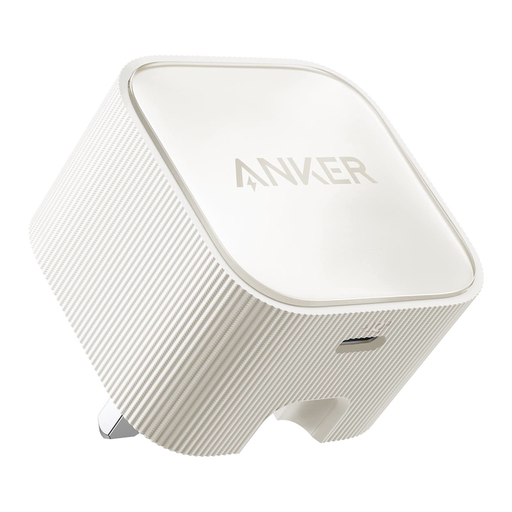
Why This Fits Their Persona: A compact 30W USB-C option for a phone, earbuds or smaller tablet in a handbag, desk drawer or commuter bag.
The USB-C output is clearly stated at 30W, making it easier to match with a suitable USB-PD cable and device.
Foldable design; ActiveShield 3.0 protection features; suitable for compact everyday carry.
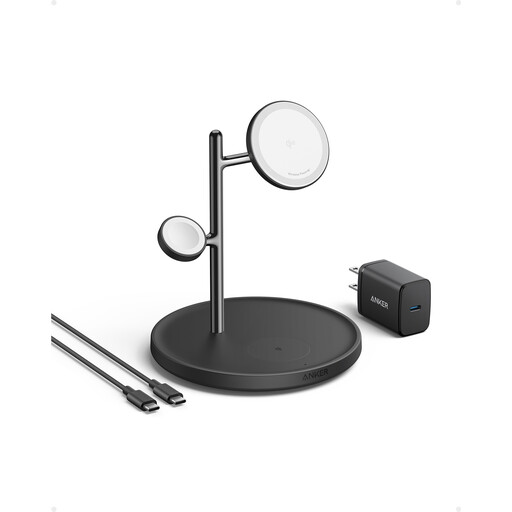
Why This Fits Their Persona: Designed for a tidy bedside table or home office where an iPhone, Apple Watch and AirPods are charged together.
Its Qi2 and MagSafe compatibility is specified, helping buyers check magnetic alignment before purchase.
15W phone charging; simultaneous three-device layout; MFW certification is listed for compatible Apple Watch charging.
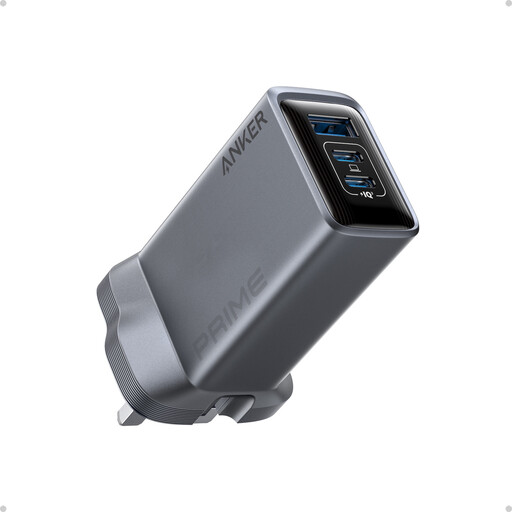
Why This Fits Their Persona: A multi-device choice for home workers, frequent travellers and anyone charging a laptop, tablet and phone from one socket.
The listing separates single-port output from three-port output, so buyers can plan around the stated 89W shared maximum.
Two USB-C ports and one USB-A port; 100W maximum USB-C output; foldable prongs for travel.
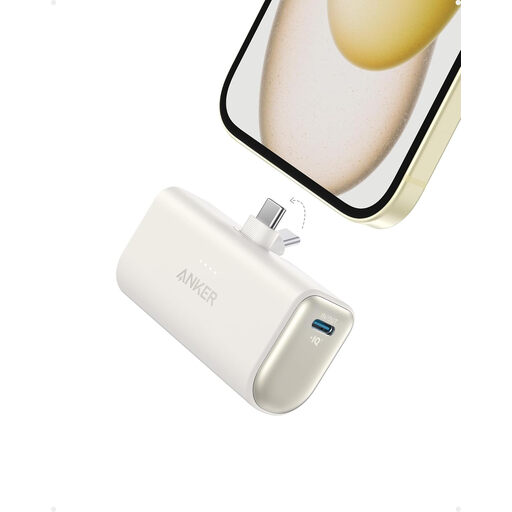
Why This Fits Their Persona: Suitable for a train journey, day trip or emergency top-up when pocket space is limited.
The stated capacity and 22.5W output make its intended top-up role clear, rather than presenting it as a laptop replacement.
5,000mAh capacity; built-in foldable USB-C connector; two USB-C ports and ActiveShield 2.0 features.
Drivers may prefer an Anker car charger with both USB-C and USB-A outputs. The 52.5W two-port model provides up to 30W through USB-C and up to 22.5W through USB-A. For older Apple devices, an Anker USB-C to Lightning cable or USB-A to Lightning cable can be paired with a suitable adapter.
For longer trips, camping or backup electricity, a portable power station requires a separate assessment of Wh capacity, AC output, recharge time and weight. These units are considerably different from a pocket power bank, so check the appliance wattage before buying.
We have compiled a complete, real-time list of products that fully satisfy these strict selection criteria and UK safety regulations.
Many are, provided the connector and charging protocol match the device. Check whether the charger offers USB-C Power Delivery, then pair it with a suitable USB-C cable. Lightning models require a Lightning cable, while newer USB-C iPhones use a USB-C to USB-C cable.
Lifespan depends on bending, pulling, storage and connector wear. Braided nylon models are designed to resist everyday abrasion, but avoid sharply folding the cable near either plug. Replace a cable if its insulation splits, the connector becomes loose or charging repeatedly disconnects.
The charger draws power according to the connected device and charging stage, not simply its maximum rating. A 100W charger does not continuously consume 100W when charging a phone. For lower running costs, unplug chargers when not needed and avoid leaving power banks or devices connected indefinitely.