
24/7 Customer Support

Free returns

Same-day & Next-day Delivery

Quality Guaranteed

Unlock Your Welcome Offers: FREE Delivery | Up to 80% OFF | Free 30-day JoyPlus trial
Download the APP
A box of balsam tissues can be a practical comfort during colds, flu and hay fever, but not every product suits every situation. Some packs prioritise portability, while others offer thicker sheets, larger boxes or bamboo materials. Choosing based only on words such as “ultra-soft” or “soothing” can lead to a product that runs out quickly, tears when damp or does not match your sustainability preferences.
This guide explains what to check before buying balsam tissues in the UK, including Kleenex Balsam tissues, aloe vera tissues, pocket packs and bamboo alternatives.
3-ply tissues can offer a useful balance of softness, strength and compactness. 4-ply tissues may feel more substantial and provide additional material for absorbing moisture, but ply count alone does not tell you the sheet size, texture or durability.
For frequent nose wiping, also check whether the product description mentions balsam, aloe vera or another conditioning ingredient. These features are separate from the number of layers.
Pocket tissues are convenient for commuting, school, travel and keeping in a car or handbag. However, individual packs usually contain fewer sheets than a standard box. A 10-pack may offer good distribution around the home, office and family bags, but the number of tissues per individual pack still matters.
For desk or bedside use, a cube or flat box is generally more practical. For days out, pocket tissues are easier to carry and protect from dirt when sealed.
Terms such as “eco-friendly”, “plastic free” and “bamboo tissues” describe specific attributes, not an automatic overall environmental score. Check whether the fibres are FSC-certified, whether packaging is recyclable or compostable, and whether local UK recycling guidance accepts the packaging.
Bamboo may appeal to shoppers seeking a rapidly renewable fibre, while virgin pulp products can still carry responsible forestry certification. Compare the full material and packaging information rather than relying on a front-of-pack slogan.
Balsam tissues are designed for use around the nose and face. Product listings may refer to aloe vera, vitamin E, calendula, chamomile or a protective balm. These ingredients can affect the feel of the tissue, but they should not be treated as medical treatments or guaranteed solutions for irritation.
If you have sensitive skin or known allergies, read the current packaging carefully. Fragrance, botanical extracts and lotions may not suit everyone. Stop using a product if irritation occurs and seek medical advice for persistent or severe symptoms.
Consider the balance between ply count, sheet quantity and intended use:
For environmentally conscious shoppers, check for FSC certification, bamboo fibre content and packaging details. Some products use virgin pulp sourced from certified forests; others use bamboo fibres and plastic-free or compostable packaging.
Packaging disposal depends on local council facilities. Used tissues generally belong in household waste rather than paper recycling, and they should not be flushed because they can contribute to blocked pipes.
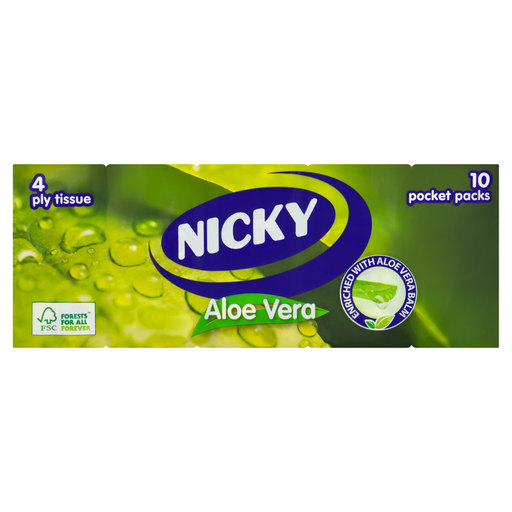
Why This Fits Their Persona: Ten individual pocket packs are practical for families, commuters and office workers who want to distribute tissues between bags, desks and cars.
The listing states the pack contains 4-ply tissues and 10 pocket packs, making the format and quantity clear before purchase.
Aloe balsam, 100% virgin pulp and FSC-certified sourcing are listed product features.
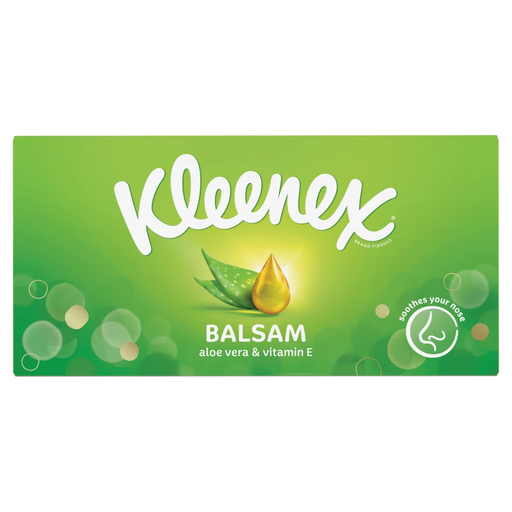
Why This Fits Their Persona: A standard box suits a bedside table, home office or living room where tissues need to remain accessible throughout the day.
The product is described as a 3-ply tissue with approximately 64 sheets, so buyers can compare supply as well as softness.
The listing identifies aloe vera, vitamin E and calendula alongside a 3-ply construction.
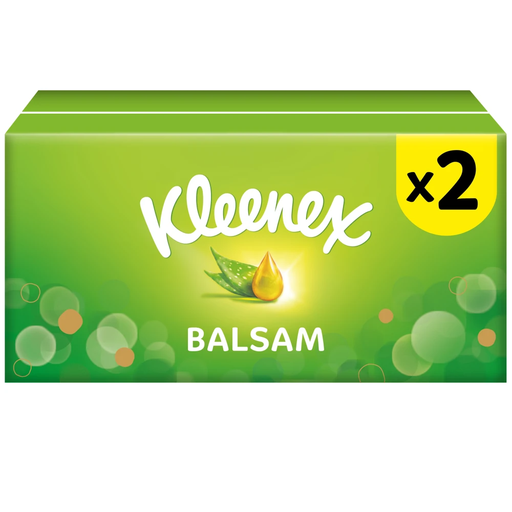
Why This Fits Their Persona: A two-box format is suitable for households preparing for frequent use during cold, flu or allergy periods.
Buying two standard boxes reduces the risk of relying on a single small pocket pack when tissues are needed repeatedly.
The product information lists aloe vera and vitamin E, with tissues designed for softness during frequent wiping.
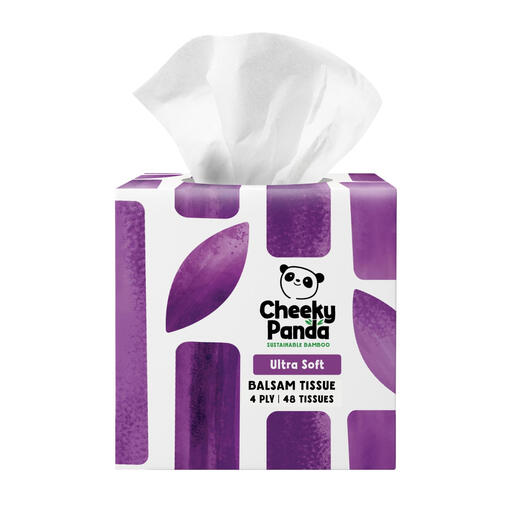
Why This Fits Their Persona: The cube format works well in a shared home or office, while bamboo and plastic-free packaging address specific material preferences.
The listing specifies 48 sheets, 4-ply construction, FSC-certified bamboo and plastic-free packaging rather than leaving the material unclear.
Aloe vera, bamboo fibres, biodegradable tissue and recyclable card packaging are stated product features.
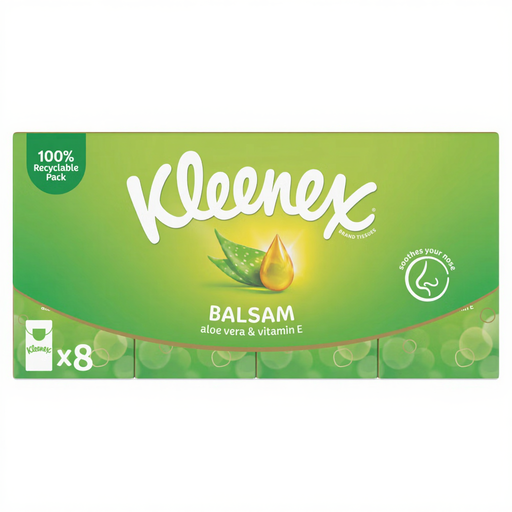
Why This Fits Their Persona: Eight compact packs are convenient for train journeys, work bags, school runs and keeping a spare pack in the car.
The 8-pack format is clearly stated, helping shoppers distinguish a multipack from a single pocket pack.
The product is listed as 3-ply, soft, absorbent and balsam-infused for portable everyday use.
We have compiled a complete, real-time list of products that fully satisfy these strict selection criteria and UK safety regulations.
Keep unused tissues in a cool, dry place and reseal pocket packs after opening. Dispose of used tissues in a general waste bin unless your local authority provides different guidance. Do not flush them down the toilet. Plastic wrappers, card boxes and compostable packaging should be separated according to the instructions on the pack and local council facilities.
Balsam tissues are intended for external personal care. They are not a substitute for medical products. Check the label before use if you have allergies or sensitivity to lotions, fragrances or botanical extracts.
They may feel more comfortable than plain tissues because they include a balm or conditioning ingredient, but suitability differs between individuals. Check the ingredient information, particularly for aloe vera, vitamin E, calendula, chamomile, fragrance and other botanical extracts. Discontinue use if irritation develops.
Choose 3-ply tissues when portability, everyday use and pack size are priorities. 4-ply tissues may suit shoppers who prefer a thicker sheet or need extra material for frequent wiping. Compare the number of sheets, dimensions and packaging size as well as ply count.
Bamboo tissues can be an alternative to conventional wood-pulp tissues, especially where the product specifies responsibly sourced bamboo and plastic-free packaging. However, disposal and manufacturing details still matter. Look for recognised certifications, clear fibre information and packaging instructions rather than relying on broad environmental wording alone.