
24/7 Customer Support

Free returns

Same-day & Next-day Delivery

Quality Guaranteed

Unlock Your Welcome Offers: FREE Delivery | Up to 80% OFF | Free 30-day JoyPlus trial
Download the APP
Keeping a bathroom sparkling clean can feel like a never-ending battle against soap scum, watermarks and stubborn grime. With shelves full of products all promising a perfect finish, it's easy to grab the wrong one and end up with disappointing results or, worse, damaged surfaces. As a Joybuy Product Recommendation Officer, my role is to help you see past the marketing jargon and choose a product that genuinely solves your problem.
Before you spend another pound, let's look at the common pitfalls that lead to wasted money and frustration.
To make an informed choice, you need to understand what makes a bathroom cleaner effective for your specific needs. Here are the core parameters to check before you buy.
Different types of grime require different chemical solutions. Matching the active ingredient to your problem is the key to an effortless clean.
The format of the cleaner affects its application and effectiveness on different surfaces.
Instead of a generic list, we've matched our recommendations to specific household needs. This ensures you get the right tool for the job.
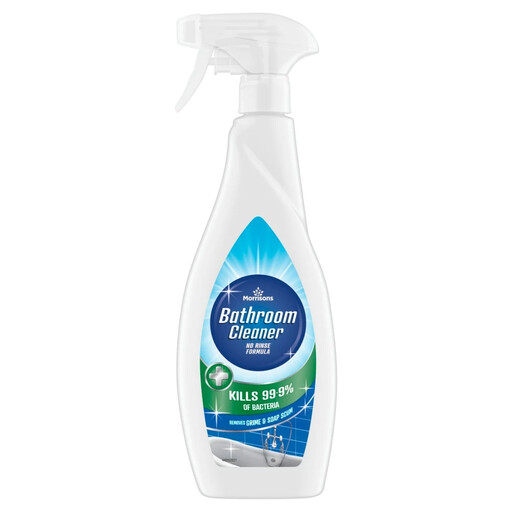
Why This Fits Their Persona: This user needs a reliable, no-fuss cleaner for weekly wipe-downs of the sink, bath and tiles. They are budget-conscious and want a product that performs well on everyday grime without a premium price tag.
It avoids the "one-size-fits-all" myth by being an honest generalist. It's positioned for tackling common bathroom dirt, not for extreme deep cleaning, thereby setting realistic expectations.
Provides effective cleaning performance at an affordable price. The convenient spray bottle makes routine cleaning quick and straightforward.
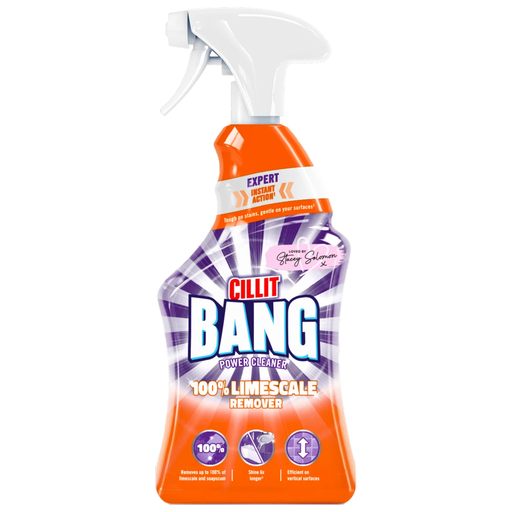
Why This Fits Their Persona: Living in a hard water area, this user's main frustration is the relentless build-up of limescale on taps, shower heads and screens. They need a powerful, specialist product that dissolves mineral deposits effectively.
This product directly counters the "weak formulation" pitfall. It is not a general cleaner; it is a dedicated limescale remover with a potent formula designed specifically for this single, tough task.
Its formula starts working instantly on application to remove limescale and soap scum. It also leaves a protective layer to help keep surfaces shiny for longer.
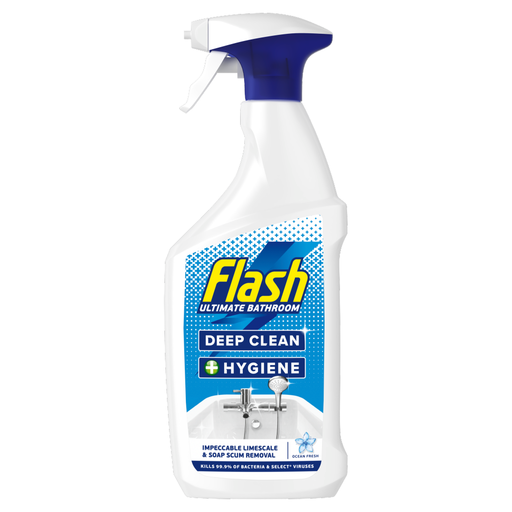
Why This Fits Their Persona: For this household, cleaning is as much about sanitation as it is about shine. They need a product that reliably kills germs on high-touch surfaces like taps, toilet flushes and sinks, providing peace of mind.
It avoids the "fragrance over function" trap by putting its disinfectant properties front and centre. The "Anti-Bac" and "Kills 99.9% of bacteria" claims are its core value, not just a secondary feature.
This is a dual-action product that removes tough soap scum and limescale while also functioning as an effective bathroom disinfectant spray, saving time and effort.
We have compiled a complete, real-time list of products that fully satisfy these strict selection criteria and UK safety regulations.
For most households, a quick daily wipe of sinks and a weekly clean of the toilet, shower and floors is sufficient. A deep clean, where you tackle limescale build-up, grout and drains, is recommended every month or two, depending on usage and water hardness. Regular use of a preventative product, like a daily shower cleaner spray or a toilet rim block, can extend the time between deep cleans.
It is generally not recommended. Many toilet cleaners, especially powerful gels, contain strong acids like hydrochloric acid or bleach. While effective in a ceramic toilet bowl, these can damage tile grout, chrome fittings and acrylic or enamel tubs. Always use a product specifically designed for bathroom surfaces to avoid costly damage.