
24/7 Customer Support

Free returns

Same-day & Next-day Delivery

Quality Guaranteed

Unlock Your Welcome Offers: FREE Delivery | Up to 80% OFF | Free 30-day JoyPlus trial
Download the APP
Finding the right food containers can make all the difference in a busy week. If you're tired of stained plastic, warped lids and the lingering taste of yesterday's lunch, you've likely considered making the switch to glass. Glass meal prep containers offer a durable, hygienic and convenient way to store, transport and reheat your food.
As the Joybuy Product Recommendation Officer, my role is to help you find practical solutions that fit your lifestyle. This guide cuts through the marketing jargon to focus on what truly matters: material quality, lid security and overall value. We'll explore the key features to look for and highlight a few recommended options to get your meal prep routine organised.
Before you decide, here are a few practical points to consider. Getting these details right will ensure your new containers serve you well for years to come.
Not all glass is created equal. You will often see borosilicate glass containers mentioned, and for good reason. This type of glass is engineered to withstand thermal shock, meaning it can go from the freezer to the microwave without the risk of cracking. Standard soda-lime glass (like a drinking glass) is less resilient to sudden temperature changes. For the ultimate convenience in meal prepping, borosilicate glass is the feature to look for.
A container is only as good as its lid. For anyone planning to transport their lunch, a secure seal is non-negotiable. Look for leak proof lunch containers that feature four-sided locking tabs and a silicone gasket fitted inside the lid. This combination creates an airtight food storage set that not only prevents spills in your bag but also keeps food fresher for longer by locking out air and moisture.
Consider how you plan to use your containers. Are you preparing daily lunches for one, or batch-cooking for a family? A multi-piece set with various sizes offers the most flexibility. Rectangular containers are often more space-efficient for stacking in the fridge or a lunch bag, while a compartmentalised bento box for adults uk style can be ideal for keeping different food items separate.
Based on features, materials and user-centric design, here are a few standout options for upgrading your food storage.

Why It Stands Out: This comprehensive set is an ideal starting point for anyone serious about meal prepping. It includes two highly practical sizes and is made from the preferred material for safe reheating.
Pros:
Who is it for? Health-conscious office workers and families who need a complete, matching set of reusable food containers for daily lunches and organised food storage.

Why It Stands Out: For those who prioritise durability above all else, this stainless steel set is a fantastic alternative to glass or plastic. It's lightweight, virtually unbreakable and completely plastic-free.
Pros:
Who is it for? Individuals and families looking for a robust, long-lasting and lightweight food storage solution. It's particularly suited for cold foods, pantry storage or anyone seeking a non-glass, plastic-free option. Note: Stainless steel is not microwave safe.
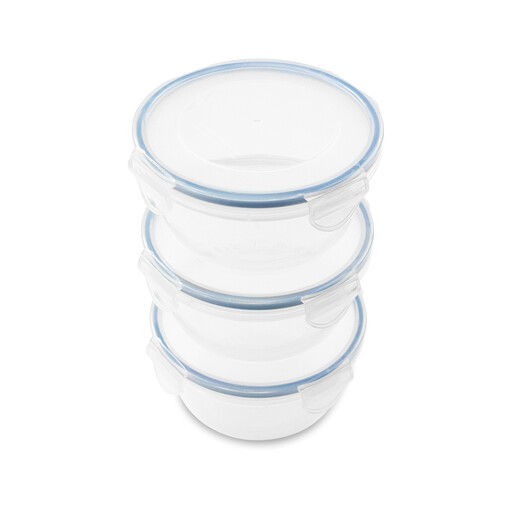
Why It Stands Out: This set offers a reliable and affordable solution from a well-known British brand. Its clip-lock design provides the airtight seal many are looking for in a lightweight format.
Pros:
Who is it for? Anyone seeking a practical, lightweight and affordable set of containers for general food storage, leftovers and lunches, where the benefits of plastic (lightweight, non-breakable) are a priority.
The right storage can transform how you organise your kitchen and plan your meals. If these recommendations aren't quite what you're looking for, or if you need different sizes and styles, you can explore a wider selection.
Browse our full range of snack storage organiser solutions to find the perfect fit for your pantry and fridge.
1. Are glass meal prep containers completely leak-proof? The leak-proof quality of a container is determined by its lid. To ensure a secure seal, look for glass food storage containers with lids that have four locking tabs and a flexible silicone gasket. This design creates pressure against the rim of the container, forming an airtight barrier that effectively prevents leaks during transport.
2. Can you put hot food directly into glass storage containers? While it is always a good practice to let very hot food cool for a few minutes, containers made from borosilicate glass are specifically designed to handle large temperature fluctuations. This makes them much more resilient than standard glass when storing hot leftovers or reheating food from the fridge.
3. Are glass containers a better choice than plastic for meal prep? Both materials have distinct advantages. Glass is non-porous, meaning it won't absorb food odours, flavours or stains, and it provides an excellent surface for reheating. Plastic is significantly lighter and won't shatter if dropped, making it a convenient and safe choice for travel or for children. The decision often comes down to personal priorities regarding weight, reheating habits and long-term durability.