
24/7 Customer Support

Free returns

Same-day & Next-day Delivery

Quality Guaranteed

Unlock Your Welcome Offers: FREE Delivery | Up to 80% OFF | Free 30-day JoyPlus trial
Download the APP
Finding the right indoor broom is less straightforward than it appears. A product may look suitable in a listing photograph, yet prove awkward on carpets, ineffective with fine dust or difficult to clean after collecting pet hair. For UK households, the most useful choice depends on your floor types, storage space, handle height and the debris you regularly need to remove.
This guide explains the main buying pitfalls, the specifications worth checking and our top recommendations for different household needs.
Very soft bristles can glide over laminate and tiles but struggle to gather heavier crumbs. Conversely, stiff bristles may work well on uneven surfaces but scatter fine dust across smooth floors. If your home combines carpets, vinyl, sealed wood or tiles, look for a broom or floor sweeper designed for more than one surface.
Pet hair often clings to carpet fibres and gathers around skirting boards. Traditional bristles may move it around rather than lift it. A rubber broom or silicone broom can create more contact with the floor, helping to gather hair and lint into a manageable line. However, rubber heads can be less suitable for pushing large dry particles unless the design includes an appropriate edge or blade.
A fixed, short handle can encourage bending during larger cleaning tasks, while an excessively long handle may feel unwieldy in smaller rooms. Check the actual adjustment range rather than relying on the phrase “telescopic handle”. Also consider whether the head swivels or whether the handle retracts enough to fit inside a cupboard.
For everyday dust and crumbs, a mixed-bristle head can provide a balance between fine-particle collection and larger debris pick-up. The Vileda 3 Action Broom, for example, uses a triple-fibre arrangement and angled bristles for edges and corners.
For pet hair, lint and damp spills, flexible rubber or silicone may be more practical. A 2-in-1 broom and squeegee can push liquid on smooth bathroom or kitchen floors, but check that the squeegee edge is intended for smooth surfaces rather than carpet.
A broom with telescopic handle should offer a useful range for the people who will use it. As a practical guide, check:
For example, the Vileda Duactiva handle adjusts from 75cm to 130cm, while the Emmama rubber broom adjusts from 84cm to 159cm.
A broom that only performs in the centre of a room can leave dust along skirting boards. Look for angled bristles, tapered blades or a swivel head. A corner cleaning broom is particularly useful in kitchens, hallways and rooms with furniture close to the walls.
Maintenance also matters. Removable barriers, washable rubber heads and easy-to-clear bristles can prevent trapped hair and dust from affecting future performance. Always follow the care instructions and allow washable parts to dry fully before storage.
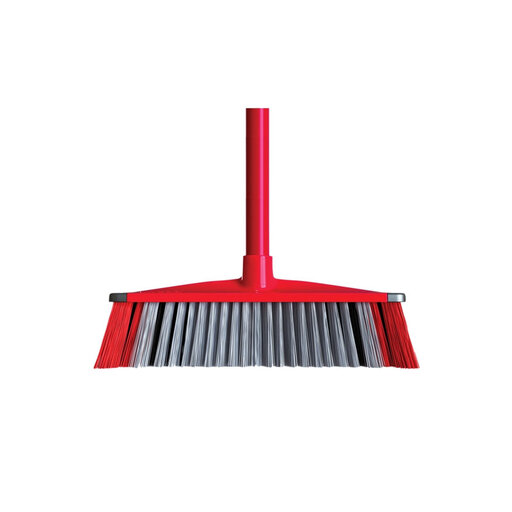
Why This Fits Their Persona: A straightforward choice for flats, family homes and regular dry sweeping across tiles, laminate, vinyl and other sealed hard floors.
Its triple-fibre design avoids relying on one bristle type, while angled bristles are shaped for corners and edges rather than only open floor areas.
100% recycled PET bristles; rubber bumpers help protect furniture and walls from knocks.
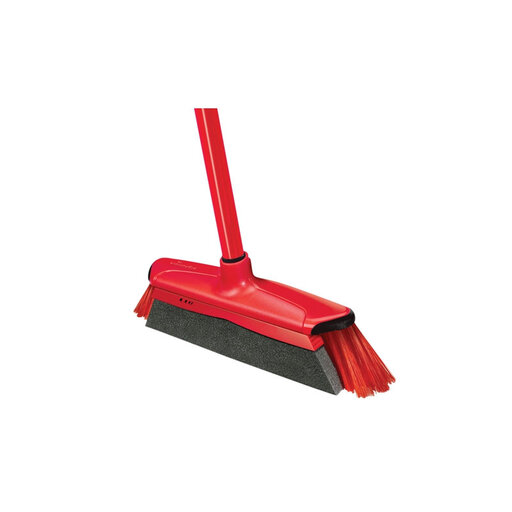
Why This Fits Their Persona: Suitable for households wanting a refined dust-and-crumb broom for frequent cleaning in living rooms, hallways and kitchens.
The foam layer is designed to limit dust spreading while the brush gathers dirt, hair, particles and crumbs. The removable anti-dust barrier can be cleaned separately.
75cm–130cm telescopic handle; hardened angled bristles for edges and corners.
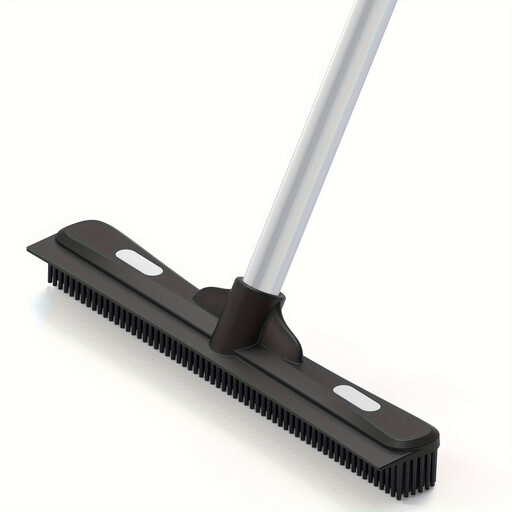
Why This Fits Their Persona: A practical match for pet owners and busy families dealing with hair on carpets, dry debris on hard floors and occasional bathroom or kitchen spills.
The flexible rubber head is intended to lift pet hair, lint and dust rather than simply sweep over them. Its washable construction also avoids permanently trapping hair in bristles.
84cm–159cm adjustable handle; integrated squeegee edge for liquid on smooth floors.
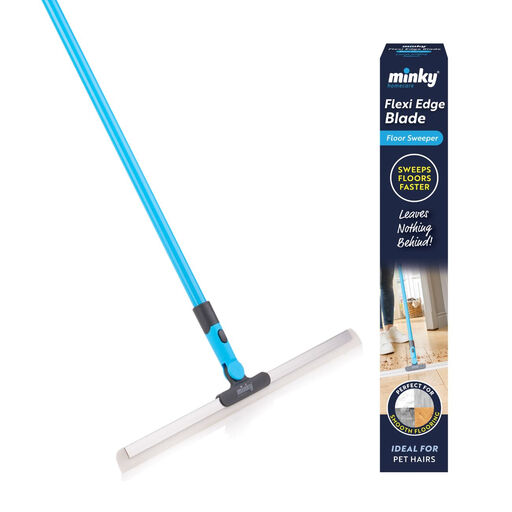
Why This Fits Their Persona: Useful for homes where one compact tool needs to move between floors, furniture gaps, windows and shower areas.
The tapered rubberised blade is shaped for a defined cleaning edge, while the swivel head helps reach beneath furniture instead of leaving inaccessible strips.
180-degree swivel head; retractable telescopic handle and 0.301kg listed product weight.
We have compiled a complete, real-time list of products that fully satisfy these strict selection criteria and UK safety regulations.
Use short, controlled strokes rather than repeatedly pushing debris back and forth. On carpets, work in one direction first, then gather the loosened hair or dust at the edge. On hard floors, sweep towards a dustpan or collection point.
After use:
A broom is a mechanical cleaning tool, so it has no electrical running cost. Its useful lifespan depends on frequency of use, floor texture, cleaning routine and whether the handle or head is forced against heavy debris.
Some rubber brooms are designed for both, including models with flexible rubber bristles that gather hair and lint from carpet while moving dust across smooth floors. Always check the product description and use gentle pressure on delicate carpet fibres.
There is no universal lifespan. Regularly clearing trapped debris, avoiding excessive force and keeping the head dry can help reduce premature wear. The handle locking mechanism deserves particular attention because repeated adjustment can affect its security over time.
Usually not for every task. A floor sweeper can handle everyday dust, crumbs and hair, while a squeegee edge can help with liquid spills on suitable smooth surfaces. Deep carpet cleaning and larger amounts of fine dust may still require a vacuum or mop as appropriate.