
24/7 Customer Support

Free returns

Same-day & Next-day Delivery

Quality Guaranteed

Unlock Your Welcome Offers: FREE Delivery | Up to 80% OFF | Free 30-day JoyPlus trial
Download the APP
A proper Sunday roast, with its crispy-skinned chicken and perfectly browned potatoes, is a cornerstone of British home cooking. Yet, the success of this classic meal often hinges on a simple piece of kit: the roasting tin. All too often, the promise of a perfect roast is ruined by cookware that fails to deliver. As a Joybuy Product Recommendation Officer, my role is to help you see past the marketing claims and identify the features that truly matter.
Many of us have been let down by a roasting pan that looked the part but couldn't handle the heat. Before you invest in another piece of cookware, let’s look at the common pitfalls that lead to disappointment and wasted money.
By understanding these flaws, you can make a more informed choice and find a roasting tin with rack that becomes a reliable workhorse in your kitchen.
To avoid the traps above, focus on a few core specifications. These are the non-negotiable features that separate a durable, high-performing tin from one destined for the recycling bin.
The material of your roasting tin directly impacts its durability and heat distribution. Most tins are made from carbon steel or stainless steel.
If you opt for a non-stick roasting tray, its longevity is paramount. A quality coating makes for an easy clean roasting pan and reduces the amount of oil needed. Look for information that specifies the coating is PFOA-free. To preserve the surface, always avoid using metal utensils and harsh, abrasive scouring pads. Hand washing is often recommended, even for dishwasher-safe models, to prolong the life of the coating.
The rack is not just an accessory; it's essential for achieving that coveted crispy finish on a roasting tin for chicken or other meats. A well-designed oven tray with rack should have:
Instead of a one-size-fits-all approach, we've matched some suitable products to different types of home cooks.
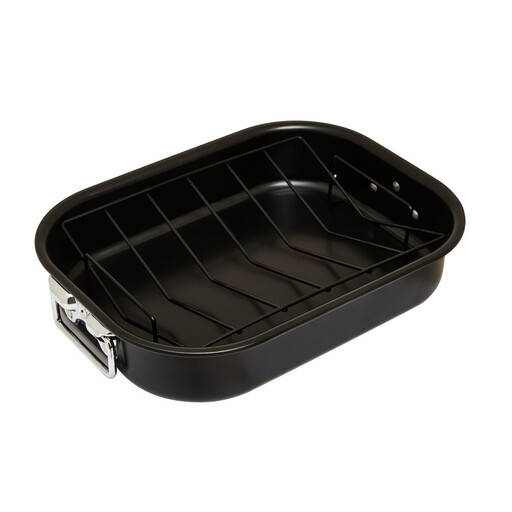
Why This Fits Their Persona: This is for the home cook who regularly prepares large family meals. Its generous 40cm length is ideal for a whole chicken, a leg of lamb or a large batch of roasted vegetables, making it a true centrepiece of weekend cooking.
Its construction from durable metal is designed to withstand the high temperatures required for roasting, helping to resist the warping that plagues thinner, lower-quality tins.
The combination of a large capacity and a functional non-stick coating simplifies the process of cooking for a crowd and, crucially, makes the post-meal cleanup far less of a chore.
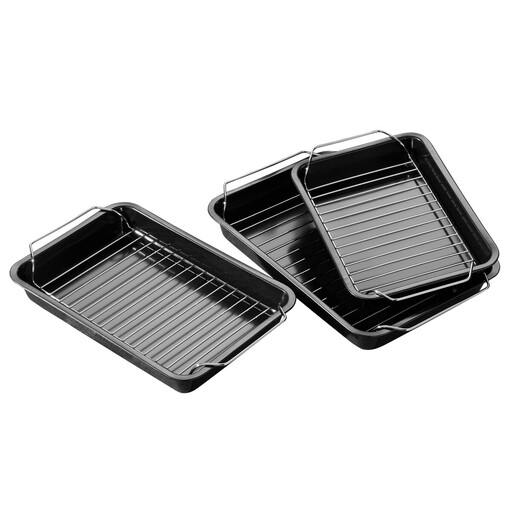
Why This Fits Their Persona: Perfect for those who need flexibility. Whether it's roasting a couple of chicken breasts for a weeknight dinner or a full set of vegetables, this set provides a tray for every occasion without taking up excessive space.
By providing three sizes, it prevents the common mistake of using an oversized pan for a small amount of food, which can lead to fats burning and uneven cooking. Each tray comes with its own correctly-sized rack.
This set offers excellent value and versatility, equipping a kitchen with the essentials for various roasting tasks in one go. The non-stick coating aids in healthier cooking and simplifies cleaning.
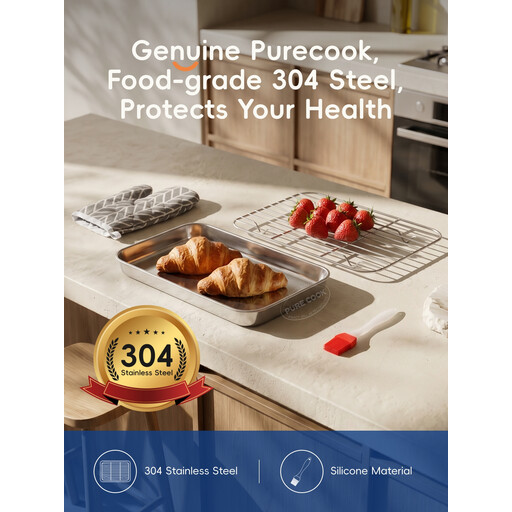
Why This Fits Their Persona: This is for the cook who prefers to avoid non-stick coatings. The food-contact grade 304 stainless steel offers peace of mind and is exceptionally durable for long-term, heavy use. It's also great for acidic marinades.
It completely sidesteps the issue of peeling non-stick coatings. Stainless steel is a solid, non-reactive material that will not scratch, chip or degrade in the same way, ensuring a much longer usable lifespan.
Its primary advantage is its robust, long-lasting material. While it may require more oil or lining for certain foods, its durability and resistance to high heat and metal utensils are unmatched.
We have compiled a complete, real-time list of products that fully satisfy these strict selection criteria and UK safety regulations.
1. What is the point of a rack in a roasting tin? The wire rack serves a crucial purpose: it elevates your food above the bottom of the pan. This allows hot air to circulate 360 degrees around the food, resulting in more even cooking and a crispier exterior. It also allows fat and juices to drip away from the meat, leading to a less greasy and often healthier, final dish.
2. How do I stop my new roasting tin from warping? Warping is primarily caused by 'thermal shock'—a rapid change in temperature—and is more common in thin, poor-quality pans. To minimise the risk, always choose a tin made from a heavy-gauge, durable material. Additionally, try to avoid placing a cold pan in a very hot oven or, conversely, putting a hot pan into cold water. Let it cool down on the hob first.
3. Can I put my non-stick roasting tray in the dishwasher? While many modern non-stick pans are labelled as 'dishwasher safe', it's often better to wash them by hand. The high heat and harsh detergents used in dishwashers can degrade the non-stick coating over time, reducing its effectiveness and lifespan. A quick wash with a soft sponge and warm, soapy water is usually all that's needed for an easy clean roasting pan and will help maintain its surface for years.