
24/7 Customer Support

Free returns

Same-day & Next-day Delivery

Quality Guaranteed

Unlock Your Welcome Offers: FREE Delivery | Up to 80% OFF | Free 30-day JoyPlus trial
Download the APP
A reliable roasting tray is the unsung hero of the British kitchen, essential for everything from a Sunday roast to weeknight traybakes. Yet, finding a good one can be surprisingly difficult. Many of us have experienced the frustration of a brand-new pan that buckles in the heat, or a "non-stick" surface that starts to peel after just a few uses.
As a Joybuy Product Recommendation Officer, my role is to help you navigate these common issues. Before you buy another roasting pan that disappoints, let's look at the frequent pitfalls and what to check for instead.
To avoid these problems, focus on a few core parameters. Getting these right ensures you get a tray that performs well and lasts.
The material of your roasting pan dictates its heat distribution, durability and maintenance.
Consider what you cook most often. A large roasting tin (around 35-40cm) is essential for a whole chicken or a leg of lamb, with high sides to contain splatters and juices. For roasting vegetables or baking biscuits, a shallower baking tray or a set of smaller oven trays offers more flexibility and promotes better air circulation for crisping.
A roasting tin with rack is invaluable. It elevates the meat, allowing hot air to circulate underneath for more even cooking and a crispier skin. It also allows fat to drip away, which can be a consideration for healthier cooking. For disposable trays, lids are a game-changer, making them perfect for transporting food to gatherings, storing leftovers or for meal prep.
Instead of a generic list, we've matched specific products to different cooking styles and needs, helping you find the right fit for your kitchen.
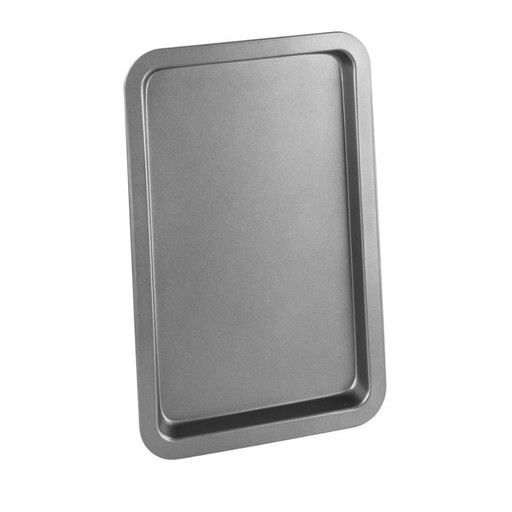
Why This Fits Their Persona: This tray is built for convenience. Its freezer-to-oven capability is perfect for anyone who batch-cooks on a Sunday for the week ahead. The compact size is ideal for smaller households or for cooking side dishes.
It directly counters the warping pitfall with its durable carbon steel construction. The non-stick coating is specified as free from PFAS and PTFE, addressing concerns about peeling and safety.
Freezer-to-oven safe for ultimate meal-prep convenience. It is also dishwasher safe for easy cleanup.
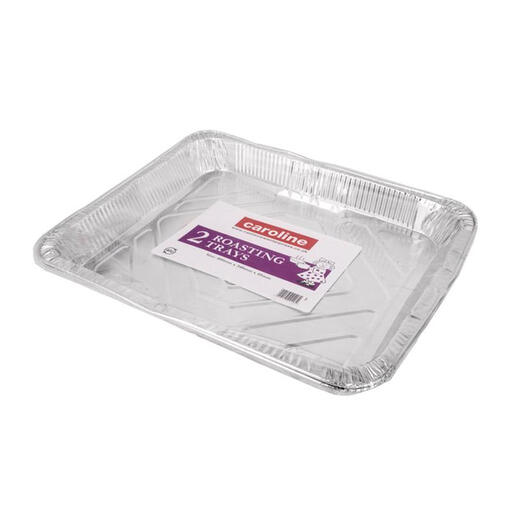
Why This Fits Their Persona: For parties, buffets or family gatherings, cleanup is the last thing you want to worry about. These large, deep disposable trays are perfect for cooking big batches of food and eliminate washing up afterwards.
This avoids the "flimsy foil" trap. Its large size (400x340mm) and 45mm depth provide the structure needed to hold heavy dishes like a large lasagne or roast potatoes without buckling.
Generous capacity for catering-sized portions. The disposable design offers maximum convenience for events.
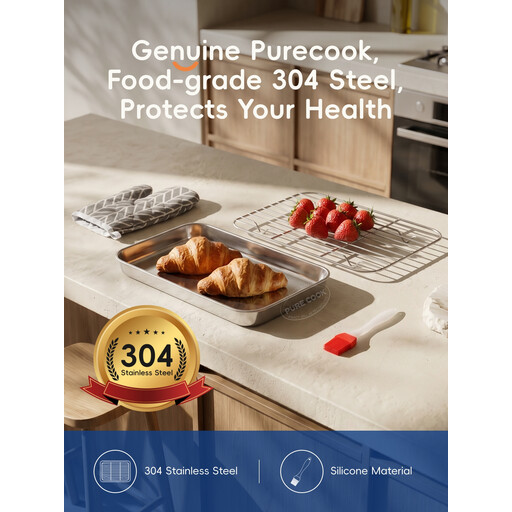
Why This Fits Their Persona: This set is for the cook who prioritises material safety and cooking method. The stainless steel construction removes any concerns about non-stick coatings, and the included wire rack is perfect for crisping food and allowing fat to drain away.
It completely sidesteps the peeling non-stick pitfall by using food-contact grade 304 stainless steel, a stable and durable material that contains no chemical coatings.
The two-piece set includes a detachable wire rack for even cooking and oil draining. The material is durable and resistant to acids and alkalis.
We have compiled a complete, real-time list of products that fully satisfy these strict selection criteria and UK safety regulations.
This depends entirely on the material and quality of the tray. Putting a cold, thin metal tray into a preheated oven can cause "thermal shock," which is a primary cause of warping. However, some trays, like the Chef Aid Carbon Steel tray mentioned, are specifically designed to be freezer-to-oven safe. Always check the manufacturer's instructions. As a general rule, allowing a tray from the fridge to sit at room temperature for 10-15 minutes before it goes into the oven can help reduce the risk.
For materials like stainless steel, a few simple techniques work well. First, ensure the pan is properly preheated with the fat or oil before adding the food; this helps to create a temporary non-stick barrier. Second, make sure your ingredients are dry and lightly coated in oil. Finally, don't try to move the food too early. Once it has formed a proper crust, it will release naturally from the pan.
Yes, aluminium foil trays are widely recyclable across the UK. However, they must be clean. Food residue can contaminate the recycling process. Before placing them in your recycling bin, give them a quick rinse to remove any grease or leftover food particles. Check your local council's guidelines, as rules can vary slightly by area.