
24/7 Customer Support

Free returns

Same-day & Next-day Delivery

Quality Guaranteed

Unlock Your Welcome Offers: FREE Delivery | Up to 80% OFF | Free 30-day JoyPlus trial
Download the APP
Choosing the right vlogging camera can feel overwhelming. With countless models on the market, each boasting different features and specifications, it's difficult to know where to begin. Whether you're just starting your content creation journey or looking to upgrade your setup, the camera you choose is a critical tool for bringing your vision to life.
This guide is designed to cut through the clutter. We will walk you through the essential features to consider and present a curated selection of cameras that cater to different needs and budgets. Our goal is to provide you with clear, practical information to help you find a camera that fits your vlogging style.
Before diving into specific models, let's outline the key features that make a camera well-suited for vlogging. Focusing on these aspects will help you narrow down your options effectively.
While Full HD (1080p) is still acceptable, a 4K vlogging camera offers significant advantages. Recording in 4K provides superior detail and clarity, making your videos look more professional. It also gives you the flexibility to crop and reframe your shots in post-production without losing quality. Look for cameras that can record 4K at a minimum of 25 or 30 frames per second (fps) for smooth, cinematic footage.
For vloggers who are often filming themselves, reliable autofocus is non-negotiable. A fast and accurate autofocus system ensures you stay sharp and in focus, even when moving around. A camera with a flip screen (also known as a fully articulating or 180-degree tiltable screen) is equally important. It allows you to see yourself while recording, making it much easier to frame your shots correctly and ensure you're always in the picture.
The camera's sensor size directly impacts image quality, especially in low-light conditions. Larger sensors, like those found in APS-C or full-frame models, capture more light and produce cleaner footage with less noise. While compact cameras offer convenience, a mirrorless camera for vlogging provides the flexibility of interchangeable lenses. This allows you to adapt your camera to different shooting scenarios, from wide-angle vlogging shots to detailed close-ups, making it a popular choice for those aiming for a professional vlogging camera setup.
Here are our recommendations, selected to cover a range of needs from beginner-friendly models to professional-grade systems.
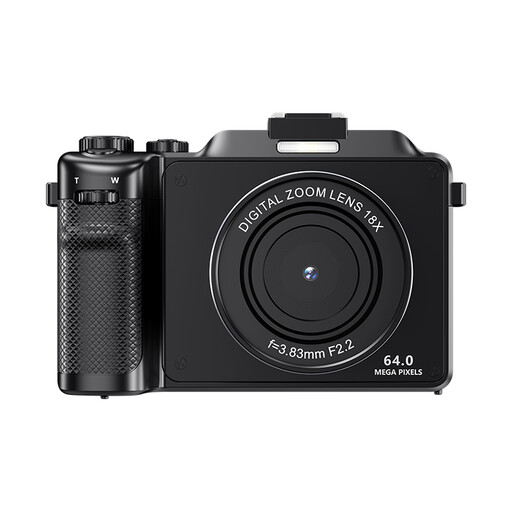
Komery X9 4K 64MP Autofocus Vlogging Camera
Why It Stands Out: The Komery X9 is a compact digital camera that packs a surprising number of vlogging-centric features into an accessible package. It offers 4K video resolution and a high megapixel count for still photos, making it a versatile tool for mixed-media creators. Its straightforward controls and built-in features like a flash and anti-shake function simplify the recording process.
Pros:
Who is it for: This is an excellent vlogging camera for beginners, teenagers or anyone wanting to experiment with content creation without a significant initial investment. Its all-in-one design means you can start shooting straight out of the box.

Sony A6100 APS-C Mirrorless Camera with 16–55mm Zoom Lens
Why It Stands Out: The Sony A6100 hits a sweet spot between performance and usability. It features a high-quality APS-C sensor that delivers excellent image quality and a highly regarded autofocus system with Real-time Eye AF and tracking. The 180-degree tiltable LCD touchscreen is perfect for self-filming, and the external microphone jack allows for significantly improved audio quality.
Pros:
Who is it for: This mirrorless camera for vlogging is ideal for YouTubers and content creators who are serious about improving their production quality. It offers a significant step up from smartphones or basic compacts, providing creative control without the complexity of a full professional setup.

Sony Alpha 7 III Full-Frame Mirrorless Camera with 28–70mm Zoom Lens
Why It Stands Out: The Sony Alpha 7 III is a powerhouse, widely recognised for its professional capabilities. Its full-frame sensor delivers exceptional image quality, impressive dynamic range and outstanding performance in low light. Features like 5-axis in-body image stabilisation, a sophisticated 693-point autofocus system and advanced video profiles (like S-Log for colour grading) provide the tools needed for cinematic-quality content.
Pros:
Who is it for: This is a professional vlogging camera for established creators, filmmakers and anyone who demands uncompromising quality. It's an investment in a system that can handle virtually any shooting condition and deliver broadcast-quality results.
If your creative needs extend beyond vlogging, such as detailed product showcases or studio-based photography, you may want to explore a wider range of specialised equipment.
? Explore our full collection of product photography cameras and more
A good vlogging camera combines several key features: high-quality video (ideally 4K), a reliable autofocus system, a flip-out screen for self-monitoring, good built-in audio or an external microphone input and a portable design. Image stabilisation is also a highly valuable feature for smooth, on-the-go footage.
While not strictly necessary to start, a 4K camera is highly recommended. It future-proofs your content and provides much more flexibility during editing, such as the ability to crop in on a shot without a noticeable loss in quality. As 4K displays become more common, viewers will increasingly expect this level of detail.
Yes, mirrorless cameras are an excellent choice for many vloggers. They typically offer a great balance of image quality, compact size and features. The ability to change lenses provides enormous creative versatility, allowing you to adapt your look for different types of content, from wide-angle travel vlogs to cinematic talking-head videos.